 English
 French
 German
 Russian
 中文
中文

Exploding Cows, Talking Ravens, and Permission to Be Alive
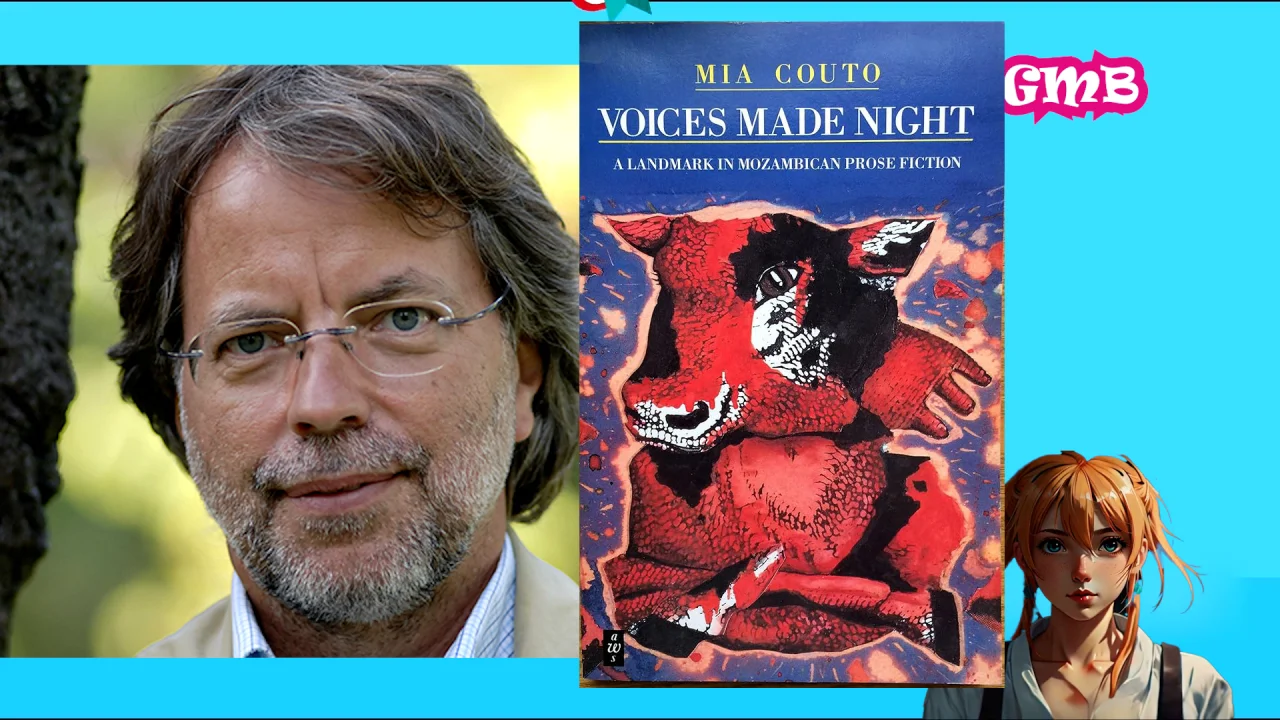
I paused mid-page when I realized a man was calmly digging his wife’s grave—while she was still alive.
Not out of hatred. Not madness. Just… certainty.
A few pages later, a boy’s future literally detonated because the cow he was herding exploded. Not symbolically. Not metaphorically. It went boom. Meat everywhere. Dreams gone.
By the time a government official had to approve two men’s existence on paper, I knew this wasn’t just a book. It was a feverish, poetic interrogation of reality itself.
That was my introduction to Mia Couto’s Voices Made Night—a slim collection that somehow managed to make me laugh, flinch, and stare into the void in under 115 pages.
What Kind of Book Is Voices Made Night?
This is a magical realist, political, absurdist collection of short stories about how ordinary lives collide with myth, power, superstition, and bureaucracy.
Tone: Darkly humorous, disturbing, poetic
Pace: Fast, sharp, deceptively light
Themes: Power, love, superstition, colonial residue, bureaucracy, identity, survival
This book is for readers who:
-
Love strange, unsettling stories that mean something
-
Enjoy African literature that refuses to be “explanatory”
-
Appreciate language that bends reality without breaking emotion
This book is not for readers who:
-
Need realism to behave
-
Want neat morals and comforting endings
-
Prefer plot over meaning
👉 The edition I read is available here:
Voices Made Night by Mia Couto (Paperback / Kindle)
Why This Story Collection Matters
What stayed with me wasn’t the exploding cow or the talking raven.
It was the quiet cruelty embedded in everyday logic.
In these stories, people do terrible things not because they are evil—but because tradition told them to. Or rumor. Or fear. Or the state. Or love warped beyond recognition.
Mia Couto writes worlds where absurdity is policy and logic is optional—but emotion is brutally real. His characters suffer under systems that feel familiar: governments that erase you, families that break you “for your own good,” beliefs that justify violence.
This book refuses to explain itself. It asks instead:
What happens when reality stops making sense—but you still have to live inside it?
And that question feels painfully relevant.
A Glimpse of the Stories (No Spoilers)
A man digs his wife’s grave because he believes she is dying—despite all evidence to the contrary.
A boy is denied school to herd cattle, only for the prized dowry cow to explode and ruin everything.
A husband pours boiling water on his wife because he suspects she’s a witch—and calls it help.
A father ties his daughter to a drum to turn her into a contortionist because someone said it pays well.
Two men return home after a flood only to discover they are legally dead—and must apply for permission to exist.
These are not twists. They are situations.
And that’s what makes them terrifying.
When Relationships Go Bad… Very Bad
In “How Ascolino de Perpetuo Socorro Lost His Spouse,” an alcoholic husband and a painfully quiet wife orbit each other until disaster feels inevitable.
In “So You Haven’t Flown Yet, Carlota Gentina,” suspicion, misogyny, and superstition combine into one irreversible act of violence.
“Witchcraft is a vice of sisters, an illness they are born with.” (p.48)
That line alone tells you everything you need to know about the world Couto is dissecting.
Absurdity as Political Weapon
Couto’s genius is how effortlessly the personal becomes political.
In “The Barber’s Most Famous Customer,” a barber brags about cutting a white man’s hair—using a postcard as proof—and is promptly arrested as a terrorist collaborator.
“A joke, let’s see about that… It’s probably one of those you put up here.” (p.113)
In “The Tale of the Two Who Returned from the Dead,” bureaucracy reaches its final form:
“…they should be deemed members of the population in existence.” (p.76)
Only then can they begin applying for documents to prove they are alive.
If you’ve ever dealt with official paperwork in a fragile system, this story hurts in a very specific place.
Love, Snakes, Whales, and Delusion
There’s a lovesick snake catcher who uses reptiles as romantic deterrents.
A man waiting for a whale to vomit riches—while authorities suspect him of arms trafficking.
And a raven that speaks to the dead… until it says too much.
Couto’s world runs on dream logic—but the consequences are always real.
Mia Couto’s Language Is the Real Magic
The prose alone is worth the read:
“Now is it only the sun that rains?”
“I am a blind man who sees many doors.”
“Happiness stepped out of her life and forgot to return.”
“His voice lay prostrated on the ground.”
This is poetry disguised as fiction.
Or fiction pretending not to be prophecy.
Meet the Man Behind the Madness
Mia Couto—born António Emílio Leite Couto in Mozambique in 1955—was publishing poetry at fourteen. Fourteen.
He studied medicine, became a journalist during political upheaval, later earned a degree in biology, and somehow still found time to become one of Africa’s most translated writers.
Voices Made Night (1986) was his first short story collection, and it already carries everything he’d later become famous for: linguistic invention, political bite, and emotional depth.
His novel Sleep Walking Land was named one of the Top 12 African Books of the 20th Century.
And yes—he’s still writing.
Also still working as a biologist. Because of course he is.
My Honest Verdict
This isn’t a comfortable book.
Some stories feel unfinished. Some hurt without offering closure. And if you need realism to behave itself, this will test your patience.
But this is an honest book.
And honest books linger.
👉 If this sounds like your kind of reading experience, you can find the edition I read here:
Voices Made Night by Mia Couto
Final Thoughts
Voices Made Night doesn’t ask you to understand it.
It asks you to feel it.
It was the perfect book to kick off my Africa Reading Challenge—because it reminded me why African literature matters: it tells truths that logic alone can’t carry.
If you love stories where reality bends, language sings, and meaning sneaks up on you later—this one belongs on your shelf.
Just… maybe don’t pour boiling water on anyone. Ever.
Optional Add-Ons
Similar books you might enjoy:
-
Sleep Walking Land – Mia Couto
-
The Palm-Wine Drinkard – Amos Tutuola
Best format:
Paperback. This is a book you’ll want to pause, reread, and underline