 English
 French
 German
 Russian
 中文
中文

When Life Throws You to the Devil: A Review of Devil on the Cross by Ngũgĩ wa Thiong’o
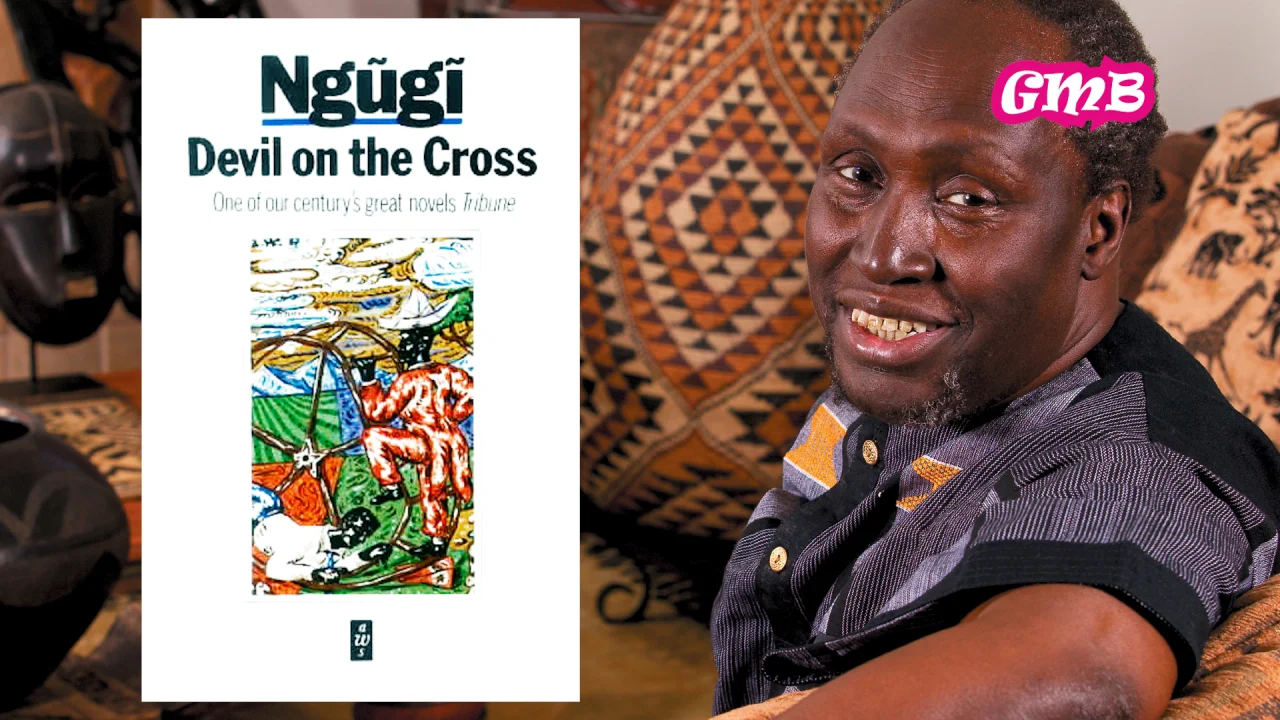
Ever had one of those weeks where everything seems to go wrong? Your job evaporates, relationships crumble, and life feels like a relentless uphill battle. Now, imagine all of that… and then being invited to a “Devil’s Feast”—a literal competition of theft, greed, and exploitation. Welcome to the world of Devil on the Cross by the legendary Kenyan writer Ngũgĩ wa Thiong’o, a novel that is equal parts fury, satire, and revolutionary fire.
This is no ordinary story. It’s a bold, unflinching look at the corruption, greed, and systemic injustice that pervade modern society—specifically postcolonial Kenya. And it all begins with one woman who has simply had enough.
👉 You can find the edition I read here on Amazon.
A Story of Desperation, Destiny, and the Devil
The narrative opens in Ilmorog, a small fictional Kenyan town, through the voice of a traditional singer who reluctantly begins telling a story that can’t be ignored. Enter Jacinta Warĩĩnga, a woman whose life has been cruel: dumped, fired for rejecting harassment, and abandoned as a teenage mother. At her lowest point, standing at a bus stop contemplating suicide, fate intervenes in the form of a stranger—and with that, the adventure begins.
Jacinta is drawn into The Devil’s Feast, a mysterious gathering where the rich and powerful boast about exploiting the poor. From there, the story moves through a surreal journey aboard a rundown matatũ (minibus taxi) to Ilmorog, where passengers from all walks of life share their misfortunes. Among them are Mũturi, a fired handyman; Wangarĩ, a displaced Mau Mau veteran; Gatuĩria, a curious music student; and Mwĩreri wa Mũkiraaĩ, a businessman who openly celebrates theft as national development. Through these interactions, Ngũgĩ highlights enduring inequalities and the corrosive grip of both local and foreign elites.
When the characters arrive at the Feast, they witness a grotesque display of capitalism run amok: businessmen pitching absurdly exploitative schemes—from selling bottled air to harvesting organs. Warĩĩnga’s journey, from victim to revolutionary, intertwines with these larger political commentaries, culminating in a climax that’s as shocking as it is unforgettable.
Analysis: Fire, Fury, and Revolutionary Insight
Devil on the Cross is not subtle. It shouts. Its target is unambiguous: corrupt elites, foreign capitalists, and systems designed to keep the powerless oppressed. But Ngũgĩ’s brilliance lies in making the personal political. Warĩĩnga isn’t just an individual woman struggling against injustice—she embodies a nation grappling with betrayal, exploitation, and hope.
The novel’s central metaphor, the Devil’s Feast, is a grotesque yet piercing mirror of the global capitalist order. The absurdity of selling air or human organs is darkly humorous, yet it resonates disturbingly with reality. Through this lens, Ngũgĩ forces readers to confront uncomfortable truths about greed, complicity, and the normalization of exploitation.
Warĩĩnga’s transformation is equally compelling. From broken and powerless, she evolves into a skilled, politically aware engineer—and, ultimately, a figure of radical agency. Her journey forces us to wrestle with questions of justice, revenge, and morality. That ending—controversial, violent, and unresolved—cements the novel as a work that refuses to provide easy answers, compelling readers to reflect on the ethics of resistance and rebellion.
Strengths and Weaknesses
Strengths:
-
Fiery political commentary intertwined with compelling narrative.
-
Rich, symbolic characters who reflect larger societal issues.
-
Bold, unforgettable ending that sparks discussion and debate.
-
Vivid portrayal of postcolonial Kenya, blending folklore, satire, and realism.
Weaknesses:
-
The narrative can feel heavy-handed at times, with metaphor sometimes overtaking subtlety.
-
The surreal and symbolic elements may challenge readers seeking straightforward storytelling.
-
The abrupt violence at the end may alienate those uncomfortable with moral ambiguity.
About the Author
Ngũgĩ wa Thiong’o is one of Africa’s most influential writers, born in 1938 in Kenya. Known for using literature as a tool against oppression, Ngũgĩ began writing in English but later chose to write in his native Gĩkũyũ, including Devil on the Cross (originally Caitaani Mũtharaba-Inĩ). Famously, he penned this novel on toilet paper while imprisoned for his political activism. Across his career, Ngũgĩ has remained a fearless critic of neo-colonialism, capitalism, and the betrayal of independence.
Who Should Read Devil on the Cross
You’ll enjoy this novel if:
-
You love literature that challenges societal norms and exposes injustice.
-
You appreciate African literature rich in political and symbolic depth.
-
You read fiction to think, not just to escape.
You might struggle with this book if:
-
You prefer subtle, light-hearted storytelling.
-
You seek clear-cut heroes and villains.
-
Ambiguity and moral complexity frustrate you.
👉 Grab your copy here on Amazon Kindle or check out the paperback edition if you prefer the feel of a book in hand.
Final Thoughts
Devil on the Cross is more than a novel—it’s a punch in the gut, a fiery critique of injustice, and a call to awareness. Jacinta Warĩĩnga’s journey from despair to radical empowerment mirrors the struggle of a nation, reflecting both the personal and political stakes of resistance. Ngũgĩ’s unapologetic voice makes it impossible to ignore the ethical and social questions he raises.
If you’re ready for a story that challenges, enrages, and inspires, Devil on the Cross is a must-read. This is African literature at its most provocative, unflinching, and transformative.