 English
 French
 German
 Russian
 中文
中文

When Gods Refuse to Bend: A Quiet Tragedy in Arrow of God
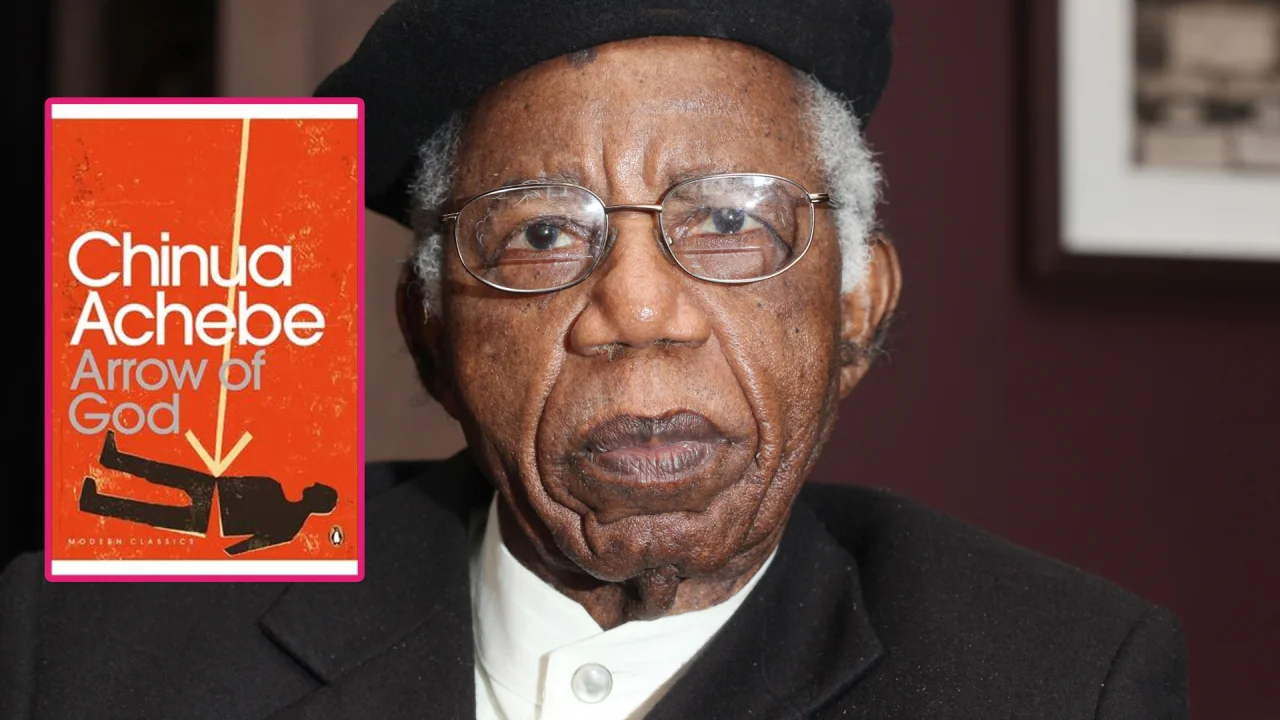
There’s a moment in Arrow of God that made me stop reading—not because anything dramatic exploded on the page, but because I suddenly realized how fragile authority really is. One stubborn decision. One delayed ritual. And an entire community begins to unravel.
You start out in Umuaro, a proud Igbo village (actually six villages stitched together by one god, Ulu), where life follows the rhythms of farming, festivals, and belief. Yams grow. Elders argue. Priests speak for the gods. Everything feels stable—until it isn’t.
At the center of this slow-burning disaster is Ezeulu, the Chief Priest of Ulu. A man entrusted with the spiritual calendar of his people… and burdened with a pride almost as heavy as that responsibility. What follows is not a loud collapse, but a quiet, devastating one—where hunger, faith, colonial pressure, and human stubbornness collide.
This isn’t chaos for entertainment. This is Achebe doing what he does best: showing how power breaks when it refuses to listen.
What Kind of Novel Is Arrow of God?
Arrow of God is a historical literary novel about power, pride, and the dangerous illusion of moral certainty.
-
Tone: Reflective, tense, quietly tragic
-
Pace: Slow and deliberate
-
Themes: Authority, faith, colonial interference, communal responsibility, pride, change
This book is for readers who:
-
Love novels that wrestle with ideas rather than rushing plots
-
Enjoy African literature grounded in culture and moral complexity
-
Appreciate stories where no one is completely right—or completely wrong
This book is not for readers who:
-
Prefer fast-paced, action-driven stories
-
Need clear heroes and villains
-
Want tidy endings and obvious moral lessons
👉 The edition I read is available here:
Arrow of God by Chinua Achebe – Paperback
Why This Story Still Hurts (and Matters)
What makes Arrow of God linger is not what happens—but why it happens.
Ezeulu believes he is merely “an arrow in the bow of Ulu.” In other words: he is not responsible. He is just obeying divine order. But Achebe quietly asks a brutal question—what happens when faith becomes a shield against empathy?
When Ezeulu refuses to announce the New Yam Festival, the consequences are immediate and physical. No festival means no harvest. No harvest means hunger. And hunger doesn’t care about theology.
As the people starve, Christian missionaries—led by the opportunistic Mr. Goodcountry—offer an alternative: convert, and you may harvest your crops. Salvation comes with permission. Faith becomes practical.
Achebe doesn’t mock traditional religion. He doesn’t glorify Christianity either. Instead, he exposes how rigid authority collapses when it cannot bend, especially under external pressure like colonial rule.
When the villagers finally turn against Ezeulu, the question isn’t “Who betrayed whom?”
It’s “Who failed first?”
And Achebe refuses to answer that for you.
A Glimpse of the Story (No Spoilers)
This is a novel about:
-
A priest who controls sacred time
-
A community caught between belief and survival
-
Colonial administrators who don’t understand what they’re disrupting—but disrupt it anyway
The conflict isn’t loud. It’s procedural. Ritual delayed. Authority questioned. Faith tested. And by the time everything collapses, it feels tragically inevitable.
The Achebe Effect: Language, Balance, and Restraint
One of the most impressive things about Arrow of God is Achebe’s restraint.
He never lectures. He never tells you what to think. Instead, he presents:
-
Igbo proverbs that carry entire philosophies
-
Characters who feel painfully human in their contradictions
-
A colonial presence that feels casually destructive rather than overtly evil
Achebe’s neutrality is unsettling—and intentional. You’re forced to sit with uncertainty. To admit that conviction, when unexamined, can be just as destructive as oppression.
It’s a cultural feast, yes—but also a moral one.
👉 You can find the same edition I read here:
Arrow of God – Chinua Achebe (Amazon)
Who This Book Is Perfect For
You’ll enjoy Arrow of God if:
-
You like books that question belief systems
-
You enjoy morally complex characters
-
You read fiction to understand people, not escape them
You might struggle with this book if:
-
You prefer quick resolutions
-
You dislike slow, reflective narratives
-
You need certainty rather than ambiguity
👉 If that sounds like your kind of reading experience:
Check the book out here
My Honest Verdict
This isn’t Achebe’s most famous novel—but it might be his most mature.
What worked:
-
Deep thematic weight
-
Balanced portrayal of tradition and change
-
Emotional realism without melodrama
What didn’t (for some readers):
-
The pacing demands patience
-
The emotional payoff is subtle, not explosive
Still, Arrow of God is a necessary novel. One that doesn’t comfort—it confronts.
This isn’t a perfect book.
But it’s an honest one.
And those are rare.
Final Thoughts
By the time I finished Arrow of God, I wasn’t thinking about Ezeulu alone. I was thinking about leaders who confuse authority with righteousness. About systems that collapse because they refuse to adapt. About how belief—when weaponized—can turn inward and destroy the very people it claims to protect.
Achebe doesn’t give answers. He gives mirrors.
And that’s why this story still matters.
👉 If you’d like to read the same edition I did, here’s the link:
Arrow of God by Chinua Achebe – Amazon
Optional: Similar Reads
-
Things Fall Apart – Chinua Achebe
-
The River Between – Ngũgĩ wa Thiong’o
Best Format
Paperback — this is a book you’ll want to underline, pause over, and return to.