 English
 French
 German
 Russian
 中文
中文

The Devil in Silk Shirts: When Salvation Comes with a Price
There’s a moment in this novel when you realize generosity can feel like a trap.
Not the loud, obvious kind. The quiet kind. The kind that smiles, pays your bills, buys you drinks, and slowly rearranges your morals while you’re busy being grateful.
I kept asking myself a disturbing question while reading this book:
How much of my integrity would I trade if my stomach was empty for eight months?
Because hunger has a way of making even the devil look like deliverance.
And in this story, the devil wears silk shirts and calls himself Mystique Mysterious.
What Kind of Novel Is This?
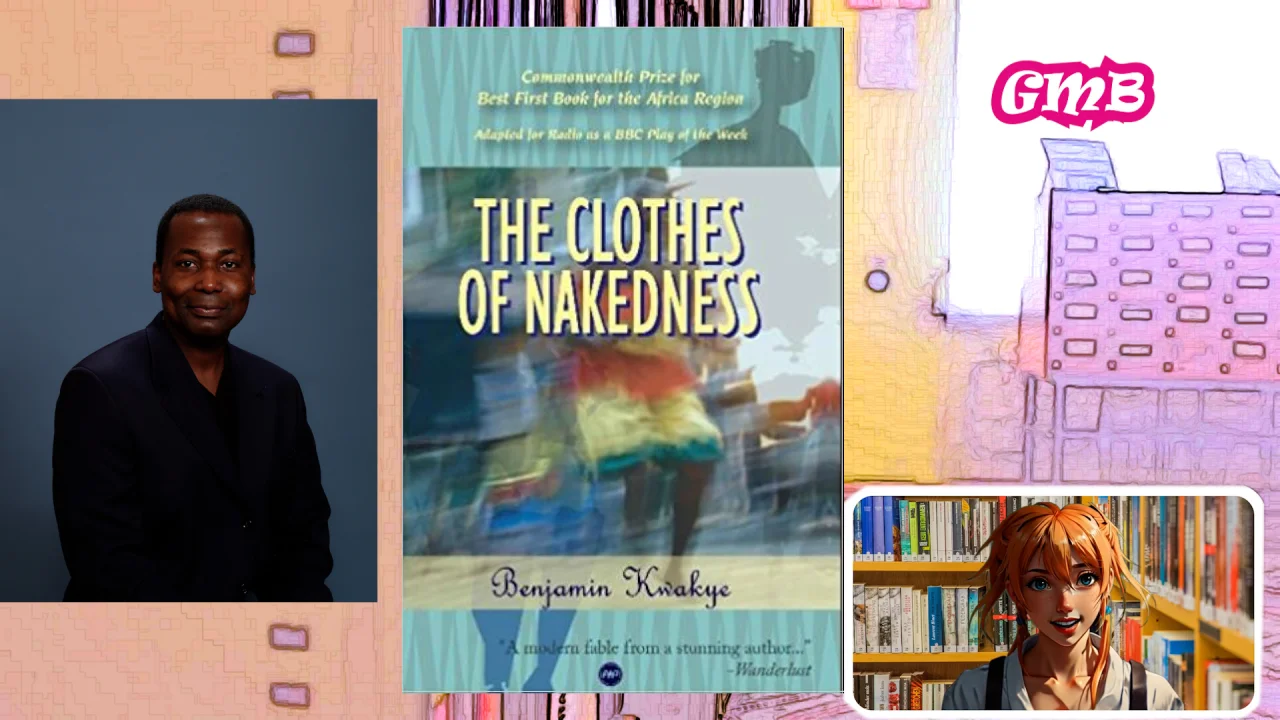
The Clothes of Nakedness by Benjamin Kwakye is a gritty social realist novel about poverty, manipulation, moral compromise, and the dangerous seduction of false saviors.
Tone: Dark, reflective, quietly disturbing
Pace: Moderate, with moments that escalate quickly
Themes: Power, corruption, addiction, dignity, family, poverty, illusion vs reality
This book is for readers who:
-
Enjoy African literature that doesn’t romanticize struggle
-
Like stories that explore moral gray areas
-
Appreciate symbolism woven into everyday life
This book is NOT for readers who:
-
Want fast-paced action without reflection
-
Prefer clear heroes and obvious villains
-
Avoid stories that expose society’s underbelly
👉 The edition I read is available here:
The Clothes of Nakedness – Amazon
Why This Story Matters (Emotional Core)
This novel is not really about Mystique Mysterious.
It’s about what happens when a community becomes so economically desperate that manipulation starts to look like opportunity.
Mystique doesn’t force anyone. That’s what makes him terrifying. He offers. He smiles. He “helps.” And slowly, he takes. A percentage of a taxi driver’s income. A cut from a teenage newspaper seller. Loyalty. Bodies. Futures.
The Ghanaian proverb behind the title says:
“If nakedness promises you clothes, listen to its name.”
In other words, someone who has nothing cannot give you something without taking more in return.
What stayed with me after finishing this book wasn’t the orgies, the drugs, or even the violence.
It was that final image — Mystique still present. Still smiling. Still watching.
Because he isn’t just a man.
He’s the embodiment of every system that feeds off desperation. Every politician who buys votes with rice. Every “mentor” who charges vulnerable youth for access. Every structure that thrives on inequality.
The book feels painfully relevant — not just to Ghana, not just to Nima in Accra — but to any society where survival overrides morality.
And that’s why it lingers.
A Glimpse of the Story (Minimal, No Spoilers)
The story is set in Nima, a real neighborhood in Accra, where three friends — Kojo Ansah, Kofi Ntim, and Gabrielle Bukari — are navigating poverty and stalled dreams.
Bukari, unemployed for eight months, meets a charismatic man named Mystique Mysterious who offers him a job driving a taxi. But the generosity comes with strings attached.
Soon, Bukari’s life shifts — alcohol, infidelity, moral drift. His teenage son is drawn into Mystique’s economic web. The youth are introduced to drugs. Relationships fracture. Loyalties are tested.
And at the center of it all is one quiet question:
What does it cost to survive?
Who This Book Is Perfect For
You’ll enjoy this novel if:
-
You like books that expose uncomfortable truths
-
You enjoy socially conscious African fiction
-
You read fiction to think, not just to escape
You might struggle with this book if:
-
You prefer light, uplifting narratives
-
You need clean resolutions
-
You dislike morally complex characters
👉 If this sounds like your kind of book, you can get it here:
The Clothes of Nakedness by Benjamin Kwakye – Amazon
My Honest Verdict
This isn’t a perfect novel — but it’s an honest one.
What worked:
-
The symbolism is sharp without being heavy-handed.
-
The language is simple but layered.
-
Mystique Mysterious is one of the most unsettling characters in African fiction — not because he shouts, but because he smiles.
What didn’t quite sit right with me:
-
The scene where Fati reacts positively to her teenage son’s romance felt culturally off. In many African households, that reaction would likely be… louder.
Still, as a debut novel, this is impressive. No surprise it won the 1999 Commonwealth Writers Prize (Africa Region) and was later adapted for BBC radio.
It doesn’t glamorize poverty. It doesn’t preach. It simply shows — and lets you wrestle with what you see.
Final Thoughts & Recommendation
When I finished this book, I didn’t feel entertained.
I felt warned.
Mystique Mysterious never really disappears. The last lines make that chillingly clear. He lingers in the background — smiling, waiting.
That’s what makes this novel powerful. It suggests that exploitation isn’t a single villain you defeat. It’s a recurring presence. A system. A mindset. A shadow.
If you’re building your collection of classic African literature — especially works from the African Writers Series — this is one worth adding.
👉 If you’d like to read the same edition I did, here’s the link:
Buy The Clothes of Nakedness on Amazon
Read it slowly.
Sit with it.
And ask yourself — if nakedness promised you clothes… would you listen?