 English
 French
 German
 Russian
 中文
中文

They Didn’t Run from the Snakes — They Farmed Them
Imagine this: your village is attacked by deadly snakes. People are dying. Families are mourning. Fear spreads faster than the venom itself.
Now pause — because instead of fleeing, instead of screaming like normal human beings, the elders of your community come up with a solution so absurd it almost feels genius.
They decide to farm the snakes.
Yes. The very creatures killing them become a business opportunity.
That moment alone tells you everything you need to know about The Snake Farmers. This is not a play that wants to comfort you. It wants to make you laugh, then slowly realise you’re laughing at something painfully real. What follows is one of the darkest, strangest, and most intelligent satires I’ve read — a story that pretends to be about snakes but is really about power, aid, corruption, and how tragedy can be turned into profit.
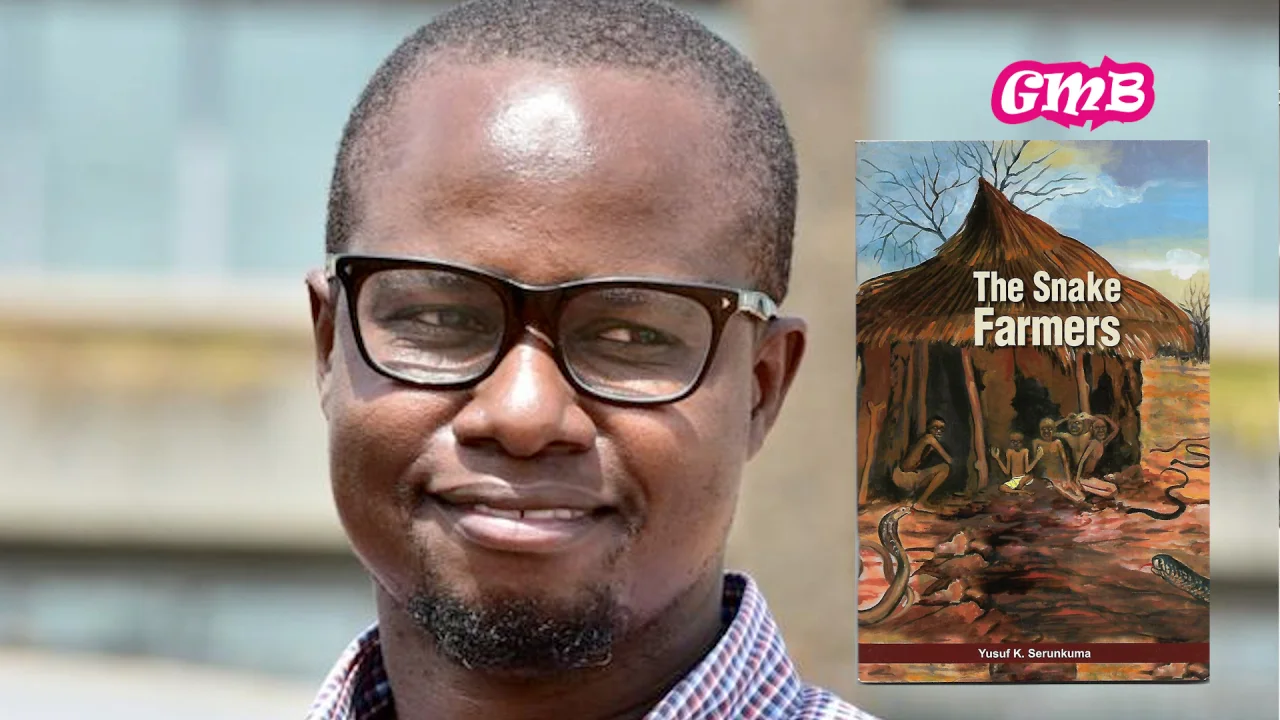
👉 The Snake Farmers by Yusuf Serunkuuma
When Tragedy Strikes Kayunga Village
The play opens in the dusty heart of Kayunga village, somewhere in the African Sahara. Life is ordinary, quiet, familiar — until Oyire’s three children die suddenly and mysteriously. No one knows what killed them. Some whisper about poison. Others fear an epidemic. Panic grips the village.
Chairman Opobo, the village leader, rushes to inform Mzee Sekande, and as tradition demands, the elders visit Oyire’s family. Grief is shared publicly, with solemn faces, long pauses, and plenty of head-shaking. But beneath the mourning is confusion — and fear.
Then the play does something clever.
Instead of staying in Kayunga, it cuts sharply to another world entirely.
London Watches Africa Suffer
Thousands of miles away, in the comfort of a London living room, we meet the Browns. Matt Brown turns on the television and watches breaking news from Africa: three children in Kayunga village have died, possibly from snake bites.
His shock is instant. Something must be done.
This contrast is deliberate and uncomfortable. On one side, villagers are burying their dead. On the other, tragedy is consumed through screens, sofas, and sympathy speeches. Two worlds meet — not through lived experience, but through media.
This is where The Snake Farmers begins to reveal its real target: not just local leadership, but the global system that responds to African suffering from a safe distance.
Committees, Witchcraft, and Convenient Solutions
Back in Kayunga, the elders meet to investigate the deaths. As expected, theories fly. One elder blames witchcraft — because envy always needs a supernatural explanation. Another insists it must be snake bites. Oyire, the grieving father, agrees.
So what do they do?
They form committees.
Bush-clearing committees. Investigation committees. Planning committees. It’s both hilarious and painfully familiar. Serious problems are buried under procedure, while people continue to die.
Meanwhile, the snake epidemic grows.
Saving Sahara: Charity with a Soundtrack
The scene returns to London, where a massive charity concert — Saving Sahara — is underway. Musicians perform. Activists speak. Donations pour in. Mayor Richard English delivers a speech so emotional it practically reaches into people’s wallets.
The Browns mobilise funds through their church. Media headlines explode with stories of heroic intervention. Africa, once again, becomes a cause — simplified, dramatized, and ready for rescue.
Back in Kayunga, however, villagers are still dying.
The contrast couldn’t be sharper.
When Aid Finally Arrives
Eventually, European aid workers arrive in Kayunga, led by Brother Samson. They come bearing gifts: clothes, shoes, bicycles, money, medical equipment. A storage facility is built. A hospital is constructed so villagers no longer have to travel miles for care.
Snake bites decrease. Lives improve.
And then comes one of the play’s most telling details: Chairman Opobo receives a brand-new iron-sheet house.
Aid works — but not evenly.
👉 https://godsmercybookshop.com/the-snake-farmers-by-yusuf-k-serunkuma-903
When Tragedy Starts Looking Profitable
As the crisis stabilises, something disturbing happens. The elders begin to reflect — not on the lives lost, but on what was gained.
Bicycles. Clothes. Shoes. Money. Houses. A hospital.
For the first time, tragedy doesn’t look like pure loss. It looks like opportunity.
And then comes the play’s most outrageous — and brilliant — idea.
The Snake Farm
Two elders hatch a plan so evil it’s almost admirable in its honesty.
If snakes bring aid… then the snakes must never disappear.
Their solution?
They establish a snake farm.
Not to eliminate danger — but to preserve it. Controlled suffering ensures continued attention, continued donations, continued relevance. Poverty becomes sustainable. Disaster becomes an industry.
It’s funny. It’s horrifying. And it works.
👉 https://godsmercybookshop.com/the-snake-farmers-by-yusuf-k-serunkuma-903
A Cycle That Refuses to End
Back in London, the Browns receive an official thank-you note. They sit comfortably, satisfied that the crisis has been solved.
Then the news breaks again: No end to the snakes.
Matt Brown is furious. Phones Brother Samson. Round two begins.
The play ends where it started — not with resolution, but with repetition. Aid. Tragedy. Exploitation. Relief. Again and again.
What This Play Is Really About
The Snake Farmers is not about snakes.
It’s about how disasters are managed, manipulated, and monetized. It’s about leaders who benefit from chaos. It’s about international aid that treats symptoms while preserving systems. It’s about dependency — and how it quietly replaces self-determination.
The satire is sharp because it’s believable. Snake farming sounds ridiculous — until you realise how often suffering is maintained because it serves someone’s interest.
And yet, the play never becomes bitter. It stays funny. Darkly funny. The kind of laughter that catches in your throat.
About the Author
Yusuf Serunkuuma is a Ugandan writer, academic, and journalist known for using satire to interrogate power, aid, and African political realities. In The Snake Farmers, he doesn’t attack from a distance — he exposes everyone involved: local leaders, foreign saviours, and the systems that connect them.
His strength lies in making you laugh first… then think later.
My Honest Verdict
This isn’t a comfortable play.
It isn’t subtle either.
But it’s honest.
The Snake Farmers works because it refuses easy answers. It shows how good intentions can coexist with exploitation, and how victims can become participants in the very systems that trap them.
If you read African literature to understand power — not just plot — this play is worth your time.
👉 https://godsmercybookshop.com/the-snake-farmers-by-yusuf-k-serunkuma-903