 English
 French
 German
 Russian
 中文
中文

The Courage to Tell the Truth: Why Our Endangered Values Still Feels Dangerous Today
There’s a strange moment that happens when you question something powerful.
I once asked why a country could always find money for war but somehow struggle to fund healthcare, clean water, or support struggling farmers abroad. The reaction was immediate. Suspicious looks. Accusations. Someone even said, “That sounds anti-American.”
And I remember thinking: Since when did asking questions become treason?
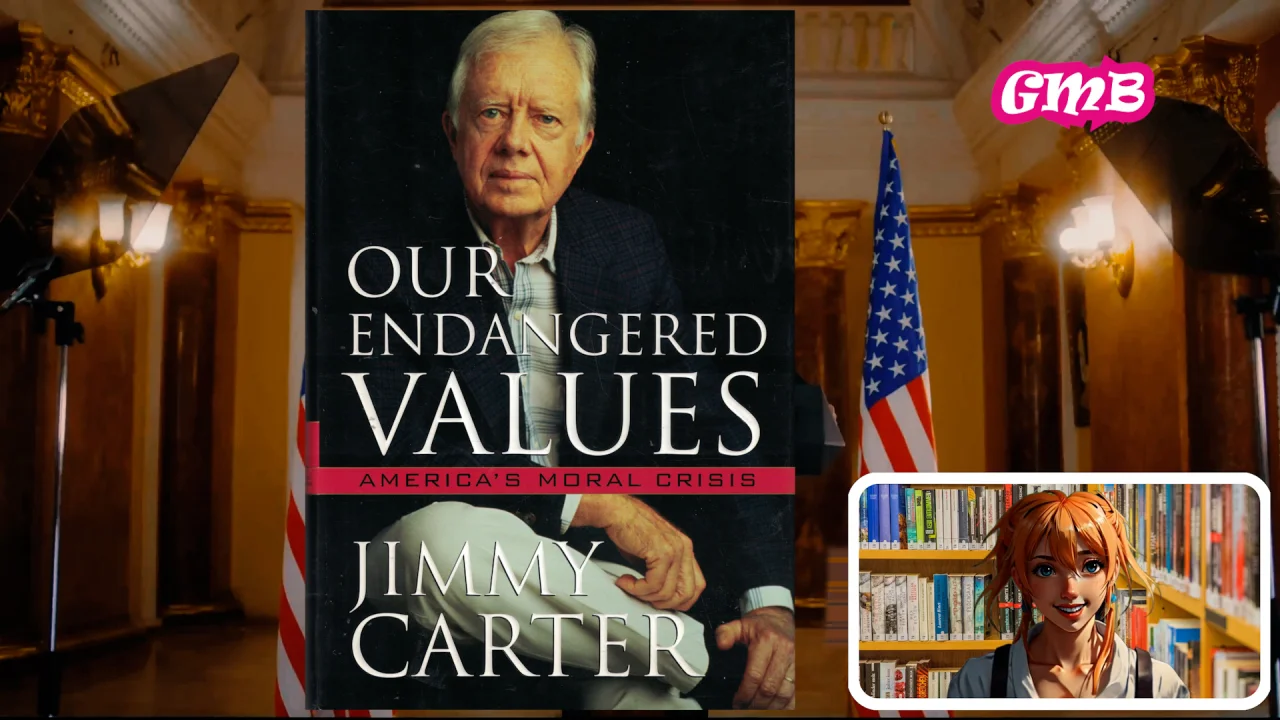
So when I picked up Our Endangered Values: America's Moral Crisis by Jimmy Carter, I expected something safe. Maybe a polished memoir. A bit of patriotic storytelling. Some political nostalgia.
Instead, I found a book that calmly, relentlessly questions the moral direction of one of the world’s most powerful nations.
And coming from a former president, that honesty is startling.
About the Book and Its Author
Published in 2005, Our Endangered Values: America's Moral Crisis is a political and moral reflection written by Jimmy Carter, the 39th President of the United States and later a Nobel Peace Prize laureate.
Rather than writing a traditional political memoir, Carter examines what he believes are the moral contradictions shaping American politics and global influence.
👉 If you're curious about the edition I read, you can explore it here:
https://amzn.to/48FqiQu
The book blends political commentary, religious reflection, and historical context to examine how power, faith, and policy have become deeply entangled in modern America.
A Brief Overview (Without Spoilers)
At its core, the book explores a troubling question:
What happens when a nation’s actions stop reflecting its values?
Carter discusses several issues he believes threaten America’s moral credibility:
-
The growing influence of religious fundamentalism in politics
-
The use of fear and misinformation in foreign policy
-
The erosion of international law
-
Economic inequality and corporate influence
-
The global consequences of military intervention
Rather than focusing on personal anecdotes from his presidency, Carter analyzes decisions made by later administrations and the broader political culture that allowed them.
The result is less a memoir and more a moral diagnosis of a powerful nation.
Religion, Politics, and Moral Contradictions
One of the book’s most striking sections explores the rise of religious fundamentalism in American politics.
Carter argues that certain religious movements have shifted from spiritual guidance into political authority. According to him, these movements often promote rigid hierarchies, particularly around gender roles and social control.
He writes that fundamentalist movements are frequently led by authoritarian figures who view themselves as morally superior and seek to dominate both their followers and broader society.
The contradiction, Carter argues, appears when moral principles are applied selectively.
For instance:
-
Strong opposition to abortion paired with support for the death penalty
-
Advocacy for “family values” alongside tolerance for political hypocrisy
-
Moral outrage over sexuality while ignoring broader injustices
Carter’s proposed solution is simple but powerful: maintain a clear boundary between religious institutions and state power.
America’s Foreign Policy Under the Microscope
Another major theme in the book is American foreign policy—especially in the aftermath of the Iraq War.
Carter argues that the war was justified through manipulated public fear and incomplete information.
He cites statements from political leaders suggesting that international law only matters when it benefits national interests. The implication is stark: global rules apply selectively, depending on who holds power.
He also documents disturbing reports from detention facilities during the war, including abuses associated with Abu Ghraib prison.
According to Carter, these events damaged America’s global credibility and fueled resentment in regions already struggling with instability.
His warning is clear: when powerful nations abandon moral standards, the consequences ripple across the world.
The Global Economy and Hidden Inequality
Carter also examines economic injustice, both inside the United States and internationally.
One example he highlights involves foreign aid programs. While public announcements suggested generous support for African nations battling HIV/AIDS, Carter points out that much of the funding never actually reached local communities.
Instead, large portions returned to American consulting firms managing aid programs.
He also discusses agricultural subsidies in wealthy countries—particularly cotton subsidies in the United States—which drive global prices down and make it nearly impossible for farmers in places like Mali to compete.
The result is a system where wealthy economies protect their industries while poorer nations absorb the consequences.
What Makes This Book Powerful
The strength of Our Endangered Values: America's Moral Crisis isn’t just the arguments Carter makes.
It’s who is making them.
This isn’t an outside critic or political opponent. It’s a former president speaking from within the very system he’s analyzing.
That perspective gives the book unusual weight.
Carter doesn’t rely on outrage or rhetoric. Instead, he presents statistics, official statements, and historical examples that force readers to confront uncomfortable questions.
A Few Weaknesses
Despite its strengths, the book isn’t perfect.
At times, the tone can feel a bit academic. Some chapters read more like policy essays than narrative storytelling, which might slow down readers expecting a traditional memoir.
Additionally, Carter’s arguments often assume some familiarity with American politics. Readers outside the United States may occasionally need extra context to fully grasp certain debates.
Still, these minor issues don’t diminish the book’s overall impact.
Why This Book Still Matters
Even though the book was published in 2005, many of its concerns feel strikingly relevant today.
The tensions Carter identifies—between morality and power, faith and politics, democracy and corporate influence—haven’t disappeared. If anything, they’ve intensified.
For readers outside the United States, the book also provides something rare: a candid critique of American power written by someone who once held it.
That honesty is refreshing.
Who Should Read This Book
You’ll likely appreciate Our Endangered Values: America's Moral Crisis if you:
-
Enjoy political books that challenge mainstream narratives
-
Are interested in ethics, international relations, or global politics
-
Want to understand how power shapes moral decisions in government
This book may feel less appealing if you prefer fast-paced storytelling or purely personal memoirs.
👉 If it sounds interesting, you can check the same edition here:
https://amzn.to/48FqiQu
Final Thoughts
Reading Our Endangered Values: America's Moral Crisis left me with a strange mix of emotions.
On one hand, it’s unsettling. Carter exposes contradictions that are difficult to ignore. On the other hand, it’s oddly reassuring.
Because the critique isn’t coming from outside the system.
It’s coming from someone who once stood at the very center of it.
And maybe that’s the most important lesson of the book: sometimes the most patriotic act isn’t defending your country blindly.
Sometimes it’s telling the truth about it.