 English
 French
 German
 Russian
 中文
中文

Resurrecting the Spirit of a Revolutionary: A Review of Steve Biko's "I Write What I Like"
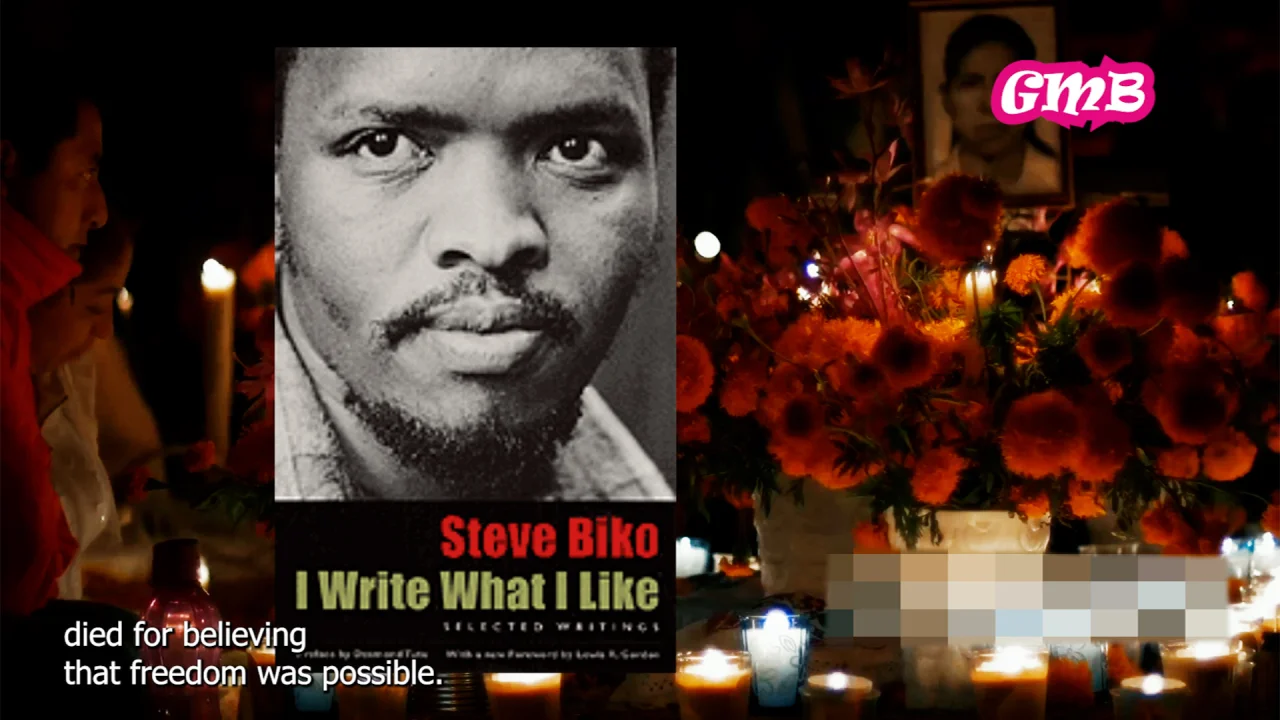
It's January 8th, 2012. The African National Congress is throwing itself a centenary party – 100 years of existence, and they're feeling pretty good about themselves. Meanwhile, I'm sitting here thinking, "You know what? Everyone talks about Mandela – and rightfully so – but what about that other guy? The one who died at 31 but managed to shake an entire system to its core before the world even knew his name properly?" That guy was Steve Biko. And today, I'm going to tell you why his story – and his book – should be on your radar.
Steve Biko's story isn't just a chapter in South African history; it's a testament to the power of ideas to spark a movement and challenge the status quo. Before we dive into the book itself, let's set the stage and understand the context in which Steve Biko emerged as a potent voice for change.
Discover the fire withinSteve Biko's words - "I Write What I Like" on Amazon.
The Story Begins
Imagine South Africa in the 1960s and 70s. If you think today's political climate is messy, imagine a country where your skin color literally determined which bathroom you could use, which job you could have, and whether you could even move from one district to another without government permission. It was like the world's worst game of Simon Says, except Simon was racist and had all the guns.
Enter Steve Biko – born December 18th, 1946, in a little place called Tylden in the Eastern Cape. He was the third kid in the family, probably the one who asked too many questions at the dinner table. In 1966, he went off to study medicine at the University of Natal, probably thinking he'll fix people's bodies. Little did he know he was about to try to fix an entire nation's soul.
Now, here's where it gets interesting. Young Steve looked around at university and saw these white liberal students in organizations like NUSAS – the National Union of South African Students – and he's watching them have their little meetings, nodding seriously about "the black problem" like they're discussing the weather. And Steve's thinking, "Hold up. These people are talking ABOUT us, not WITH us."
So what does he do? In 1968, he and his buddies say, "You know what? We're starting our own organization." And boom – the South African Students' Organisation (SASO) is born.
The Philosophy Takes Shape
But here's where Steve Biko gets really dangerous to the system – not because he's violent, but because he's asking the one question that terrifies oppressive regimes: "What if we stopped asking for permission to exist?"
See, Biko had this wild idea that maybe – just maybe – black South Africans didn't need white people to save them. Revolutionary concept, right? He called it Black Consciousness, and it was basically the ultimate self-help movement, except instead of "think yourself rich," it was "think yourself free."
He looked at these liberal organizations and their approach, and he had some choice words. He wrote: "Nowhere is the arrogance of the liberal ideology demonstrated so well as in their insistence that the problems of the country can only be solved by a bilateral approach involving both black and white."
But wait, it gets better. He absolutely roasted the liberal tea party culture: "As a testimony to their claim of complete identification with blacks, they call a few 'intelligent and articulate' blacks to 'come around for tea at home', where all present ask each other the same old hackneyed question 'how can we bring about change in South Africa?' The more such tea-parties one call the more of a liberal he is and the freer he shall feel from guilt that harness and binds his conscience."
I mean, can you imagine being at one of those tea parties? "Oh yes, Margaret, we had Thabo over for Earl Grey last week. We're practically freedom fighters now!"
And then Biko drops this absolute mic drop: "The liberal must understand that the days of the Noble Savage are gone; that the blacks do not need a go-between in this struggle for their own emancipation."
Ignite your perspective - Get "I Write What I Like" by Steve Biko on Amazon today.
The Movement Expands
So Steve's not content with just student politics. In 1972, he helps found the Black People's Convention – the political wing of his Black Consciousness Movement. He's also working with the Black Community Programme, and they're not just talking revolution; they're building clinics, they're showing people that they can actually DO things for themselves. Imagine that – helping people help themselves. What a concept!
But of course, the apartheid government is watching all this like, "This Biko fellow is getting a bit too uppity for our liking."
Now, here's something fascinating about Biko's approach to religion. The man was religious, but he wasn't having any of this "suffer now, get your reward in heaven" nonsense that was being preached. He looked at Christianity as it was being practiced and said, "Hold up, this doesn't make sense."
He wrote: "The anachronism of a well-meaning God who allows people to suffer continually under an obviously immoral system is not lost to young blacks who continue to drop out of Church by the hundreds."
So what does he do? He advocates for Black Theology. And his vision of Jesus? Not the meek, turn-the-other-cheek figure, but what he called a "fighting God who saw the exchange of Roman money - the oppressor's coinage - in His father's temple as so sacrilegious that it merited a violent reaction from Him - the Son of Man."
Basically, Biko's Jesus was the guy who flipped tables when he saw injustice. I like this Jesus.
Fighting the System
Meanwhile, the apartheid government is trying this brilliant strategy called the Bantustan policy. Picture this: You take 13% of the worst land in the country and tell 80% of the population – all the non-white people – "Here you go! This is your homeland now. You're welcome!"
Some leaders actually bought into this. Guys like Gatsha Buthelezi and Lucas Mangope were like, "Sure, we'll rule these little territories." But Biko saw right through it. He called it what it was – divide and rule. Instead of one united struggle, they wanted separate little struggles that would be easier to crush.
Biko had a different name for South Africa – he called it Azania. Because even the name "South Africa" was colonizer language. The man was thinking decades ahead.
The Crackdown
Now, the government is getting really nervous about this Biko character. They arrest him multiple times, ban him from speaking publicly, restrict him to his hometown of King William's Town. The restrictions were ridiculous – he couldn't talk to more than one person at a time. Literally, if three people were together including Biko, that was considered a crowd. His name couldn't be mentioned anywhere, nothing he wrote could be published. They were trying to erase him from existence while he was still alive.
But before one of his detentions, Biko managed to send a memorandum to an American diplomat, Senator Dick Clark. And he didn't hold back. He wrote:
"Besides, the sin of omission, America has often been positively guilty of working in the interests of the minority regime to the detriment of the interests of black people. America's foreign policy seems to be guided by a selfish desire to maintain an imperialistic stranglehold on this country irrespective of how the blacks were made to suffer."
Even in 1977, Biko was calling out American foreign policy. The man had no chill, and I respect that.
Uncover the powerful ideas that shaped a movement - "I Write What I Like" on Amazon.
The Tragic End
And then comes August 1977. Steve Biko is arrested again. What happens next is the true horror of apartheid laid bare. During interrogation, police officers beat him so severely that he sustains brain injuries. And here's the kicker – after they literally bash his head against the wall, they chain him to a window grille and leave him there to "recover" so they can continue the interrogation later.
On September 11th, 1977, these monsters load him – naked and chained – into the back of a police Land Rover and drive him 1,100 kilometers to Pretoria. Eleven hundred kilometers. That's like driving from New York to Miami, except you're dying in the back of a truck.
Steve Biko died on September 12th, 1977, at age 31. Thirty-one years old.
His death sparked international outrage and led to a UN arms embargo on South Africa. Sometimes it takes a martyrdom to wake the world up.
The Book Revealed
"I Write What I Like" by Steve Biko, published by Picador Africa in 1978, is 244 pages of pure intellectual fire. This isn't just a book – it's a compendium of articles, essays, letters, and memoranda that Biko wrote, compiled after his death in police detention.
The title comes from a column Biko used to write for SASO newsletters under the pseudonym "Frank Talk." And boy, did he talk frankly.
My Thoughts and Analysis
Here's what strikes me about this book: Biko wasn't trying to be Malcolm X or Martin Luther King Jr. He was trying to be Steve Biko, and that was enough to change everything.
The central theme of Black Consciousness is psychological liberation before political liberation. You can't free a people who don't believe they deserve freedom. Biko understood that the most insidious part of apartheid wasn't just the physical oppression – it was the mental colonization that made people accept their oppression as natural.
His critique of liberal involvement is particularly relevant today. He wasn't anti-white; he was anti-paternalism. There's a difference between being an ally and being a savior, and Biko understood that distinction decades before it became part of our modern discourse.
What I find most powerful is his holistic approach. He wasn't just fighting political battles; he was fighting psychological, spiritual, and cultural battles. He understood that true liberation required reimagining everything – from religion to economics to education.
Experience the enduring power of Steve Biko's words - "I Write What I Like" on Amazon.
About Steve Biko
Bantu Stephen Biko was born into a world designed to crush him, and instead, he chose to reshape it. From a small town in the Eastern Cape to becoming one of the most influential thinkers of the 20th century, his journey is remarkable.
He went to university to study medicine but ended up diagnosing the sickness of an entire society. His organizations – SASO, the Black People's Convention, the Black Community Programme – weren't just political groups; they were laboratories for a new way of being human.
The tragedy is that we'll never know what more he could have accomplished. Thirty-one years old. But maybe that's the point – his ideas were so powerful that they outlived him, outlasted apartheid, and continue to influence liberation movements worldwide.
Closing
"I Write What I Like" isn't just a book about South African history. It's a masterclass in revolutionary thinking, in the power of psychological liberation, and in the courage to imagine a world that doesn't exist yet.
If you're interested in understanding how oppression really works – not just the obvious stuff, but the subtle ways it gets into people's heads – read this book. If you want to understand the intellectual foundations of one of the most successful liberation movements in modern history, read this book.
And if you want to understand why a 31-year-old medical student became so dangerous to a system that they had to kill him, definitely read this book.
Steve Biko wrote what he liked, thought what he wanted, and died for believing that freedom was possible. The least we can do is remember why that mattered.
Remember – question everything, especially the systems that tell you not to.
Don't just read history, understand it - Get your copy of "I Write What I Like" on Amazon.