 English
 French
 German
 Russian
 中文
中文

This Book Didn’t Let Me Look Away
I joined the Africa Reading Challenge with good intentions. You know the kind—steady pace, familiar classics, maybe something comforting, something that reminds you why you love African literature in the first place.
And then I picked up this book.
Halfway through, I wasn’t reading anymore. I was standing inside ruined churches. I was listening to survivors speak in half-finished sentences. I was staring at humanity and asking a question I didn’t want to ask:
How does a country lose its mind?
This book didn’t ease me in. It sat me down and said: You wanted African literature? Fine. Now deal with what it has had to carry.
What Kind of Book Is This?
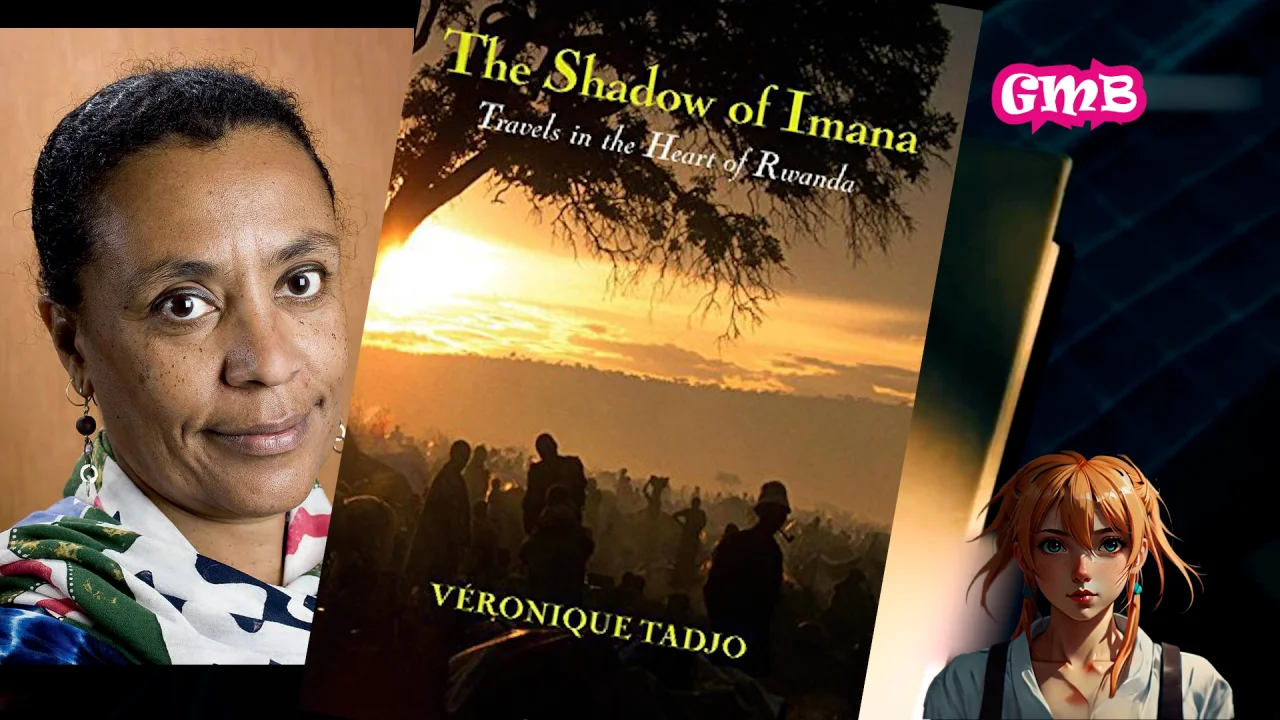
The Shadow of Imana is a non-fiction travelogue—but calling it that feels inadequate.
This is a quiet, devastating meditation on genocide, written in fragments that blur the line between poetry, testimony, and witness.
Tone: Lyrical, mournful, unsettling
Pace: Slow, deliberate
Themes: Memory, identity, colonial legacy, guilt, survival, human cruelty
This book is for readers who:
-
Read to understand the world, not escape it
-
Can sit with discomfort and unresolved questions
This book is not for readers who:
-
Want neat conclusions
-
Prefer emotional distance from history
👉 The edition I read is available here:
The Shadow of Imana on Amazon
Walking Through the Ashes of Rwanda
In 1998, Véronique Tadjo traveled to Rwanda.
Not as a tourist.
Not as a journalist chasing headlines.
Not even with a clear intention to write a book.
She went to understand the unthinkable.
Over a hundred days in 1994, nearly 800,000 people were killed—by neighbors, coworkers, classmates, even relatives. Tadjo walked through the remains of that reality. She spoke to survivors. She visited mass graves. She entered prisons filled with perpetrators.
What she found wasn’t just history.
She found poetry where none should exist.
She found madness that felt terrifyingly familiar.
She found us.
Beauty and Brutality, Side by Side
This is not a book of tidy facts or academic distance.
One section, The Voice, reads like a long, aching poem—whispering loss, betrayal, and grief that refuses to settle. And then, without warning, Tadjo forces you to look directly at the violence.
At the church of Nyamata, she writes of a woman’s body left in a position too horrific to summarize away. Rape. Machetes. A brutality that does not soften itself for the reader.
And yet—this is the disturbing paradox—the language remains lyrical.
The prose is beautiful.
What it describes is not.
That tension never resolves. It isn’t meant to.
Identity as a Weapon
One of the most chilling realizations in this book is how arbitrary the divisions were.
Hutu. Tutsi.
You couldn’t reliably tell the difference by appearance. Centuries of intermarriage had erased physical distinctions.
So the killers asked for identity cards.
Not culture.
Not language.
Not belief.
Paper.
Colonial history plays its familiar role here. Belgian administrators, armed with pseudo-science and racist theories, elevated one group, sowed resentment, and then—when everything collapsed—left.
So did the priests.
So did the international community.
Silence, abandonment, and bureaucracy became accomplices.
Women, Complicity, and the Myth of Innocence
Tadjo refuses comforting myths.
Women were not only victims. Some were perpetrators. Some sang while men killed. Some betrayed neighbors. Some raised machetes themselves.
Not all were forced.
Not all were coerced.
And afterward, justice proved impossible.
With over 130,000 arrests and the capacity to try only 1,000 cases a year, Rwanda faced a grim reality: justice delayed beyond a human lifetime.
What do you do when accountability itself collapses?
This Is Not Just Rwanda’s Story
Tadjo is clear: genocide is not an African anomaly.
It can happen anywhere.
All it takes is:
-
A society divided along identity lines
-
Unequal justice systems
-
Leaders who inflame instead of heal
Genocide doesn’t begin with guns.
It begins with language.
That warning feels uncomfortably current.
The Book That Shook Me
The book is The Shadow of Imana: Travels in the Heart of Rwanda, published in English in 2002 as part of the African Writers Series.
Just 118 pages.
And yet it holds generations of grief.
👉 You can find the same edition here:
The Shadow of Imana – African Writers Series
What Stayed With Me
This book reminded me that numbers numb us.
“800,000” becomes abstract—until you hear a voice. Until you read a name. Until you realize the killers were not monsters.
They were people.
And that truth is more frightening than any horror story.
About the Author: Véronique Tadjo
Véronique Tadjo was born in Paris in 1955 and raised in Abidjan. Her father was Ivorian; her mother, a French artist. She has lived and taught across Africa, Europe, the Americas, and holds a doctorate in African American Studies.
She is also the author of Reine Pokou, winner of the Grand Prix Littéraire d’Afrique Noire.
Her writing is restrained. Thoughtful. And devastating precisely because it refuses spectacle.
My Honest Verdict
This is not an easy book.
It is not comforting.
It is not complete.
But it is necessary.
The Shadow of Imana doesn’t explain genocide away. It doesn’t offer redemption arcs or moral relief. It simply asks you to bear witness—and then leaves you alone with what you’ve seen.
👉 If this feels like your kind of reading, you can find the book here:
The Shadow of Imana on Amazon