 English
 French
 German
 Russian
 中文
中文

A Celestial Summit on Humanity: Reviewing The Parliament of Poets by Frederick Glaysher
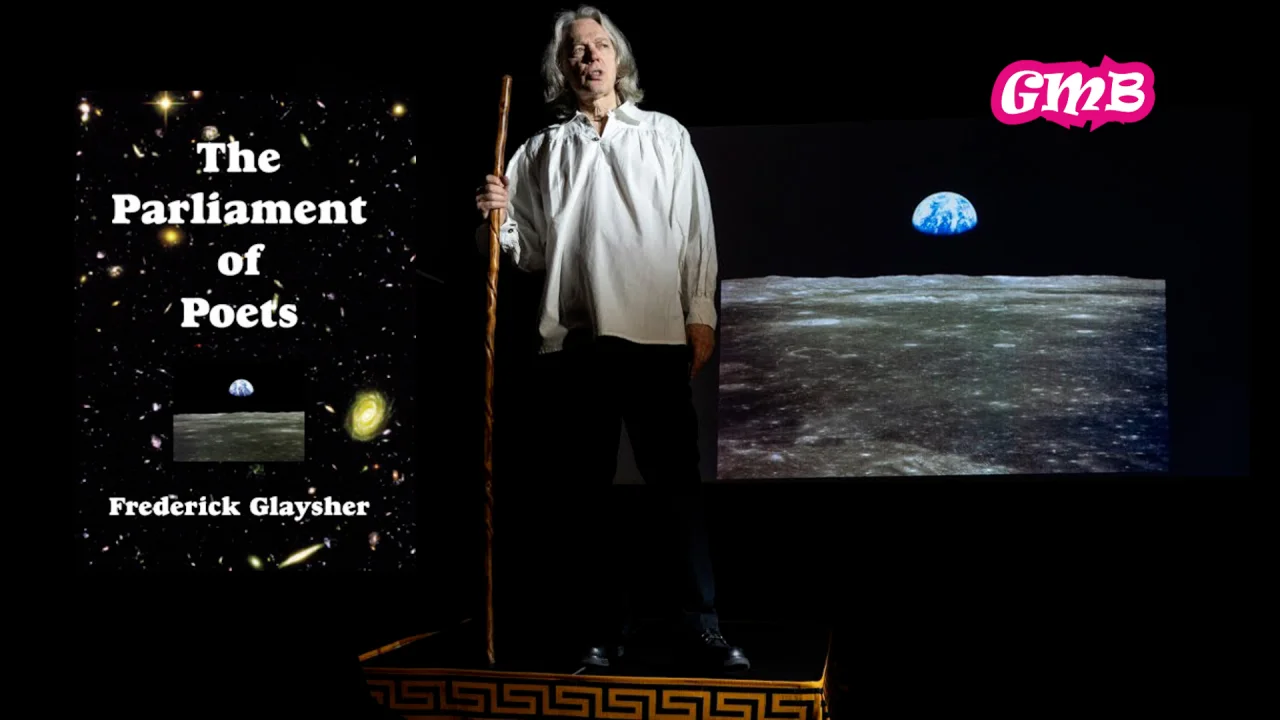
Imagine standing on the moon—not just at the historic Apollo 11 landing site, but in a gathering of history’s greatest literary minds. Shakespeare, Jane Austen, Rumi, African griots, even mythical figures like Merlin and Job, all convened to debate humanity’s failures, from wars to greed to environmental collapse. Sounds like a TED Talk on steroids, right? That’s exactly the journey Frederick Glaysher invites us on in The Parliament of Poets—a cosmic, poetic exploration of what it means to be human in a world teetering on chaos.
This isn’t your average epic poem. It’s witty, urgent, and surprisingly modern, tackling issues that feel more relevant today than ever: the clash of science and religion, corporate greed, moral decay, and the responsibilities of leadership. And somehow, Glaysher manages to do it all across space, time, and culture, with humor and grace.
👉 You can find The Parliament of Poets here on Amazon (paperback edition).
What This Epic Poem Is About
The Parliament of Poets is a reflective, ambitious epic poem that imagines the world’s greatest poets and thinkers convening on the moon to discuss humanity’s greatest challenges. The tone is reflective, sometimes humorous, sometimes chilling, with a moderate pace that allows for deep engagement with each idea.
The book explores themes such as:
-
Science vs. Religion: How progress can become a tool for exploitation rather than enlightenment.
-
Moral Decline and Power: The rise of corporate plutocracy, oligarchs, and leaders indifferent to human welfare.
-
Cultural Unity and Human Identity: African philosophy, the Buddhist concept of Itai Doshin, and the universal threads connecting humanity.
-
Leadership and Responsibility: What it means to serve the people rather than oneself.
This book is for readers who:
-
Enjoy thought-provoking, philosophical literature.
-
Appreciate poetry that blends global voices, history, and mythology.
It’s NOT for readers who:
-
Prefer fast-paced action-driven narratives.
-
Need a clear-cut, happy ending.
A Brief Look at the Story (No Major Spoilers)
The poem begins on the moon, where the Greek god Apollo and the Nine Muses summon poets from every corner of the world to discuss modernity’s dilemmas. The “Poet of the Moon” serves as our guide through this celestial parliament, carrying the voices of both the living and the dead to explore humanity’s triumphs and failures.
Book I, “The Big Questions,” centers on the dangers of unchecked scientific and capitalist ambition. Figures like Cervantes and Samuel Johnson weigh in on humanity’s moral shortcomings, highlighting how greed and shortsightedness have left us teetering on the edge.
Fast forward to Book XI, and the poet travels across Africa with Ezeulu, the priest from Chinua Achebe’s Arrow of God, confronting stereotypes and uncovering a profound understanding of African identity, philosophy, and history. The poem also includes Sogolon’s prophecy, a warning of greed, environmental degradation, and the collapse of communal values—echoing modern crises across the globe.
Why This Poem Matters
What stayed with me long after finishing was the realization that The Parliament of Poets isn’t just about lofty ideas—it’s about choice. Leadership, morality, and community aren’t abstract concepts; they’re decisions that define the future of humanity. Glaysher reminds us, through epic verse, that unity in diversity and respect for all human life are not optional.
The poem seamlessly weaves historical and mythological figures into contemporary concerns, making it both timeless and urgent. It’s a meditation on science, spirituality, and human responsibility, infused with global perspectives and philosophical insight. And yet, it reads beautifully, without ever feeling dense or inaccessible.
My Thoughts & Analysis
Going into this book, I expected something overly academic or impenetrable. Instead, Glaysher’s language flows elegantly, balancing gravitas with readability. The themes resonate deeply—consumerism, environmental destruction, moral decline, race, and identity are all tackled with a poetic lens that encourages reflection rather than judgment.
The central philosophy of the poem—drawing from Ubuntu and Itai Doshin—is clear: “I am because we are.” Humanity is interconnected, and our failures and successes affect everyone. In today’s fractured, chaotic world, this reminder is both timely and necessary.
About the Author
Frederick Glaysher is an American poet and visionary writer who saw the need for a modern epic. His 2012 masterpiece, The Parliament of Poets, spans 294 pages and gathers voices from across time, space, and culture to probe the questions of modernity, morality, and human purpose. Ambitious? Absolutely. Successful? Unequivocally.
👉 You can explore Frederick Glaysher’s work here on Amazon.
Who Should Read The Parliament of Poets
You’ll enjoy this epic poem if:
-
You like literature that challenges your worldview.
-
You enjoy works that blend mythology, history, and contemporary critique.
-
You read to think, not just to escape.
You might struggle with it if:
-
You prefer fast-moving plots or straightforward storytelling.
-
You need clear-cut heroes and villains.
-
You dislike open-ended philosophical questions.
Final Verdict
The Parliament of Poets is bold, intelligent, and surprisingly readable for an epic poem. It reminds us that literature can still be daring and relevant in a world obsessed with brevity and distraction. After reading it, the moon—and humanity—never feels the same again.
For anyone willing to embark on a poetic journey through history, philosophy, and global consciousness, Frederick Glaysher offers a once-in-a-lifetime literary experience.
👉 If this sounds like your kind of read, grab it here on Amazon and take your seat at the ultimate literary parliament.