 English
 French
 German
 Russian
 中文
中文

When Widowhood Becomes a Crime: The Quiet Fury of The Purple Violet of Oshaantu
Some marriages are so bad, you watch them from the outside and start appreciating your own minor inconveniences.
Like, “Yes, my partner forgets anniversaries… but at least they haven’t accused me of witchcraft.”
That’s the kind of uneasy laughter this novel pulled out of me.
I went into this story thinking I was about to read a simple rural drama set in Namibia. What I didn’t expect was the slow, suffocating weight of a community turning against one woman—not because she committed a crime, but because she refused to perform grief the way tradition demanded.
And somewhere between the gossip, the funerals, and the whispers, I realized something uncomfortable:
Sometimes the real villain isn’t one man.
It’s an entire system.
What Kind of Novel Is This?
The Purple Violet of Oshaantu is a quiet, deeply reflective African literary novel about marriage, patriarchy, widowhood, and complicity.
-
Tone: Reflective, grounded, quietly disturbing
-
Pace: Slow to moderate
-
Mood: Intimate, observant, emotionally restrained
-
Themes: Patriarchy, domestic neglect, female solidarity, tradition, injustice
This book is for readers who:
-
Appreciate subtle, character-driven storytelling
-
Enjoy novels that explore gender and social structures
-
Like African rural settings rendered with authenticity
This book is NOT for readers who:
-
Want fast-paced, plot-heavy drama
-
Prefer clear heroes and villains
-
Need emotionally explosive narration
👉 The edition I read is available here:
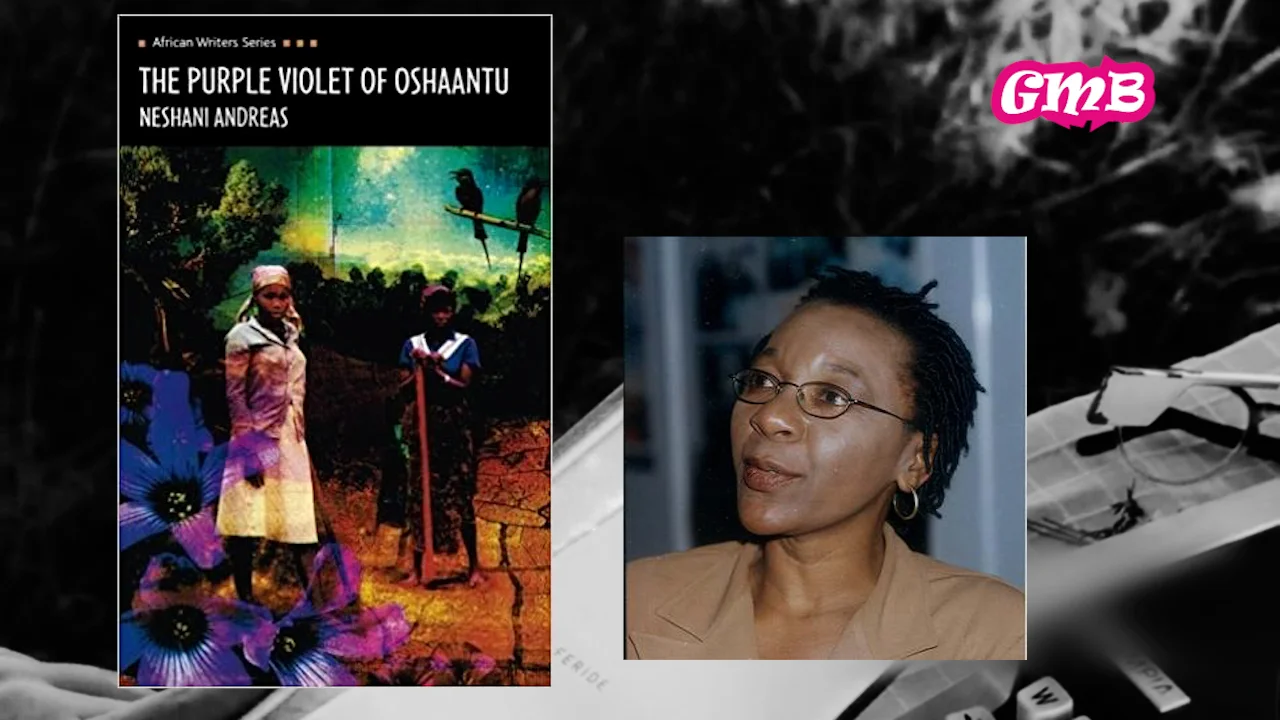
The Purple Violet of Oshaantu – African Writers Series Edition
Why This Story Matters (Emotional Core)
At its heart, this novel asks a painful question:
Why do communities protect harmful men—but police grieving women?
Kauna’s husband, Shange, is not subtle in his cruelty. He disappears for days. Flaunts his mistress. Publicly humiliates his wife. Leaves her emotionally abandoned long before he ever physically dies.
But when he finally drops dead—suddenly, without warning—the focus shifts.
Not to his behavior.
Not to his infidelity.
Not to his neglect.
Instead, all eyes turn to Kauna.
Because she didn’t cry “correctly.”
Because she didn’t wail loudly enough.
Because she looked… relieved.
And that is what lingers long after finishing the novel. The realization that for many women, widowhood is not a time of mourning—it’s a trial. A test. A performance.
The novel doesn’t shout its message. It doesn’t preach. It simply shows how tradition, church authority, inheritance customs, and gossip can quietly form a weapon.
And perhaps most unsettling of all?
Women participate in this policing too.
Mee Ali—the narrator—watches. Observes. Questions. She loves her friend Kauna, but even she sometimes hesitates. And that hesitation feels painfully real.
This story exists because silence exists.
And it refuses to let that silence feel comfortable.
A Glimpse of the Story (No Spoilers)
The novel is set in rural Namibia, in a village where everyone knows everyone’s business.
Kauna marries Shange, a man who initially appears respectable. Over time, he becomes emotionally distant, openly unfaithful, and neglectful. The community normalizes his behavior.
One evening, he returns from his mistress’s house, sits down… and dies.
What follows is not relief—but accusation.
Kauna must navigate suspicion, property disputes, and social humiliation while trying to survive a system designed to strip widows of dignity.
The story is told through her friend Mee Ali, whose own respectful marriage offers a quiet contrast to Kauna’s suffering.
Who This Book Is Perfect For
You’ll enjoy this novel if:
-
You like books that quietly expose social injustice
-
You enjoy African literary fiction with moral depth
-
You read fiction to reflect—not just escape
You might struggle with this book if:
-
You prefer explosive drama over slow realism
-
You need direct access to the protagonist’s inner thoughts
-
You dislike restrained, observational narration
👉 If this sounds like your kind of book, you can find it here:
Get The Purple Violet of Oshaantu on Amazon
The Author Behind the Story
Neshani Andreas was born in Walvis Bay, Namibia, in 1964. She trained as a teacher and worked in education for much of her life.
This was her first—and tragically, only—novel.
It was published in 2001 as part of the African Writers Series, a collection that has introduced generations to powerful African voices.
Andreas passed away in 2011, but this novel remains quietly significant. It captures a slice of Namibian rural life with honesty and restraint. It doesn’t exaggerate. It doesn’t dramatize for spectacle.
It observes.
And sometimes observation is more powerful than outrage.
My Honest Verdict
This isn’t a perfect novel—but it’s an honest one.
What worked:
-
The realism. The social commentary feels organic.
-
The contrast between Kauna’s marriage and Mee Ali’s.
-
The exploration of widowhood customs and inheritance injustice.
-
The portrayal of female solidarity through characters like Mukwankala.
What didn’t fully work for me:
-
I wished Kauna herself narrated the story. I wanted her raw voice.
-
The emotional distance sometimes kept me from feeling the full weight of her suffering.
Still, the themes hit hard.
This is not a loud feminist manifesto.
It’s something more unsettling: a mirror.
Final Thoughts & Recommendation
Reading The Purple Violet of Oshaantu felt like sitting in a village courtyard, listening to gossip that slowly turns into revelation.
It reminded me that patriarchy is rarely maintained by one villainous man. It survives because communities protect it. Because traditions go unquestioned. Because silence feels safer than justice.
If you’re interested in African rural life, gender dynamics, and stories that linger quietly in your mind, this novel is absolutely worth your time.
It’s especially powerful for readers exploring African literature beyond the usual countries and names. Namibia deserves more shelf space. And this book earns it.
👉 If you’d like to read the same edition I did, here’s the link:
The Purple Violet of Oshaantu – African Writers Series Edition
Similar Books You Might Like
-
Nervous Conditions – Another sharp exploration of womanhood and patriarchy in Southern Africa.
-
So Long a Letter – A deeply personal look at marriage, polygamy, and female resilience.
If you’ve ever known a “Shange,” you’ll recognize this world.
And if you haven’t—this book will quietly show you why listening matters.
Keep reading. Keep questioning.