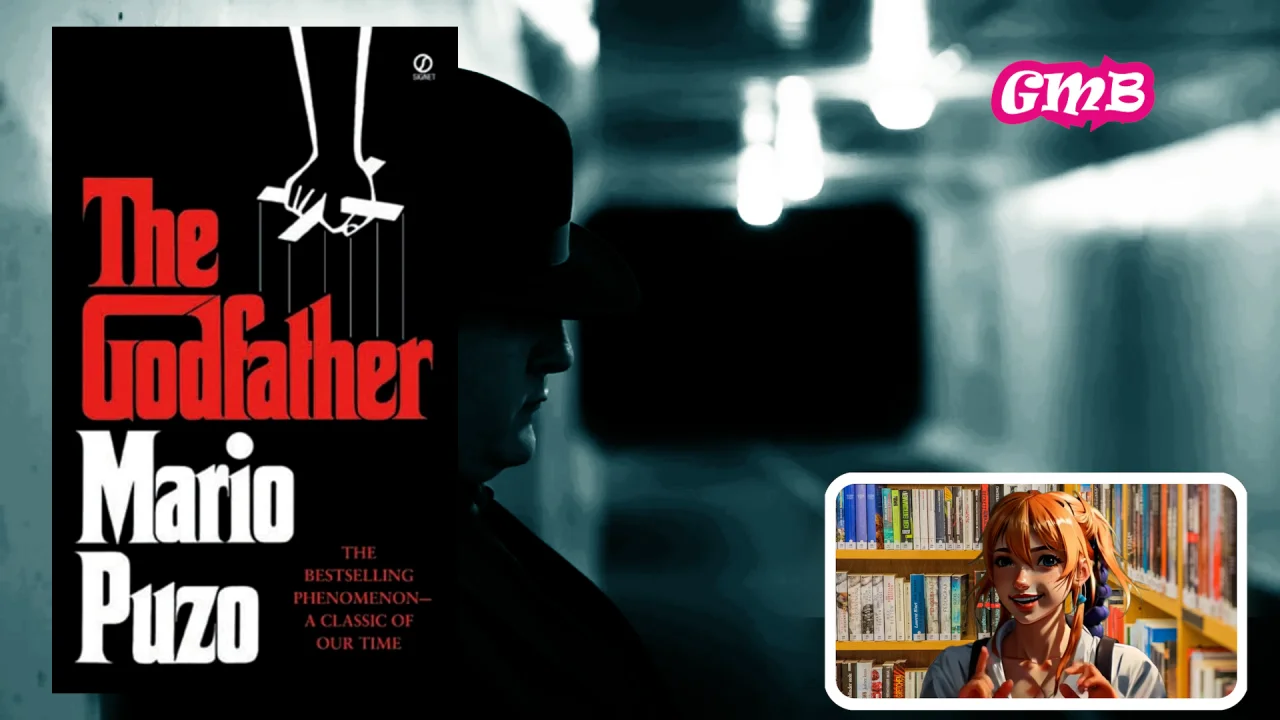
There was a moment while reading this book when I caught myself nodding in agreement… right after someone was marked for death.
That pause stayed with me.
Not because the act shocked me—but because it didn’t. Somewhere along the way, I had started to understand the logic. The justification. The quiet, chilling calm behind decisions that should feel monstrous.
And that’s when it hit me: this story doesn’t just show you crime—it slowly teaches you how to accept it.
Welcome to The Godfather by Mario Puzo.
What Kind of Novel Is This?
This is a crime drama about power, loyalty, and the fragile line between justice and control.
Tone: Dark, reflective, quietly brutal Pace: Moderate, with bursts of intensity Themes: Power, family, loyalty, morality, corruption
At the center of the novel is the Corleone family, led by Don Vito Corleone—a man whose influence stretches far beyond what the law can touch.
When threats begin to close in on the family’s empire, everything starts to shift.
Alliances become fragile. Trust becomes dangerous.
And Michael Corleone—the son who wanted nothing to do with the family business—faces a choice:
Stay clean… or step into a world where power is built on fear, loyalty, and irreversible decisions.
Why This Story Matters
At its core, The Godfather isn’t really about crime.
It’s about how power justifies itself.
The novel forces you to sit with uncomfortable questions:
Is loyalty to family more important than morality?
Can violence ever be justified if it protects the people you love?
And how far would you go… if you truly believed you were right?
What makes this story unsettling is how reasonable everything begins to feel.
The Corleones don’t see themselves as villains. They see themselves as protectors. Providers. Men of honor in a dishonorable world.
And somehow, as a reader, you begin to see it that way too.
That’s the real power of Puzo’s writing.
He doesn’t ask you to forgive these characters. He simply makes sure you understand them.
And once you do, the line between right and wrong starts to blur in ways that linger long after the final page.
Analysis & Review
What Works
The strength of this novel lies in its characters.
Don Vito isn’t just a crime boss—he’s controlled, thoughtful, almost philosophical. There’s a strange dignity to him that makes you respect him, even when you know you shouldn’t.
Then there’s Michael.
His transformation is one of the most compelling arcs in modern fiction. Watching him shift from an outsider to something far more calculating—and far more dangerous—is both fascinating and deeply unsettling.
The writing itself is smooth and immersive. Dialogue feels sharp and natural, and every scene carries weight. You’re not just reading events—you’re sitting in the room, watching them unfold.
And perhaps most impressively, Puzo makes you root for people you would fear in real life.
What Doesn’t Work
At times, the pacing slows, especially when the story drifts into side characters or extended backstories.
Some sections feel less essential than others, and modern readers might find certain parts a bit drawn out.
But even then, these moments often add texture to the world rather than detract from it.
Thoughts on the Film Adaptation
It’s impossible to talk about The Godfather without mentioning the iconic film directed by Francis Ford Coppola.
The movie is legendary—and for good reason.
But the book offers something deeper.
It gives you access to the internal logic of these characters. Their thoughts. Their reasoning. The quiet moments that films can only hint at.
If you’ve only seen the movie, the novel will feel like stepping into a richer, more intimate version of the same world.
Who This Book Is Perfect For
You’ll enjoy this novel if:
You like stories that challenge your sense of morality
This isn’t a perfect novel—but it’s a powerful one.
What worked:
Deep, unforgettable characters
A morally complex narrative that stays with you
Writing that pulls you into a fully realized world
What didn’t:
Occasional pacing issues
Some sections feel longer than necessary
And yet… I still recommend it.
Because books that make you question your own thinking are rare.
And this one does it effortlessly.
Final Thoughts & Recommendation
I started this book expecting a Mafia story.
What I got instead was a quiet, unsettling exploration of power—how it grows, how it protects, and how it changes the people who hold it.
That moment I mentioned at the beginning—when I found myself agreeing with something I shouldn’t—that’s the experience this book offers again and again.
Not loudly. Not dramatically.
But slowly… until you realize you’ve crossed a line you didn’t even see.
If you’re the kind of reader who wants more than just a story—if you want something that lingers, something that challenges you—The Godfather is worth your time.
 English
 French
 German
 Russian
 中文
中文