 English
 French
 German
 Russian
 中文
中文
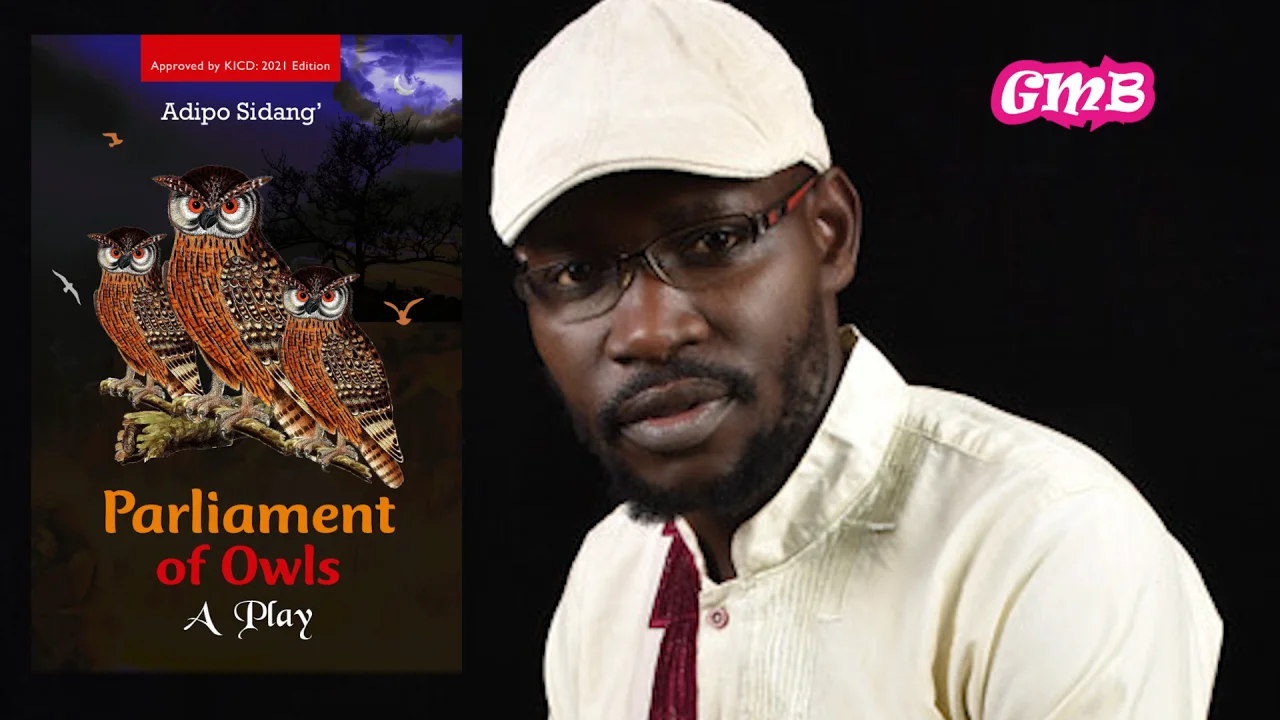
When Owls Become Tyrants: A Savage Review of A Parliament of Owls by Adipo Sidang
Imagine this: you’re a bird. Life is simple. You eat, you chirp, you mind your business.
Then one day, a group of owls shows up, declares themselves the smartest creatures alive, forms a government, and immediately starts stealing everything that isn’t nailed to a tree.
They pass laws you didn’t vote for.
They tell you when you’re allowed to move.
They rob you—and then explain why it’s for your own good.
That’s the world of A Parliament of Owls: A Play by Adipo Sidang, one of the most brutal, hilarious, and unsettling political allegories I’ve read in a long time.
This is not a subtle book.
And thank God for that.
👉 The edition I read is available here:
A Parliament of Owls: A Play – Adipo Sidang (Amazon)
What Kind of Book Is A Parliament of Owls?
This is a political satire / allegorical drama about power, corruption, propaganda, and resistance.
-
Tone: Dark, biting, occasionally funny, deeply unsettling
-
Pace: Moderate, but emotionally heavy
-
Structure: A five-act play that reads smoothly even off the stage
-
Core themes:
-
Abuse of power
-
Propaganda and misinformation
-
Class oppression
-
Resistance and collective action
-
The cost of freedom
-
This book is for readers who:
-
Enjoy political allegory (Animal Farm, The Trial, Wizard of the Crow)
-
Read fiction to think, not just escape
-
Appreciate African literature that doesn’t sugarcoat reality
This book is not for readers who:
-
Want comfort or neutrality
-
Prefer fast, plot-driven thrillers
-
Dislike heavy symbolism
A Glimpse of the Story (No Spoilers)
The story opens at sunset with Osogo, a weaver bird, playing a mourning tune. Thirty-three weaverbirds have been massacred—an event that sets the emotional tone for everything that follows.
The owls, led by King Tula Nyongoro, rule the bird kingdom through fear, propaganda, and absurd laws—most famously the Moonlight Bill, which forbids non-owls from going outside at night.
As corruption deepens, resistance begins to stir.
Artists refuse to comply.
Truth-tellers are silenced.
Propaganda spreads—until it doesn’t.
What follows is not just a political collapse, but a moral reckoning.
Why This Story Hits So Hard
This book doesn’t pretend to be neutral.
Sidang is holding up a mirror—especially to African politics—and saying: Look carefully.
The owls claim wisdom, superiority, and moral authority. In reality, they loot resources, silence dissent, and manipulate truth to stay in power.
Sound familiar?
What makes A Parliament of Owls powerful is that it doesn’t limit itself to one country or one era. This story could belong anywhere power is hoarded by a few while the many are told to be patient.
And the symbolism? Immaculate.
Owls—often symbols of wisdom—are reimagined here as creatures of darkness and bad omen, especially resonant within many African cultural traditions. A parliament of owls sounds legitimate… until you realize it’s governance built on deception.
The Golden Bead, hidden within the Royal Trees, is perhaps the book’s most chilling metaphor: a tool that manipulates perception itself. Control the narrative, and you control reality.
Characters That Feel Uncomfortably Real
Every character is an archetype you recognize instantly:
-
King Tula Nyongoro – the dictator intoxicated by unchecked power
-
Money Bags Owl – the oligarch profiting from state corruption
-
Socialite Owl – politics as performance, laws without substance
-
Red String Owl – the obedient mouthpiece of the regime
-
Arum Tidi – the master of propaganda, turning lies into truth
And on the side of resistance:
-
Iron Lady Owl – moral courage from within the system
-
Oyundi the Fire-finch – small, underestimated, and brilliant
-
Osogo the Weaver Bird – the artist who remembers
-
Tel Tel the Woodpecker – the one who simply refuses to comply
That the revolution is led by a fire-finch, not a powerful bird of prey, is one of the book’s most radical ideas: leadership is not about size or status—it’s about clarity and courage.
Why This Book Matters Right Now
What stayed with me after finishing this book wasn’t the revolution—it was the warning.
Sidang reminds us that freedom is fragile.
That propaganda doesn’t look like evil—it looks like “reasonable explanations.”
That oppressive systems don’t collapse on their own.
And most importantly: resistance is not optional.
This book exists because silence is dangerous.
👉 If this sounds like your kind of read, you can find the book here:
A Parliament of Owls: A Play – Adipo Sidang (Amazon)
About the Author: Adipo Sidang
Adipo Sidang is a Kenyan writer working firmly within the tradition of African political satire—alongside voices like Ngũgĩ wa Thiong’o, Chinua Achebe, and Wole Soyinka.
What sets Sidang apart is his refusal to dilute the message. He critiques power without apology, but he also offers something rare: hope. Change is possible. Unity matters. Truth still has weight.
At 288 pages and structured as a five-act play, A Parliament of Owls is especially powerful when imagined on stage. It’s political theatre in the truest sense.
My Honest Verdict
This isn’t a comfortable book.
It’s not gentle.
And it doesn’t pretend all sides are equal.
But it’s honest—and those books are rare.
What worked:
-
Sharp, fearless allegory
-
Unforgettable symbolism
-
Clear moral vision
What might challenge some readers:
-
Heavy political weight
-
Minimal subtlety
Still, I recommend it—strongly.
Final Thoughts
A Parliament of Owls is a story about birds that refuses to stay fictional.
It’s about power, corruption, resistance—and the quiet courage of saying “no.”
By the time Osogo plays his flute again, you understand what it costs to earn that music.
If you want literature that challenges you, remembers the dead, and dares to imagine justice, this book is worth your time.
👉 You can read the same edition I did here:
A Parliament of Owls: A Play – Adipo Sidang (Amazon)
Be a fire-finch. 🐦🔥