 English
 French
 German
 Russian
 中文
中文

The Fragile Chaos of Love and Society
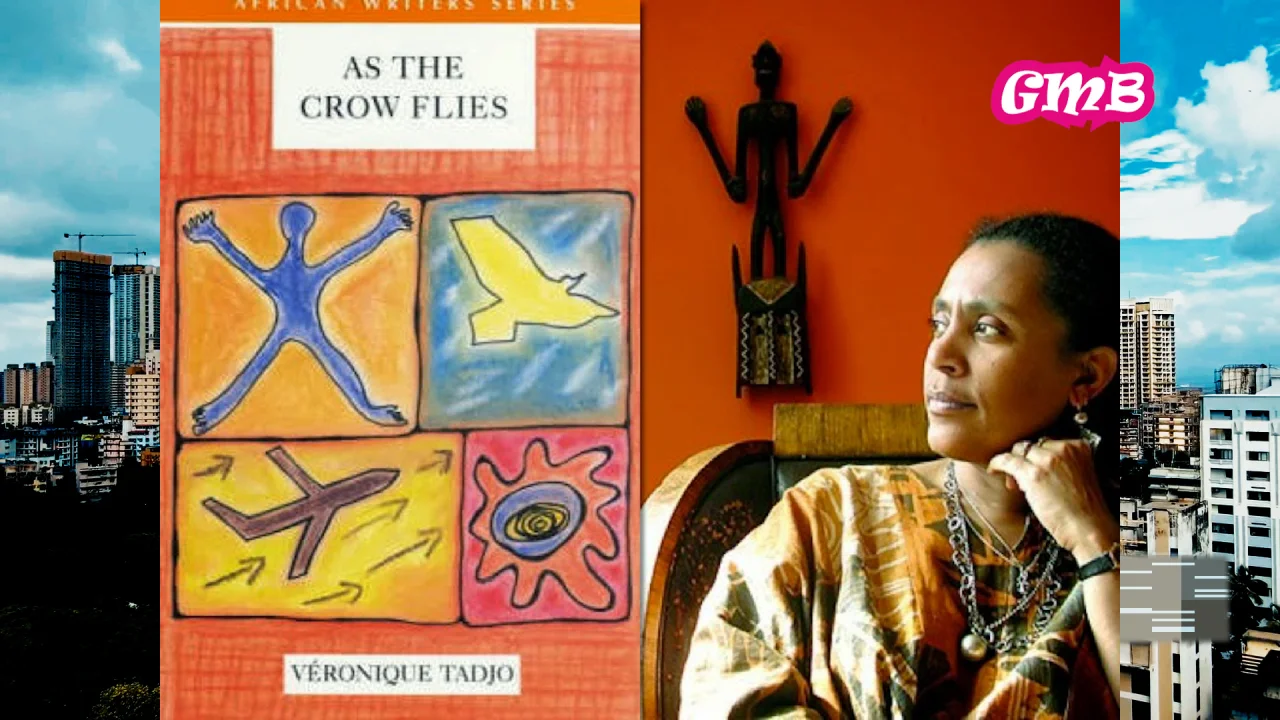
I kept thinking about airports while reading this book.
Not the glamorous version—the Instagram version with rolling suitcases and coffee cups—but the emotional kind. The kind where people arrive carrying unfinished love stories. Where someone lands in a foreign country just to see a person who once meant everything to them… even when logic says they shouldn’t.
Imagine flying halfway across the world to meet a man you once loved.
And then discovering that this man still has a wife. Not an ex-wife. Not a “we’re separated but figuring things out” wife. A real, present, fully-installed wife.
At that moment you have two options: turn around and go home… or stay and confront the messy, uncomfortable truths about love.
The novel that opens with this emotional tension is As the Crow Flies by Véronique Tadjo—a book barely over 100 pages long that somehow manages to explore betrayal, politics, despair, broken cities, and the strange resilience of human affection.
👉 The edition I read is available here:
As the Crow Flies (Amazon)
What Kind of Novel Is This?
This is a poetic literary novel about the fragility of love in a broken society.
Tone: reflective, dark, occasionally haunting
Pace: slow but intense
Themes: love, betrayal, loneliness, corruption, social decay, hope
But calling it a “novel” almost feels misleading.
The story doesn’t move in a straight line. Instead, it unfolds in fragments—like pieces of memory drifting in and out of focus.
One moment you’re inside a crumbling marriage. The next moment you’re witnessing a desperate young woman seeking an abortion. Then suddenly the narrative shifts to a city drowning in corruption—sometimes literally, thanks to a construction disaster involving exploding toilets.
Yes, that actually happens.
This book is for readers who:
-
enjoy poetic, experimental storytelling
-
like fiction that blends social critique with emotional reflection
-
don’t mind fragmented narratives that require patience
This book is NOT for readers who:
-
prefer straightforward plots
-
want clear heroes and villains
-
expect neat endings
👉 The edition I read is available here:
As the Crow Flies
Why This Story Matters (The Emotional Core)
What stayed with me after finishing this book wasn’t a single character or plotline.
It was the feeling that love itself is struggling to survive.
Throughout the novel, Tadjo suggests that modern society has become spiritually exhausted. Relationships break under pressure. Compassion fades. People retreat into their own loneliness.
At one point the narrator observes:
“It is definitely a century that hangs its head in shame… Even love is finding it hard to thrive.”
That line captures the emotional center of the book.
This is not just a story about romantic failure. It’s about a world where empathy itself is collapsing.
In Tadjo’s city, wealth and misery live side by side. Glittering lights illuminate neighborhoods where children sleep on the streets. Political leaders hoard power while ordinary people lose hope.
And love—whether romantic, familial, or social—keeps breaking under the strain.
The novel introduces us to:
-
a woman returning to the man she once divorced
-
a pregnant girl searching for help
-
a young man whose heartbreak turns into bitterness
-
a boy visiting his dying mother
-
an old beggar willing to kill just to keep his spot on the street
Each story reveals another fracture in the moral structure of society.
Yet Tadjo refuses to abandon hope completely.
At one point, the narrator pleads with a man who wants to punish women for his heartbreak:
“Love is the colour of hope. Bitter today, sweet tomorrow.”
That line feels like the book’s quiet rebellion against despair.
Even in a damaged world, tenderness still matters.
A Glimpse of the Story (No Spoilers)
The novel begins with a woman whose marriage has collapsed.
She once believed love could survive a complicated arrangement—sharing a husband who already had another wife. At first she tried to accept the situation. But slowly the relationship suffocated under silence and disappointment.
Eventually she files for divorce.
Yet years later she finds herself traveling back to the same man.
Around this central thread, Tadjo weaves many other stories: broken relationships, wounded families, political corruption, and a city where beauty and decay exist side by side.
Each fragment raises the same unsettling question:
Can love survive in a world that seems determined to destroy it?
Who This Book Is Perfect For
You’ll enjoy this novel if:
-
you like fiction that asks difficult questions about society
-
you enjoy poetic storytelling that blends realism with symbolism
-
you read literature to reflect on life, not just escape it
You might struggle with this book if:
-
you prefer fast-paced plots
-
you want a traditional beginning-middle-end narrative
-
you dislike stories that leave emotional questions unresolved
👉 If this sounds like your kind of book, you can find it here:
As the Crow Flies
My Honest Verdict
This isn’t an easy novel.
The fragmented structure can feel disorienting at first. Just when you start following one storyline, the narrative suddenly shifts somewhere else.
But that chaos is deliberate.
Tadjo isn’t trying to tell one story. She’s trying to capture the emotional noise of modern life—the overlapping tragedies, hopes, and contradictions that define our world.
What worked for me:
-
the poetic language
-
the sharp social commentary
-
the emotional honesty about love and disappointment
What didn’t always work:
-
the sudden narrative shifts can feel confusing
-
some fragments end so abruptly that you wish they continued
Still, the book leaves a powerful impression.
This isn’t a perfect novel—but it’s a fearless one.
And those are rare.
About the Author
Véronique Tadjo is a poet, novelist, and academic from Côte d’Ivoire whose work often explores memory, trauma, and human resilience.
She is also the author of The Shadow of Imana, a powerful reflection on the Rwandan genocide.
Across her writing—whether fiction or nonfiction—Tadjo consistently confronts difficult truths about humanity while still searching for moments of hope.
Final Thoughts
When I finished this book, I kept thinking about that airport again.
About the woman who returns to a man she once left.
Not because the situation makes sense—but because human emotions rarely do.
That’s what As the Crow Flies captures so well: the way love, regret, anger, and hope all collide inside the same fragile heart.
It’s a short book. You could read it in an afternoon.
But the ideas inside it will probably stay with you much longer.
👉 If you’d like to read the same edition I did, you can find it here:
As the Crow Flies
Similar Books You Might Like
-
The Shadow of Imana – Tadjo’s haunting reflection on memory and genocide
-
Works by Mia Couto – for readers who enjoy poetic African prose