 English
 French
 German
 Russian
 中文
中文

Stop Being Fragile: Why Antifragile Will Change How You See Life, Economics, and Risk
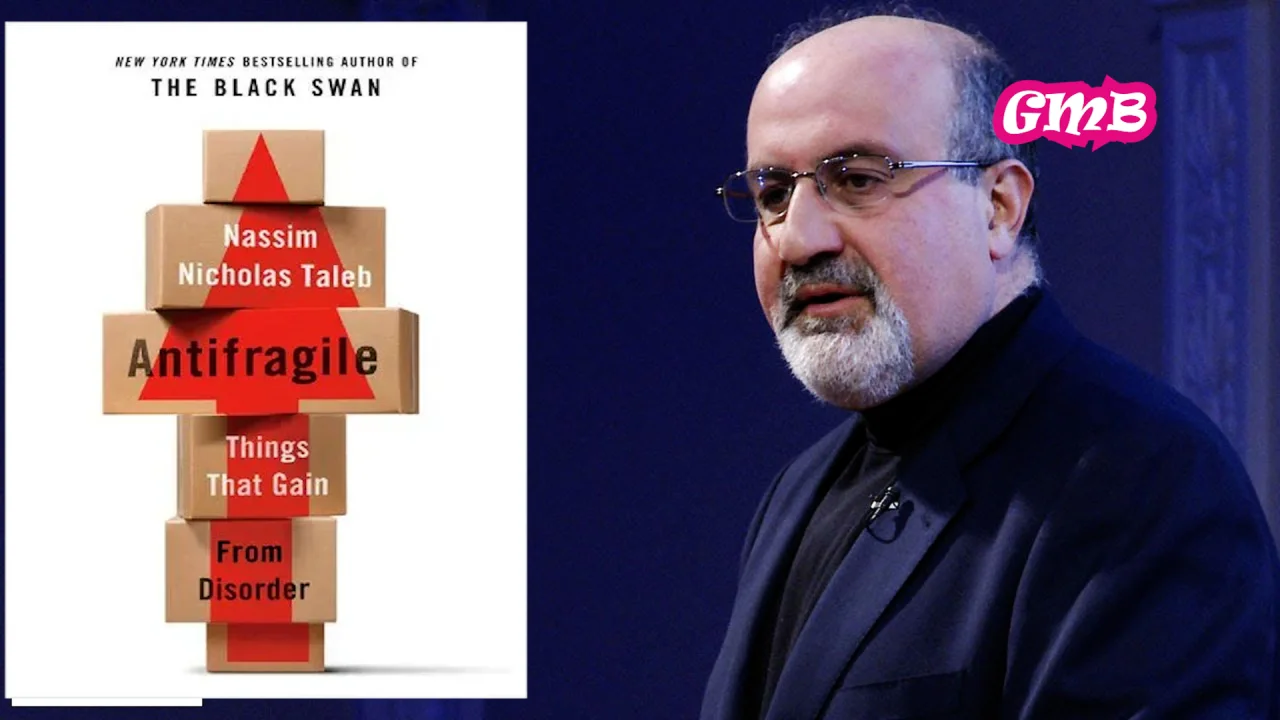
You know, sometimes life reminds me of being a turkey. Bear with me. Imagine waking up every day to food, water, and maybe even a gentle pat on the head. For 999 straight days, everything seems perfect. You strut around thinking, “I must be the luckiest turkey alive!” And then comes day 1000—the day before Thanksgiving. Suddenly, what felt like stability turns out to be fragile. That’s the kind of story Nassim Nicholas Taleb thrives on, and it’s exactly where his book Antifragile: Things That Gain from Disorder takes off.
This is the second major work in Taleb’s celebrated Incerto series, following The Black Swan. If The Black Swan explored rare, unpredictable events that shake the world, Antifragile flips the question: how can we thrive in the chaos, instead of collapsing under it?
👉 Grab your copy of Antifragile on Amazon here
What Kind of Book Is Antifragile?
Antifragile is a provocative, philosophical, and deeply analytical work that sits at the intersection of economics, philosophy, and practical wisdom.
-
Tone: Reflective yet sharp, with humor and streetwise skepticism
-
Pace: Moderate, with moments of technical depth
-
Themes: Fragility vs. antifragility, unpredictability, decentralization, risk, and the necessity of “skin in the game”
This book is for readers who:
-
Want to rethink risk, uncertainty, and personal growth
-
Enjoy philosophical reflections combined with practical examples
It’s not for readers who:
-
Prefer light, fast-paced narratives
-
Need neatly packaged conclusions with predictable outcomes
A Quick Look at the Idea
Taleb argues that most of us live like our turkey friend—chasing stability, smoothing over bumps, and suppressing variability. But when true shocks come—what he calls Black Swans—we’re ill-prepared.
Here’s the key: being antifragile isn’t about surviving shocks. That’s robustness. Antifragile systems actually benefit from them. Stress, variability, randomness—these are fuel, not threats. Taleb puts it bluntly: “What kills me makes others stronger.”
He divides the world into two realms:
-
Mediocristan: Small, predictable events. Think gaining or losing a pound, a restaurant closing, a canceled dinner.
-
Extremistan: Rare, massive events with outsized consequences—like the Great Depression, 9/11, or the Titanic sinking.
Most experts, the “fragilistas,” live in Mediocristan fantasies. They make models, forecasts, and neat charts. When Extremistan events hit, they shrug and claim surprise. Taleb’s point: you can’t predict these events—but you can build systems that gain from them.
Antifragility in Nature and Systems
Taleb loves examples:
-
Evolution: One animal dies, another learns. One tree collapses in a storm; another thrives from the nutrients.
-
Aviation: Every plane crash leads to safer designs.
-
The Titanic: A tragedy that reshaped shipbuilding safety standards.
In human systems, though, we suppress small failures. Governments bail out banks, economies are smoothed over, and mistakes pile up. One day, the whole system explodes. Taleb’s radical solution? Let small failures happen—especially in economics and politics—so that systems can learn and grow stronger.
Banking and Economics
Taleb compares the banking sector to restaurants: restaurants fail, but the industry survives and thrives because failures weed out bad ideas. Banks, however, are often bailed out. Small mistakes are hidden, errors multiply, and eventually a systemic crisis erupts.
Real-World Examples
-
Ghana: Subsidized petroleum prices created temporary stability but ultimately led to power shortages and inflation when subsidies ended abruptly.
-
Middle East: Post-9/11 policies suppressed volatility but strengthened extremist movements, culminating in larger Extremistan events.
Taleb calls these harmful interventions Iatrogenics—when the “cure” causes more damage than the problem.
Fragilistas and Skin in the Game
Who bears the consequences of these failures? Not the experts. Fragilistas often escape losses while society pays the price. Taleb’s solution: skin in the game. If you reap the benefits, you must also bear the risks.
An Akan proverb captures this perfectly: “If the chief does not go to war, the servant stays behind.” Leadership demands shared risk—both the upside and the downside.
Practical Solutions: Decentralization and Volatility
Taleb advocates:
-
Smaller, local systems over centralized, top-down structures
-
Exposure to small failures to avoid catastrophic collapses
-
Allowing businesses and banks to fail naturally
-
Embracing volatility as a source of strength
In life, this principle is everywhere. Your body grows stronger under stress, your mind learns from setbacks, and your communities thrive when small mistakes are allowed and learned from.
What I Loved About This Book
Antifragile isn’t just a guide for economists or policymakers. It’s a philosophy for life: stop seeking excessive comfort, accept uncertainty, and build resilience that actually benefits from disorder.
Even if you skip the mathematical chapters, Taleb’s wit, analogies, and memorable characters—like Fat Tony and Dr. John—make the book unforgettable.
About the Author
Nassim Nicholas Taleb is as bold as his ideas. Born in Lebanon, trained in mathematics and philosophy, and a former options trader, Taleb blends finance, history, philosophy, and streetwise skepticism like no other. He has no patience for intellectual fraud, and his alter ego Fat Tony is a constant reminder to question authority and think for yourself.
Final Thoughts: Why You Should Read Antifragile
If you’ve ever felt like the turkey—safe, predictable, unaware that day 1000 might be coming—Antifragile is a wake-up call. It challenges you to embrace uncertainty, stop chasing false stability, and build systems, habits, and communities that grow stronger under stress.
This isn’t a light read. It’s challenging, sometimes abrasive, but always thought-provoking. And in a world increasingly defined by volatility, it’s essential.
👉 Get Antifragile here on Amazon
You’ll finish it thinking differently about risk, life, economics, and how to survive—and thrive—in a world that refuses to stay predictable.