 English
 French
 German
 Russian
 中文
中文

The Quiet Brutality of Love and Caste: Why The God of Small Things Still Hurts to Read
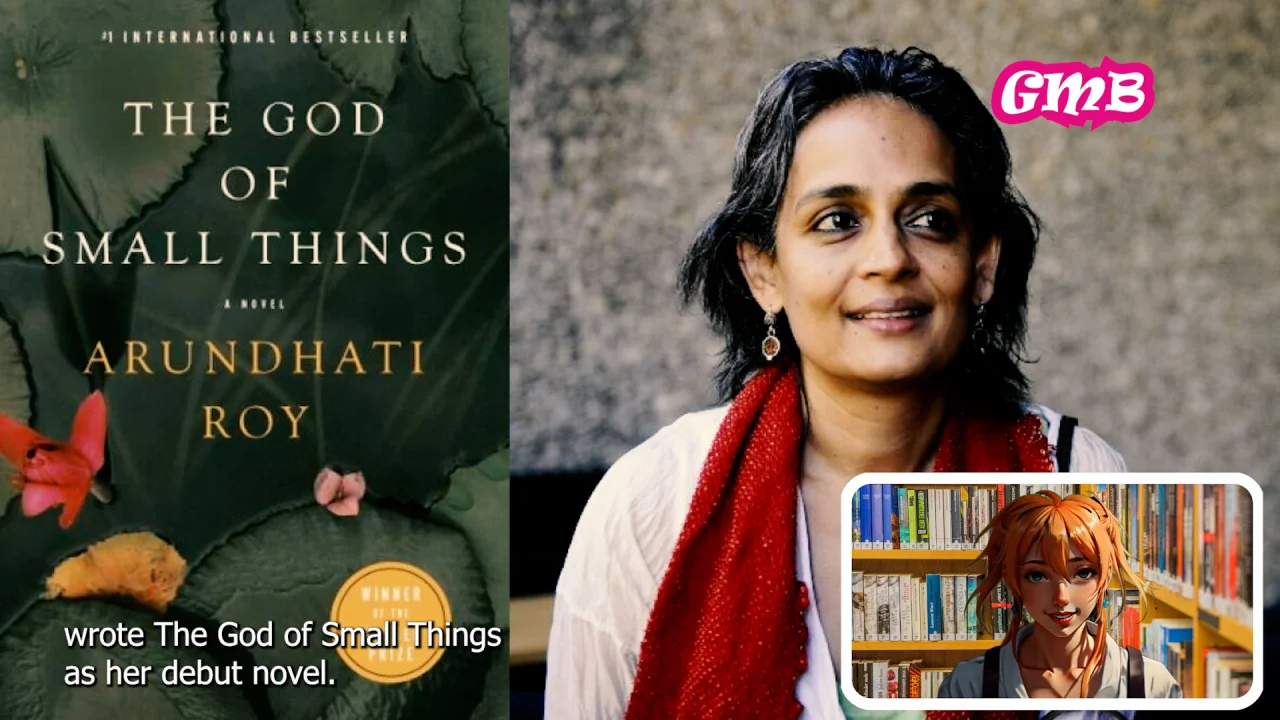
There was a moment while reading this novel when I had to stop.
Not because the writing was difficult. Not because the plot was confusing.
But because something about the quiet cruelty of it all felt too real.
It’s the moment when you realize that the tragedy in this story isn’t some grand disaster. It’s not war. It’s not famine. It’s not even a villain twirling a mustache.
It’s something smaller.
A careless lie.
A bitter grudge.
A social rule nobody questions.
And suddenly you understand that the lives of two children are about to collapse because of a handful of “small things.”
That’s the emotional territory of The God of Small Things by Arundhati Roy — a novel that begins gently, almost playfully, and slowly tightens until it becomes impossible to breathe.
What Kind of Novel Is This?
This is a literary tragedy about love, power, and the quiet violence of social rules.
Tone: reflective, haunting, and quietly devastating
Pace: slow but deliberate
Themes: caste, family, memory, betrayal, childhood trauma, forbidden love
This book is for readers who:
-
Love literary fiction that digs into emotional and social complexity
-
Enjoy novels that unfold through memory and shifting timelines
-
Appreciate language that feels poetic and experimental
This book is NOT for readers who:
-
Prefer fast-paced plots
-
Want clear heroes and villains
-
Need stories to wrap up neatly
👉 The edition I read is available here:
The God of Small Things by Arundhati Roy – [Amazon Edition]
Why This Story Matters (The Emotional Core)
What makes this novel so powerful is not the tragedy itself.
It’s the system behind the tragedy.
The story quietly exposes how societies decide who deserves protection and who can be sacrificed.
At the center are fraternal twins, Estha and Rahel. They grow up in a complicated family in Kerala, India — a world where hierarchy quietly shapes every interaction. Men are valued more than women. Respectability matters more than truth. And the caste system quietly dictates who is allowed to love whom.
Their mother, Ammu, is already an outsider in her own home. She’s divorced — something that carries enormous stigma in her community. While her brother Chacko enjoys privilege and authority, Ammu is treated like an inconvenience.
And then she commits what society considers an unforgivable crime.
She falls in love.
But the man she loves, Velutha, belongs to the Untouchable caste — the lowest social position in the traditional caste hierarchy.
Their relationship is tender, secretive, and doomed from the beginning.
Because systems built on inequality cannot tolerate love that crosses their boundaries.
And when that system decides to punish someone, it rarely stops at the guilty. It destroys everyone in its path.
The real victims of this story are not just Ammu and Velutha.
They are the children.
Estha and Rahel become witnesses to betrayal, manipulation, and cruelty they cannot possibly understand. By the time the novel finishes, their childhood has been stripped away piece by piece.
What stayed with me after finishing this book wasn’t just the tragedy.
It was the question the novel leaves hanging in the air:
How many lives are quietly destroyed just to preserve social order?
A Glimpse of the Story (No Spoilers)
The novel begins in the lush town of Ayemenem in Kerala.
Estha and Rahel grow up in a complicated household dominated by relatives who carry old resentments and rigid beliefs. Their mother Ammu struggles to find dignity and independence in a world that has already judged her.
When their cousin Sophie Mol arrives from England, the family celebrates her visit as something special.
But beneath the surface, tensions are already simmering.
A forbidden romance is unfolding in secret. Old grudges are waiting for an opportunity to strike. And one terrible night on a river changes everything.
From that moment forward, the lives of the twins fracture — and the consequences follow them into adulthood.
Who This Book Is Perfect For
You’ll enjoy this novel if:
-
You like stories that explore the emotional scars of childhood
-
You enjoy lyrical, unconventional storytelling
-
You read fiction to understand people and societies more deeply
You might struggle with this book if:
-
You prefer fast-moving plots
-
You want clear moral resolutions
-
You dislike nonlinear narratives
👉 If this sounds like your kind of book, you can find the same edition here:
The God of Small Things by Arundhati Roy – [Amazon Edition]
My Honest Verdict
This isn’t an easy novel.
The narrative jumps between past and present. The language sometimes mimics the perspective of children, playing with sound, spelling, and rhythm in ways that can feel unusual at first.
But once you settle into Roy’s style, the writing becomes one of the book’s greatest strengths.
She captures childhood in a way that feels startlingly authentic — the strange logic, the imaginative leaps, the way children notice details adults ignore.
What worked:
-
The emotional depth of Estha and Rahel
-
Roy’s lyrical, distinctive prose
-
The fearless critique of caste and patriarchy
What didn’t always work for me:
-
The nonlinear structure can occasionally feel disorienting
-
Some readers may find the pacing slow
Still, the emotional impact of the story is undeniable.
This isn’t a perfect novel — but it’s an unforgettable one.
Final Thoughts & Recommendation
Long after I finished The God of Small Things, the feeling of the story stayed with me.
Not the plot.
The weight.
This is a novel about how systems of power quietly crush the vulnerable, and how children often pay the highest price for the decisions of adults.
The title itself says everything.
Life isn’t destroyed only by dramatic events. Sometimes it’s undone by tiny moments — a lie told at the wrong time, a cruel decision made out of spite, a rule nobody dares challenge.
Those are the small things that end up shaping entire lives.
And that’s why this book lingers.
👉 If you’d like to read the same edition I did, you can find it here:
The God of Small Things by Arundhati Roy – [Amazon Edition]
Similar Books You Might Like
If this novel resonates with you, you might also enjoy:
-
A Fine Balance by Rohinton Mistry
-
Midnight's Children by Salman Rushdie
Both explore how personal lives become entangled with social and political forces.
Best Format to Read This Book
Paperback or Kindle
The language is dense and lyrical, and having the ability to pause, reread, and reflect makes the reading experience richer.