 English
 French
 German
 Russian
 中文
中文

When Literature Starts Killing: A Book Club Gone Terrifyingly Wrong
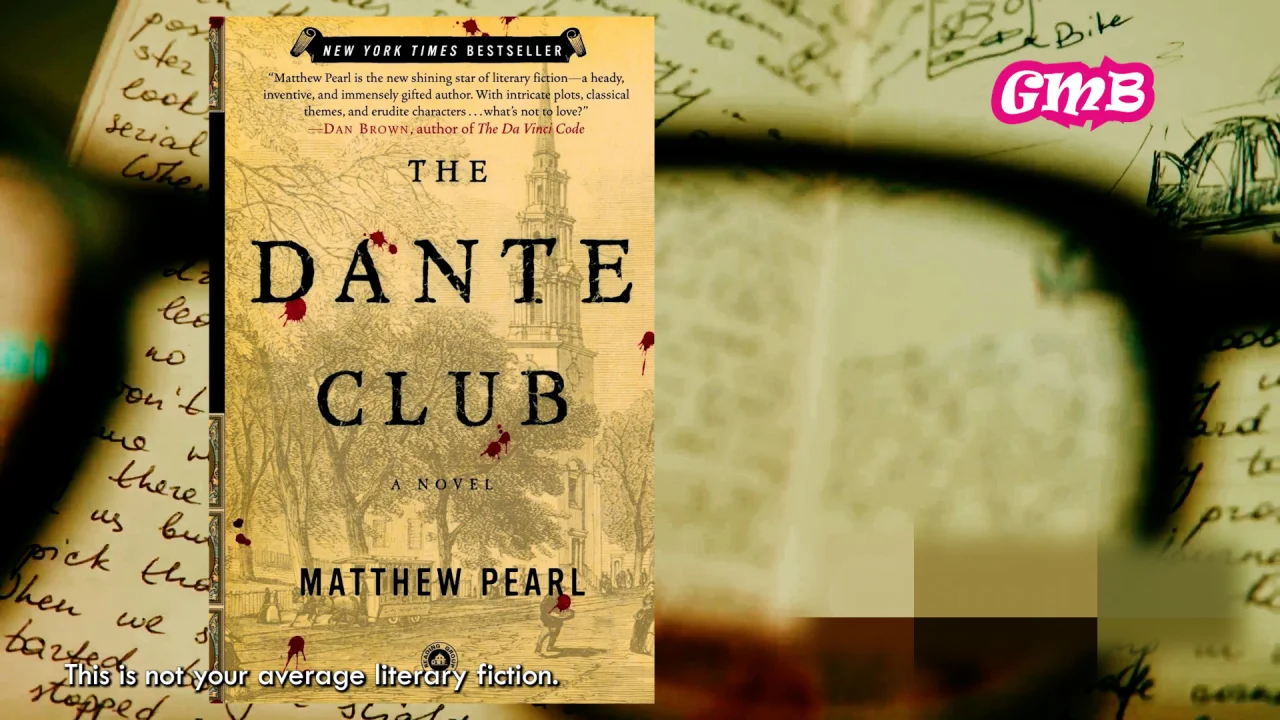
There’s a moment early in this book where I stopped and thought: wait… are we really turning poetry into murder weapons now?
Because what begins as a quiet, almost melancholic image—a grieving scholar translating a centuries-old poem—slowly mutates into something far darker. You think you’re settling in for a historical novel about literature… and then suddenly, someone is reenacting hell on earth.
That’s the unsettling brilliance of The Dante Club by Matthew Pearl—a story that asks a strange, uncomfortable question: what happens when people take literature too seriously?
Intro: A Literary Experiment Turns Deadly
Set in post-Civil War Boston, the novel follows real historical figures like Henry Wadsworth Longfellow, Oliver Wendell Holmes Sr., and James Russell Lowell—men who, in reality, helped introduce Dante’s work to America.
But Pearl imagines something else happening alongside that translation project: a series of gruesome murders inspired directly by Dante's Inferno.
It’s historical fiction, yes—but also a literary thriller with teeth.
👉 The edition I read is available here:
https://amzn.to/4aaymv7
Summary: A City, A Poem, and a Killer Who’s Paying Attention
Boston, 1865. The war is over, but tensions linger—socially, politically, and intellectually.
At the center of it all is Longfellow, still mourning his wife, who gathers a group of elite thinkers—The Dante Club—to translate Dante’s Divine Comedy into English. It’s a bold cultural project, but one that Harvard’s conservative establishment strongly resists.
Then the murders begin.
A judge is found dead in a way that mirrors Dante’s punishments. Then a reverend. Then another victim—each death echoing a specific canto from Inferno.
The connection becomes impossible to ignore: someone is using Dante as a blueprint for justice.
Now, these scholars—more comfortable with metaphors than murder—must step into unfamiliar territory. With the help of Nicholas Rey, a marginalized police officer, they race to decode the killings before the next “punishment” is carried out.
Analysis & Review: Where Poetry Meets Blood
What makes The Dante Club so compelling is how confidently it blends two very different worlds: high literature and crime fiction.
On one hand, this is a deeply intellectual novel. Pearl doesn’t shy away from literary discussions, historical detail, or the cultural resistance to foreign ideas. You feel the weight of academia, the elitism, and the fear of change.
On the other hand, it’s genuinely suspenseful.
The murders are disturbing—not just because of their brutality, but because they mean something. They’re symbolic. Intentional. Almost philosophical.
And that’s where the book really works: it forces you to confront the idea that literature isn’t harmless. That stories—especially ones about morality and punishment—can shape how people see justice.
What Works
-
The Concept: A killer inspired by Dante is already intriguing. But placing that idea in a historical setting, with real literary figures? That’s what elevates it.
-
Atmosphere: Boston feels alive—cold, tense, and divided. You can almost feel the resistance to change in the air.
-
Themes: Censorship, elitism, the power of art—these aren’t just background ideas. They drive the entire narrative.
What Doesn’t Fully Land
-
The Pacing: While generally engaging, there are moments where the historical detail slows things down.
-
Character Distance: Because many characters are based on real figures, they sometimes feel more observed than deeply felt. You admire them—but don’t always connect with them.
Still, these are small trade-offs for a novel that dares to do something this unusual.
Conclusion & Recommendation: Who Should Read This?
The Dante Club is not a casual read—but it’s a rewarding one.
You’ll enjoy this book if:
-
You love stories where ideas matter as much as action
-
You’re drawn to historical settings with real intellectual weight
-
You enjoy mysteries that make you think, not just guess
You might struggle with it if:
-
You prefer fast-paced, action-heavy thrillers
-
You don’t enjoy literary references or historical context
-
You want simple, clear-cut heroes and villains
👉 If this sounds like your kind of book, you can get it here:
https://amzn.to/4aaymv7
Final Thoughts: A Strange, Intelligent, Unforgettable Novel
This isn’t a perfect novel—but it’s an ambitious one.
And ambition like this is rare.
What stayed with me wasn’t just the mystery—it was the idea that books can outlive their time, take on new meanings, and even be twisted into something dangerous. That a poem written centuries ago could still influence how people think about justice, morality… even violence.
It brings you back to that quiet, unsettling question from the beginning:
What happens when someone reads a book—and doesn’t stop at understanding it, but decides to act on it?
👉 If you’d like to read the same edition I did, here’s the link:
https://amzn.to/4aaymv7
Similar Books You Might Like
-
The Name of the Rose – another intellectual mystery rooted in literature and history
-
The Shadow of the Wind – a love letter to books with a haunting edge
Best Format to Read This Book
Paperback works best here. The density of ideas and references makes it easier to pause, reflect, and even flip back when needed—something you’ll likely want to do.