 English
 French
 German
 Russian
 中文
中文

Love, Death, and the Cost of Silence in Rural Zimbabwe
There’s a moment in this novella when I had to close the book and just sit there.
Two young people are dead. Not because of war directly. Not because of famine. Not even because of colonial soldiers marching through a village. But because of pride. Because of fear. Because of a father who couldn’t bend.
And I kept thinking: how many tragedies begin like that? Not with guns—but with silence, ego, and the need to control?
In just over a hundred pages, this story gave me more sorrow than some 500-page epics. And yet, it never felt melodramatic. It felt quiet. Inevitable. Like a shadow slowly stretching over a village at dusk.
This is not a loud book.
It’s a haunting one.
What Kind of Novel Is This?
This is a lyrical postcolonial tragedy about love, alienation, and the psychological wreckage of colonialism.
Tone: reflective, somber, poetic
Pace: slow but steady
Themes: conflicted loyalty, colonial hangovers, forbidden love, exile, memory, guilt
This book is for readers who:
-
Appreciate poetic prose more than fast-moving plots
-
Enjoy morally complex characters
-
Want fiction rooted in African political history
This book is NOT for readers who:
-
Need clear heroes and villains
-
Prefer action-driven storytelling
-
Avoid emotionally heavy narratives
👉 The edition I read is available here:
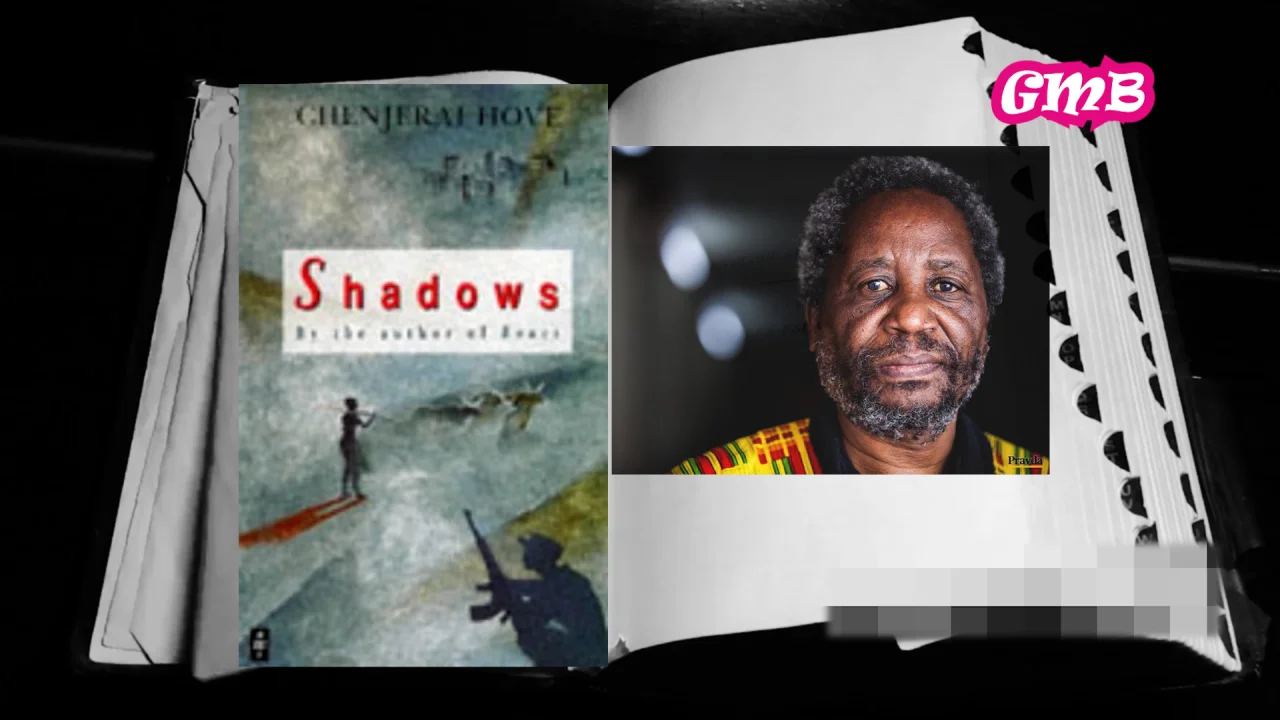
Shadows by Chenjerai Hove (African Writers Series edition)
Why This Story Matters (Emotional Core)
On the surface, Shadows is about forbidden love.
But beneath that, it’s about something far more unsettling: what happens to ordinary people caught between power structures they do not control.
Johana’s father is not a monster. That’s what makes this story painful. He is proud, insecure, ambitious, confused. He basks in the praise of colonial authorities yet fears the guerrillas in the bush. He doesn’t fully belong to either side. He floats in the murky in-between.
And that “in-between” space is where the real tragedy lives.
He beats the boy his daughter loves—Marko—almost to death. Marko hangs himself. Johana takes poison. The village fractures. Later, the father himself is branded a traitor and hunted down.
The revolution devours him just as surely as colonialism shaped him.
What stayed with me wasn’t the deaths. It was the ambiguity. The refusal to give us a clean moral conclusion.
Is Johana’s father a villain?
A victim?
Both?
The novel refuses to answer.
And maybe that’s the point.
In times of political upheaval, people are rarely purely good or purely evil. They are afraid. They are compromised. They make terrible choices out of love, pride, or confusion.
Shadows feels painfully relevant because history still creates these in-between people—those who don’t shout loudly enough for either side and are punished by both.
A Glimpse of the Story (Minimal, No Spoilers)
Johana grows up herding cattle, doing “boy’s work,” resisting the classroom. She falls first for a mysterious boy who disappears, then for Marko—a refugee from another land who sees her clearly and loves her deeply.
Her father disapproves.
Violence follows.
Their private tragedy unfolds against the backdrop of Zimbabwe’s liberation struggle, where neutrality is dangerous and silence is suspicious.
Love becomes political whether it wants to or not.
And everyone pays a price.
The Psychological Trap of Colonial Praise
One of the most powerful scenes in the novel is when Johana’s father recalls how a white agricultural officer praised him as a “master farmer.” He glows with pride, remembering how his name danced on the white man’s tongue.
It’s a moment both satirical and tragic.
Because you can feel how deeply he craves validation.
That praise becomes a trap. It shapes his identity. It distances him from others. It places him in a psychological prison where approval from power feels like success.
This is where Hove’s genius lies.
He doesn’t shout about colonial damage. He shows it—quietly, internally, spiritually.
A Personal Friction: Indigenous Knowledge
There was one element that unsettled me.
At one point, Johana’s father seems unaware of the dangers of the tsetse fly to cattle. As someone who respects Indigenous Technical Knowledge—especially in agriculture—that felt questionable.
Would an experienced cattle farmer truly not know this?
Across Africa, traditional farming methods—like mixed cropping and interplanting nitrogen-fixing legumes—have sustained communities for generations. What modern science now celebrates was often long practiced locally.
Sometimes African literature unintentionally equates lack of formal education with lack of intelligence. And I think we should be careful with that.
Still, I understand that Hove may have been emphasizing vulnerability rather than ignorance.
It didn’t ruin the book for me—but it made me think.
The Writing Style: Lyrical and Haunting
The prose is beautiful.
Not flashy. Not dramatic. Just steady and poetic.
The narration shifts gently—from omniscient voice to Johana’s mother’s perspective—without feeling abrupt. The entire book reads almost like a long, sorrowful prayer.
If you enjoy the reflective, slightly surreal tone of writers like Mia Couto, you’ll likely feel at home here.
Every sentence feels weighted.
Every silence feels intentional.
About the Author
Chenjerai Hove was born in 1956 and became one of Zimbabwe’s most important postcolonial voices. Beyond Shadows, he is widely known for his award-winning novel Bones.
He was not just a storyteller—he was a critic of power. His opposition to the Mugabe regime eventually forced him into exile in 2001. He lived abroad until his death in 2015.
That context matters.
Because Shadows reads like a spiritual meditation on what political systems—colonial or postcolonial—do to ordinary people.
The land, memory, and displacement are not just themes. They are lived realities.
Who This Book Is Perfect For
You’ll enjoy this novel if:
-
You like books that linger emotionally
-
You appreciate layered characters who feel human
-
You read fiction to understand history, not escape it
You might struggle with this book if:
-
You prefer fast-paced plots
-
You need strong, decisive protagonists
-
You dislike tragic endings
👉 If this sounds like your kind of book, you can find the same edition here:
Shadows by Chenjerai Hove (African Writers Series)
My Honest Verdict
This isn’t a perfect novella.
At times, certain portrayals lean into tropes I’m cautious about. And if you’re expecting dramatic twists, you won’t find them here.
But it’s honest.
And honesty in literature is rare.
What worked:
-
The moral complexity of Johana’s father
-
The poetic prose
-
The seamless blend of personal tragedy and political history
What didn’t fully work for me:
-
Some questionable depictions of rural knowledge
-
The emotional heaviness may overwhelm some readers
Still, I absolutely recommend it.
Because it makes you uncomfortable in the best way.
Final Thoughts & Recommendation
When I finished Shadows, I didn’t feel entertained.
I felt quiet.
It’s the kind of book that forces you to sit with questions instead of offering comfort. It reminds you that revolutions are not just fought in forests—they’re fought inside homes, inside fathers, inside daughters.
If you’re someone who values lyrical writing and morally complex storytelling rooted in African history, this novella deserves your time.
And if you’d like to read the same edition I did, here’s the link:
Shadows by Chenjerai Hove (African Writers Series)
Love, death, exile, and the unbearable weight of standing in-between.
Some books shout.
This one whispers.
And somehow, that whisper echoes louder.