 English
 French
 German
 Russian
 中文
中文

When Power Turns to Ash: The Haunting Power of Set Me Free
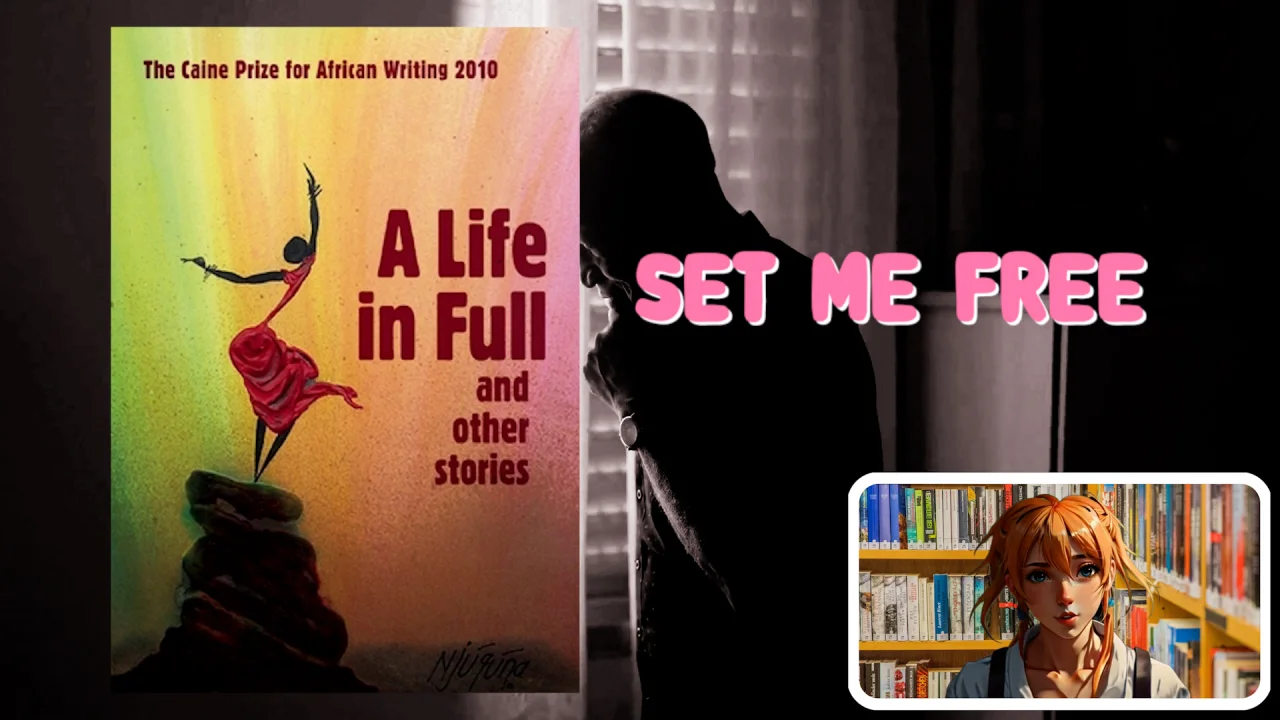
There’s a moment in this story that quietly unsettled me.
A once-powerful politician—feared, influential, surrounded by wealth and influence for years—has been reduced to a small urn of ashes. His daughter looks at it and asks a simple question: “Is that all?”
And the reply comes back calmly:
“Human beings are very small.”
That line stayed with me long after I finished reading.
Because Set Me Free, written by Clifford Chianga Oluoch, is not just a story about death. It’s about power collapsing. About family wounds that never healed. And about the strange, painful freedom that sometimes comes when a long, difficult chapter finally ends.
The story appears in the A Life in Full and Other Stories, a collection celebrating outstanding African short fiction.
👉 If you’d like to read the same anthology, you can find it here:
https://amzn.to/4iRv6ai
What Kind of Story Is Set Me Free?
This is a quiet but emotionally intense political story about legacy, guilt, and the burden children inherit from their parents.
Tone: Reflective, darkly ironic, emotionally raw
Pace: Moderate, unfolding over roughly 48 chaotic hours
Themes: Power, corruption, family estrangement, responsibility, and death
This story will resonate with readers who:
-
Enjoy literary fiction that explores politics through personal stories
-
Like narratives that blend family drama with social commentary
-
Appreciate stories that ask uncomfortable moral questions
It may not appeal as strongly to readers who:
-
Prefer fast-paced thrillers
-
Want clear heroes and villains
-
Expect tidy emotional resolutions
A Glimpse of the Story (No Spoilers)
The story unfolds in the aftermath of Kenya’s turbulent 2007–2008 Kenyan post-election violence, a moment when political tension exploded into widespread conflict.
At the center of the narrative is the daughter of a disgraced politician named David Mavita.
Mavita once wielded enormous influence. But after being linked to the violence and appearing on a list connected to investigations by the International Criminal Court, his world collapses.
Now he lies in a hospital bed, unconscious and on life support.
His powerful friends have disappeared.
His wife despises him.
His sons have distanced themselves completely.
The only person left to deal with the chaos is his daughter.
And chaos is exactly what she gets.
In the span of two days she must:
-
Decide whether to keep her father alive or let him go
-
Manage threatening phone calls and legal threats
-
Handle a hospital suddenly invaded by women claiming to have his children
-
Track down her estranged brother in Nairobi’s red-light district
All while trying to make sense of her own complicated feelings about the man lying in that hospital bed.
Why This Story Matters
What makes Set Me Free powerful is how it shrinks a national tragedy into one intensely personal space: a hospital room.
Most people remember political violence through headlines and speeches. Through statistics and election results.
But Oluoch shows us something different.
He shows us the families left behind.
The children of powerful men.
The people who must live with the consequences of decisions they never made.
David Mavita spent his life building power. Accumulating wealth, influence, and political status. Yet when his life collapses, none of those things stay with him.
No loyal allies appear.
No friends rush to help.
Even his own family carries deep resentment.
The story quietly asks a disturbing question:
What is power worth if it leaves you completely alone at the end?
And the answer, judging by the palm-sized urn in the story’s final scene, is not very much.
That idea—how quickly power dissolves into nothing—is what gives the story its haunting emotional weight.
The Symbolism That Makes the Story Work
One of my favorite details in Set Me Free is surprisingly small.
A five-year-old boy finds a wounded bird and desperately tries to save it.
The child clings to hope, refusing to accept that the bird is already dying.
Meanwhile, his mother—the narrator—is facing a similar situation with her father.
But unlike the child, she knows the truth.
Sometimes holding on doesn’t help.
Sometimes letting go is the only honest choice.
That parallel between the dying bird and the dying father adds a quiet emotional depth to the story that I really admired.
Themes That Drive the Story
The Corruption of Power
David Mavita built his identity around influence and political status.
But the story shows how fragile that power really is. When his reputation collapses, everything collapses with it.
His legacy becomes scandal instead of respect.
Family Estrangement
Every member of the family carries emotional scars.
His wife resents him.
His sons reject him.
His daughter is left to clean up the wreckage.
The emotional distance between them feels painfully real.
Gendered Responsibility
One of the most striking aspects of the story is who ends up doing the work.
Not the sons.
Not the extended family.
The daughter is the one who must make decisions, solve problems, and carry the emotional burden.
Death and Legacy
The final line of the story—“Human beings are very small”—perfectly captures the theme.
No matter how powerful someone becomes, death eventually reduces everything to something small enough to fit in an urn.
It’s a humbling thought.
About the Author
Clifford Chianga Oluoch is a Kenyan writer and educator whose work often explores the intersection of politics, identity, and everyday life in Kenya.
In Set Me Free, he draws inspiration from the real tensions surrounding Kenya’s 2007 election crisis and the political fallout that followed.
What makes his writing effective is how he avoids turning the story into a political lecture. Instead, he focuses on human consequences—the emotional fallout inside families.
My Honest Verdict
This story impressed me.
Not because it is dramatic or sensational—but because it is honest.
What worked particularly well:
-
The intimate, first-person perspective
-
The emotional complexity of the daughter’s situation
-
The powerful symbolism of the final scene
What didn’t work quite as strongly:
-
Some readers might find the narrative slightly restrained. It doesn’t rely on big emotional explosions or shocking twists.
But that restraint is also part of the story’s strength.
It feels quiet, reflective, and painfully real.
This isn’t a perfect story.
But it is a thoughtful and memorable one.
Who Should Read This Story?
You’ll likely appreciate Set Me Free if:
-
You enjoy literary fiction that explores politics through personal lives
-
You like stories that leave you thinking long after you finish
-
You’re interested in African literature that reflects real historical events
You might struggle with it if:
-
You prefer plot-driven stories
-
You need clear moral answers
-
You want emotionally simple characters
👉 If this sounds like your kind of story, you can explore the anthology here:
https://amzn.to/4iRv6ai
Final Thoughts
Set Me Free reminds us that history is never just about leaders and elections.
It’s also about the daughters who must make impossible decisions in hospital rooms.
It’s about brothers who disappear because the pain is too much.
And it’s about the quiet moment when someone looks at a small urn and realizes that a life once filled with power has been reduced to something almost weightless.
That moment alone makes the story worth reading.
👉 If you’d like to read the collection where this story appears, you can find A Life in Full and Other Stories here:
https://amzn.to/4iRv6ai
And if you enjoy thoughtful, politically charged African fiction, this anthology is an excellent place to start.