 English
 French
 German
 Russian
 中文
中文

When Paradise Falls Apart: Reading Two Thousand Seasons by Ayi Kwei Armah
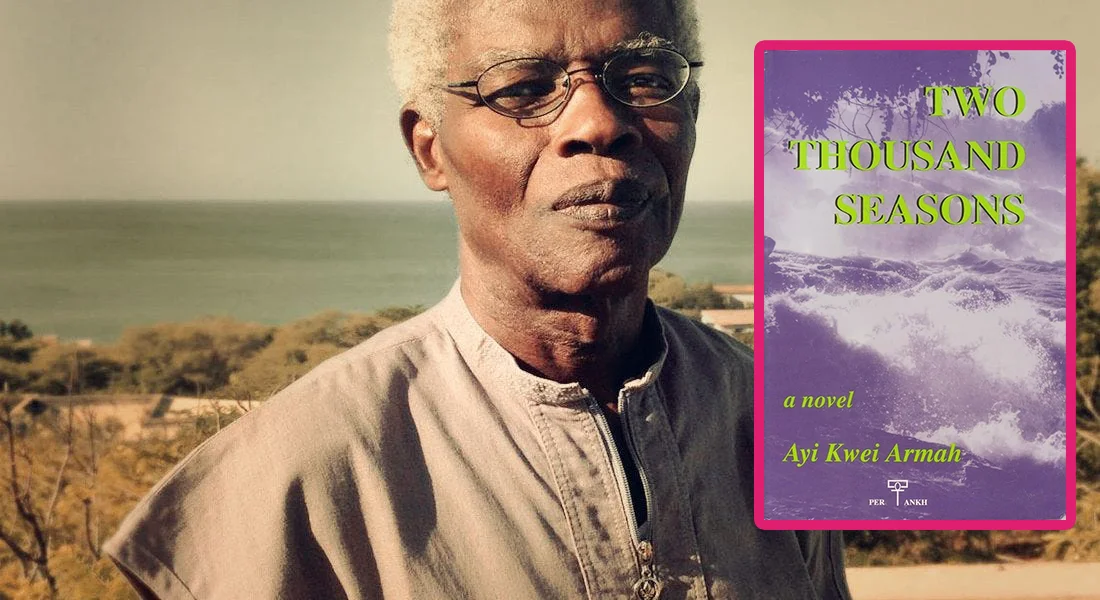
There’s a moment early in Two Thousand Seasons that made me pause—not because it was confusing (though, yes, the opening is dense), but because it felt like mourning. Not nostalgia. Mourning.
Ayi Kwei Armah asks us to imagine an Africa before borders, before kings, before the word chairman meant anything. A place guided by The Way—balance, reciprocity, shared humanity. No ownership of land. No ownership of people. Just caretakers chosen for wisdom and kindness.
And then, quietly at first, everything starts to rot.
That’s the emotional ground Two Thousand Seasons stands on. Not adventure. Not historical spectacle. Loss.
What Kind of Novel Is This?
This is a pan-African historical allegory about betrayal, memory, and resistance.
Tone: Fierce, poetic, accusatory
Pace: Slow, deliberate, almost ritualistic
Themes:
-
Colonial invasion
-
Cultural erasure
-
Complicity and betrayal
-
Collective responsibility
-
Resistance and memory
This book is for readers who:
-
Enjoy novels that challenge rather than entertain
-
Are interested in African history beyond colonial textbooks
-
Don’t mind discomfort if it leads to insight
This book is not for readers who:
-
Want a fast-paced plot
-
Prefer clear heroes and villains
-
Need simple, comforting narratives
👉 The edition I read is available here:
Two Thousand Seasons by Ayi Kwei Armah – Amazon link
A Glimpse of the Story (No Spoilers)
The story begins in Anoa, a fictional African community living communally—no kings, no chiefs, only caretakers. Life works because everyone understands The Way.
Then comes a warning: a prophecy of two thousand seasons of destruction.
First arrive the people of the desert—Arabs bearing swords and forced conversions. They take land, people, culture. Then come the people of the sea—Europeans with colorful cloth, crosses, and chains hidden behind smiles.
Worst of all, some Africans help them.
Kings like Koranche sell their people for power. Others grow lazy, greedy, or fearful. The destroyers don’t just conquer bodies—they manufacture askaris and zombis: Africans trained to police and betray their own.
What follows is not a heroic war story, but a slow reckoning.
Why This Story Matters (The Emotional Core)
Two Thousand Seasons isn’t asking, “What did Europeans do to Africa?”
It’s asking something far more uncomfortable:
“Why did we let them?”
Armah refuses to let Africans off the hook. He attacks corrupt leaders with surgical cruelty, describing them as “empty, strutting fools.” He exposes greed disguised as ambition, laziness masked as patience, and religion used as anesthesia.
But the novel isn’t hopeless.
The most powerful resistance comes from women—organizing, fighting, remembering when others forget. And from figures like Isanusi, who keeps The Way alive through teaching and memory.
What stayed with me long after finishing the book wasn’t the violence—it was the insistence that forgetting is a choice, and forgetting is how destruction wins.
This book exists because history keeps repeating itself.
Armah’s Language: Brutal and Beautiful
Armah doesn’t write gently. He writes like someone who is tired of explaining.
His prose is dense, rhythmic, almost biblical. At times it feels like a chant. At others, a public execution.
One of my favorite lines describes bribes as:
“Clothes of colors bright to fascinate children’s eyes set in adults’ heads.”
That’s not commentary. That’s indictment.
Yes, the first chapter is hard. Impenetrable, even. But once the rhythm clicks, the novel becomes hypnotic.
👉 If you’re ready to wrestle with it, you can find the book here:
Two Thousand Seasons by Ayi Kwei Armah – Amazon edition
About the Author: Ayi Kwei Armah
Born in Ghana in 1939, Ayi Kwei Armah is one of Africa’s most uncompromising literary voices. His work consistently attacks colonialism, neo-colonialism, and African complicity with equal force.
Armah doesn’t write to comfort. He writes to correct.
Two Thousand Seasons, first published in 1973, is his most openly pan-African novel—less interested in nation-states than in shared memory and responsibility.
Reading him feels less like being entertained and more like being summoned.
My Honest Verdict
This isn’t an easy novel.
-
The structure is demanding
-
The language is heavy
-
The accusations are relentless
But it’s also one of the most important African novels ever written.
It forces you to confront uncomfortable truths—not just about history, but about silence, complicity, and the cost of forgetting.
This isn’t a perfect book.
But it’s an honest one.
And those are rare.
Final Thoughts & Recommendation
If you’ve ever wondered why African literature feels angrier than expected—this book explains it.
If you’ve ever questioned why unity feels so fragile—this book answers that too.
Two Thousand Seasons doesn’t ask you to admire Africa’s past. It asks you to remember it correctly, without excuses or myths.
👉 If this sounds like your kind of reading experience, here’s the same edition I read:
Two Thousand Seasons by Ayi Kwei Armah – Amazon link
Best Format to Read This Book
Paperback or Kindle
You’ll want to pause, reread passages, and sit with the language. Audiobook would lose too much of the texture.