 English
 French
 German
 Russian
 中文
中文
Being a Child Is the Hardest Job on Earth
I caught myself thinking the other day: what’s the hardest job in the world?
Not parenting. Not leadership. Not even survival in adulthood.
Being a child.
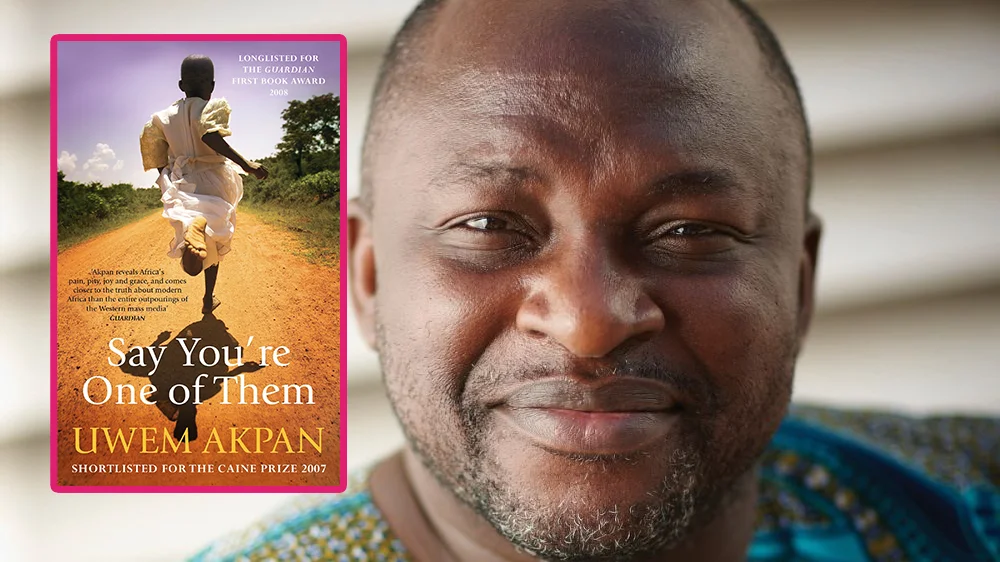
Especially a child born into chaos you didn’t choose, conflicts you don’t understand, and rules that keep changing depending on who’s holding power. That thought stayed with me while reading Say You’re One of Them—a book that doesn’t shout, doesn’t preach, but still manages to leave bruises.
This is one of those books that makes you pause mid-page, stare into space, and quietly whisper, “This shouldn’t be happening.” And yet—it is.
Uwem Akpan’s Say You’re One of Them is not here to comfort you. It’s here to make sure you don’t look away.
👉 The edition I read is available here:
Say You’re One of Them by Uwem Akpan
What Kind of Book Is This?
This is a literary short story collection about childhood under pressure—poverty, religion, war, ethnicity, and betrayal seen through young eyes that are still trying to make sense of the world.
Tone: Quietly devastating
Pace: Moderate, but emotionally heavy
Themes: Survival, innocence, religion, guilt, identity, moral collapse
This book is for readers who:
-
Can sit with discomfort and unresolved questions
-
Believe fiction should mean something
-
Want African stories that refuse to sanitize reality
This book is not for readers who:
-
Read purely for escapism
-
Need neat resolutions or comforting conclusions
-
Prefer heroes who are clearly good and villains who are clearly evil
A Collection That Refuses to Look Away
An Ex-Mas Feast
We begin in a Nairobi slum, where Christmas isn’t about joy—it’s about endurance. A family is barely surviving, and the responsibility falls on the eldest daughter, who becomes a full-time prostitute to fund her younger brother’s education.
Here’s the cruel irony:
The brother doesn’t even want to go to school.
He runs away—not out of rebellion, but guilt. Akpan captures something brutal here: how sacrifice, when imposed on a child, can feel unbearable rather than noble.
Nothing about this story feels exaggerated. That’s what makes it hurt.
Fattening for Gabon
This might be the most quietly horrifying story in the collection.
Two siblings, Yewa and Kotchikpa, live under the care of their uncle in a Beninese village. Slowly, almost casually, the truth emerges: their uncle is planning to sell them into slavery.
What makes this story unbearable is the normalcy of it. The children don’t fully understand what’s happening. The uncle hesitates—but hesitation doesn’t undo a signed deal.
Akpan doesn’t moralize. He lets the silence speak. And that silence is loud.
What Language Is That?
This story starts gently. Two girls—one Christian, one Muslim—in Ethiopia. Best friends. Inseparable. Innocent.
Then religion enters the room.
Suddenly, one girl is told she must stop speaking to her best friend because she’s “evil.” No explanation. No logic. Just obedience.
Akpan asks a devastating question: How do you explain hatred to a child who only understands love?
You don’t. And that’s the point.
Luxurious Hearses
Set against religious violence in Nigeria, this story follows Jubril, a teenage boy with a Muslim mother and Christian father—an identity that becomes dangerous depending on where he stands.
He hides who he is. He lies to survive. He watches how easily faith becomes a weapon.
There’s a moment involving punishment for alleged theft that is so disturbing it lingers long after the page ends. This story doesn’t just show violence—it shows how fear reorganizes morality.
In My Parents’ Room
The final story is the hardest to read.
Set during the Rwandan genocide, it’s narrated by a young girl who witnesses her Hutu father murder her Tutsi mother. The horror here isn’t graphic—it’s emotional.
This isn’t about politics or history. It’s about what happens when ideology invades the most intimate space imaginable: a family.
Akpan asks: Does war erase love completely?
The story doesn’t answer. It just leaves you with the question.
Why This Book Matters
What stayed with me after finishing this book wasn’t shock—it was unease.
Akpan forces us to confront something uncomfortable:
Children are not protected by innocence. They are often the first casualties of adult decisions.
Yes, this book risks reinforcing the Western narrative of “African suffering.” That criticism is valid. The use of English for illiterate characters can feel awkward. And read without context, this collection could easily be mistaken as representative rather than selective.
Which is exactly why Chimamanda Ngozi Adichie’s idea of “The Danger of a Single Story” matters here.
The problem isn’t that these stories exist.
The problem is when these are the only stories people choose to hear.
Religious violence in Nigeria. Ethnic collapse in Rwanda. Trafficking in Benin. Poverty in Kenya. These are real histories, real wounds. Ignoring them doesn’t make Africa richer—it just makes readers poorer in understanding.
A Glimpse of the Stories (No Spoilers)
These stories are about:
-
Children negotiating with systems far bigger than themselves
-
Love being interrupted by ideology
-
Survival requiring silence, lies, and impossible choices
There are no twists meant to entertain.
Only truths meant to stay with you.
Who This Book Is Perfect For
You’ll enjoy this book if:
-
You read fiction to think, not escape
-
You’re interested in African literature beyond surface narratives
-
You’re okay with stories that don’t comfort you
You might struggle with this book if:
-
You prefer fast plots and tidy endings
-
You need clear moral resolutions
-
You read to relax rather than reflect
👉 If this sounds like your kind of book, you can find it here:
Say You’re One of Them by Uwem Akpan
My Honest Verdict
This isn’t a perfect book—but it’s an honest one.
What worked:
-
Emotional restraint
-
Child perspectives that feel painfully authentic
-
Refusal to simplify complex realities
What didn’t:
-
Occasional linguistic awkwardness
-
Risk of reinforcing a single narrative if read uncritically
And yet, I still recommend it.
Because Uwem Akpan doesn’t write to exploit suffering—he writes to witness it.
Final Thoughts
Say You’re One of Them is the kind of book that quietly rearranges how you see the world. It doesn’t beg for empathy. It assumes you’re capable of it.
By the end, you realize something unsettling:
The child is not just the future.
The child is the present.
And what we allow children to endure says everything about us.
👉 If you’d like to read the same edition I did, here’s the link:
Say You’re One of Them by Uwem Akpan