 English
 French
 German
 Russian
 中文
中文

The Strange Beauty of Surviving Through Science
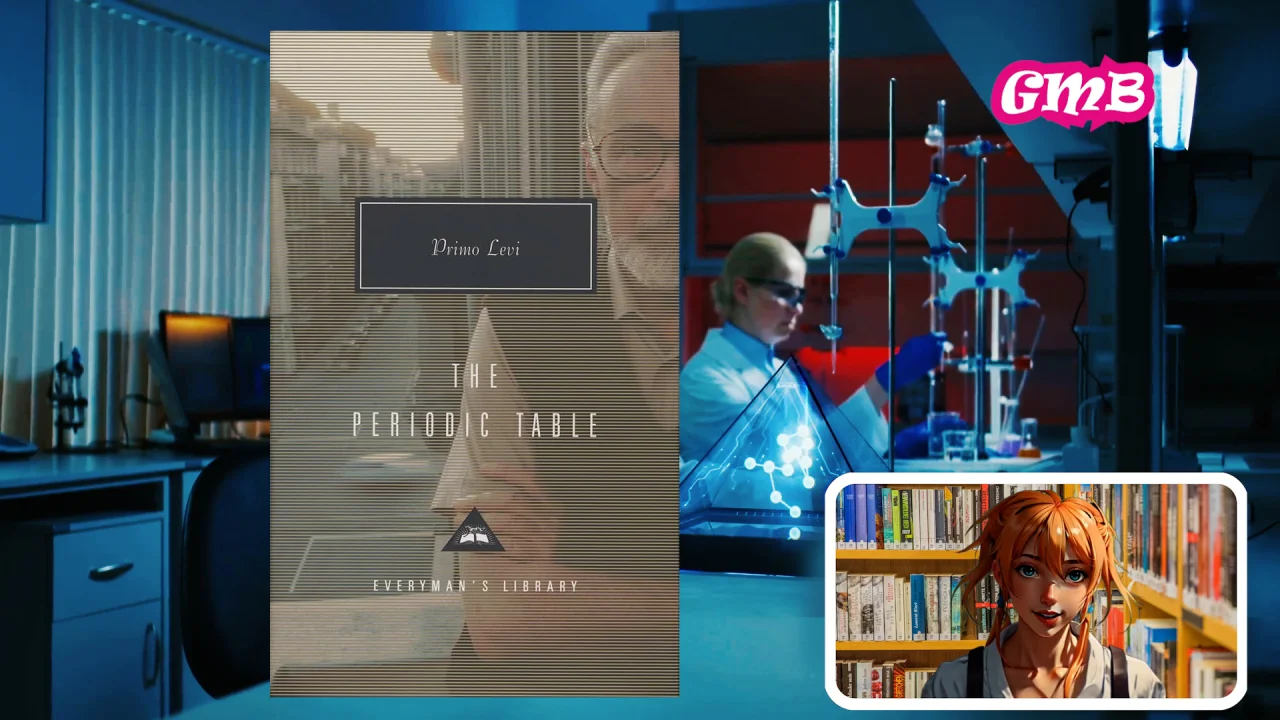
When Life Starts to Feel Like a Formula
There was a moment while reading The Periodic Table when I stopped—not because something dramatic had happened, but because something quietly unsettling had clicked.
What if your life could be broken down into elements? Not emotions. Not memories. But elements. Argon. Zinc. Carbon.
It sounds cold at first. Almost clinical. But then it hits you: maybe that’s exactly the point. Maybe the only way to survive certain things… is to reduce them into something you can study, something you can hold at a distance.
That’s what Primo Levi does. And somehow, he turns it into one of the most human books I’ve ever read.
Summary: A Life Told Through Elements (No Spoilers)
The Periodic Table is not a conventional memoir. Instead of a chronological life story, Levi structures his experiences into twenty-one chapters, each named after a chemical element.
Through these elements, we move across:
-
His childhood fascination with chemistry
-
His education and early career in Italy
-
The rise of fascism and anti-Jewish laws
-
His capture and imprisonment in Auschwitz
-
His survival and life afterward
But this isn’t just historical recounting. Each element becomes a lens—a way of interpreting life.
For example:
-
Argon reflects isolation and quiet existence
-
Zinc becomes a meditation on purity and change
-
Carbon circles back to the fundamental nature of life itself
The result is a memoir that blends science, philosophy, and survival, without ever feeling like a lecture.
Analysis & Review: Where Science Becomes Something Deeper
What makes this book unforgettable is not what happens—but how Levi chooses to understand what happens.
1. A Structure That Shouldn’t Work… But Does
Let’s be honest: organizing a life story around the periodic table sounds like a gimmick.
It isn’t.
Each chapter feels deliberate, almost like a carefully measured experiment. The properties of each element mirror a phase of Levi’s life so naturally that you stop questioning the structure and start relying on it.
It becomes a language.
2. Precision as a Form of Survival
Levi writes like a chemist—clear, controlled, exact.
And that precision matters. Because when you’re writing about something as overwhelming as war or Auschwitz, emotional excess can blur the truth. Levi does the opposite. He distills it.
That restraint makes the impact stronger.
There’s a quiet power in the way he describes even the most difficult experiences—not with dramatics, but with clarity. As if understanding something is the first step to surviving it.
3. Science Isn’t Cold Here—It’s Human
You don’t need to understand chemistry to feel this book.
In fact, the science becomes a bridge:
-
It explains transformation
-
It reflects identity
-
It reveals tension between purity and change
One of the most striking ideas Levi explores is that impurity—contact, contamination, change—is what creates life.
And suddenly, chemistry stops being about elements… and starts being about people.
4. Not a Perfect Read—But an Honest One
This is a slow book.
If you’re expecting a fast-paced war memoir or a straightforward narrative, it might frustrate you. Some chapters feel more like essays than story. Others require patience to fully appreciate.
But that slowness is part of the experience.
This isn’t a book you rush through. It’s one you examine—piece by piece, like a sample under glass.
Conclusion & Recommendation: Who Should Read This?
You’ll connect deeply with The Periodic Table if:
-
You enjoy books that make you think more than they entertain
-
You appreciate unusual storytelling structures
-
You’re drawn to themes of identity, survival, and transformation
You might struggle with it if:
-
You prefer fast-moving plots
-
You want clear emotional cues or dramatic storytelling
-
You’re not in the mood for something reflective and layered
👉 If this sounds like your kind of book, you can explore the same edition here:
https://amzn.to/3XIeyrp
Final Thoughts: The Chemistry of Being Human
What stayed with me after finishing this book wasn’t a single story or moment. It was a way of seeing.
Levi quietly suggests that we are all made of reactions—of encounters, pressures, transformations we didn’t choose. And like elements, we change depending on what we come into contact with.
There’s something both comforting and unsettling about that idea.
Because it means survival isn’t always about strength. Sometimes, it’s about adaptation. About finding a way to exist—even in the harshest conditions—without completely losing your structure.
This isn’t just a memoir.
It’s a reminder that even in the most controlled, scientific language…
life refuses to be reduced to a formula.
👉 If you’d like to read the same edition I did, here’s the link again:
https://amzn.to/3XIeyrp