 English
 French
 German
 Russian
 中文
中文

When the Villain Steals the Spotlight: Richard III by William Shakespeare
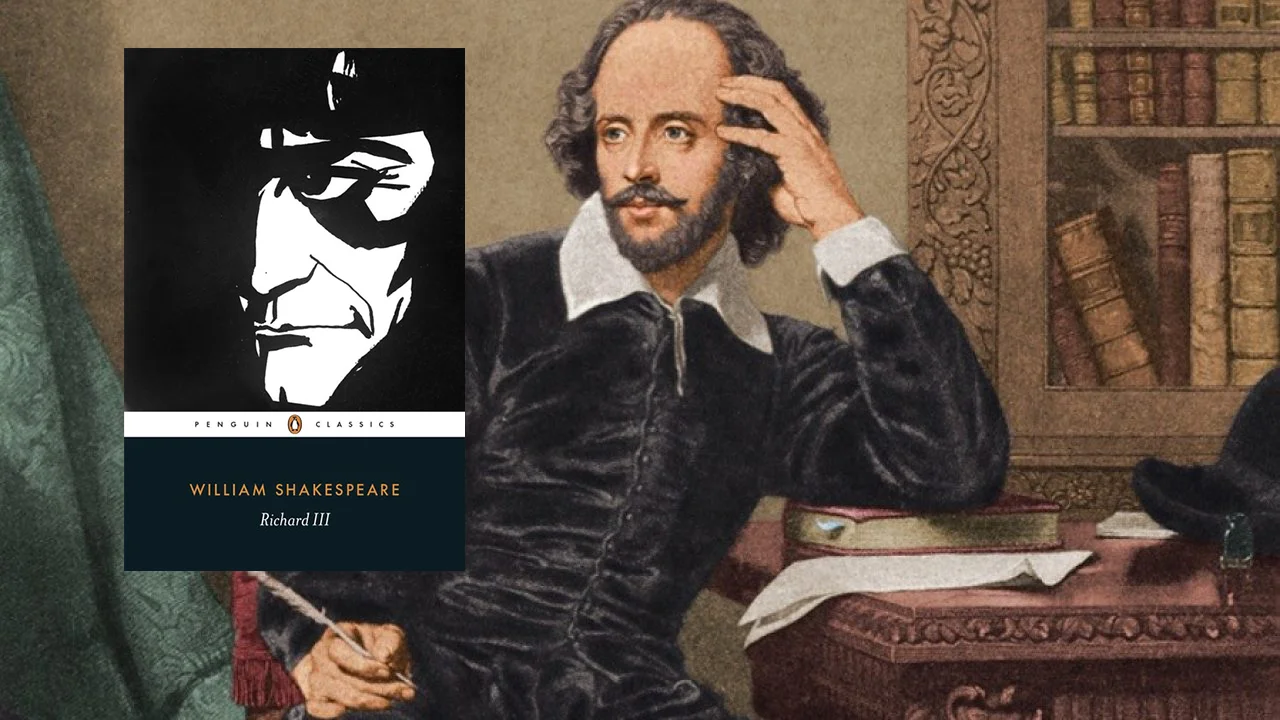
Ever wondered what happens when the villain doesn’t wait until the final act to be exposed—but instead grabs the microphone, looks straight at you, and says, “Yes, I’m evil… and here’s my plan”?
That’s the unsettling thrill of Richard III. From the very first moment, this play doesn’t pretend to be about heroes, justice, or moral balance. It’s about ambition with no brakes, power without conscience, and a man who knows exactly how rotten he is—and enjoys every second of it.
Reading Richard III feels like watching a master manipulator at work. You don’t admire Richard, but you can’t stop watching him. Shakespeare somehow makes you complicit, pulling you into Richard’s confidence as he plots his way to the crown.
A Story Where Ambition Has No Off Switch
The play opens with Richard of Gloucester already simmering with resentment and desire. He’s clever, bitter, sarcastic, and painfully self-aware. He believes the world has cheated him, so he decides to cheat the world right back.
One of the most chilling moments early on is Richard’s seduction of Lady Anne—a woman mourning a husband and father-in-law Richard himself helped murder. Logic says this scene shouldn’t work. Morality screams that it can’t. And yet, Richard bends language, confidence, and sheer audacity until Anne agrees to marry him.
That moment sets the tone for the entire play: if words are sharp enough, truth doesn’t matter.
👉 If you want to experience this scene exactly as Shakespeare wrote it, the edition I read is available here:
Richard III – William Shakespeare (Amazon paperback edition) OR https://godsmercybookshop.com/richard-iii-william-shakespeare-905
Murder as a Political Strategy
Once Richard secures his marriage, blood starts flowing faster. His brother Clarence—haunted by ominous dreams of drowning—is imprisoned and quietly executed in one of Shakespeare’s most darkly ironic deaths.
As King Edward IV weakens, Richard positions himself as protector of the realm. But behind the smiles and loyalty, he’s already clearing the path to the throne.
Shakespeare doesn’t rush this rise. Instead, he lets you sit inside the machinery of power—watching how rumors, fear, and staged morality can dismantle entire families.
The Women Who See Through Him
One of the most underrated aspects of Richard III is its women.
Margaret, Queen Elizabeth, and the Duchess of York don’t wield swords or armies—but they wield memory, grief, and curses. Margaret’s speeches feel almost supernatural, as if history itself is calling out Richard’s crimes before justice ever arrives.
Their presence reminds us that tyranny doesn’t just destroy bodies—it poisons generations.
A Crown Built on Corpses
Richard’s final steps to kingship are the most horrifying: the imprisonment and murder of his young nephews in the Tower of London. At this point, any illusion of necessity or justification collapses.
Once crowned, Richard rules through paranoia. Allies become threats. Promises turn hollow. Even Buckingham—once crucial to Richard’s rise—meets his end when ambition stops being rewarded.
Power, Shakespeare suggests, is lonely when built on fear.
Ghosts, Guilt, and the Cost of Tyranny
The night before the Battle of Bosworth is where Richard III turns inward. The ghosts of Richard’s victims visit him—not for revenge, but for judgment. They curse him and bless his enemy, Henry Tudor.
For the first time, Richard falters.
The famous cry—“A horse! A horse! My kingdom for a horse!”—isn’t just desperation. It’s irony at its finest. A man who traded everything for power realizes, too late, how empty that bargain was.
👉 If you enjoy reading Shakespeare as performance, this edition works beautifully alongside stage adaptations:
Richard III – William Shakespeare (Amazon) OR https://godsmercybookshop.com/richard-iii-william-shakespeare-905
What Richard III Is Really About
At its core, Richard III isn’t just a history play. It’s a psychological study of unchecked ambition.
Shakespeare asks uncomfortable questions:
-
What happens when intelligence has no ethics?
-
How easily can people be manipulated if fear does the talking?
-
And why are we so fascinated by charismatic villains?
The most disturbing answer is this: Richard succeeds because people allow him to.
Who This Book Is Perfect For
You’ll enjoy Richard III if:
-
You love morally complex characters
-
You’re fascinated by power, manipulation, and psychology
-
You enjoy sharp dialogue and dark humor
You might struggle with it if:
-
You prefer clear heroes and happy endings
-
You dislike political intrigue
-
You want fast-paced action without heavy language
My Honest Verdict
This isn’t Shakespeare at his most romantic—but it is Shakespeare at his most ruthless.
What works:
-
Richard’s magnetic villainy
-
Razor-sharp dialogue
-
The slow, terrifying logic of power
What might not:
-
Dense language for first-time readers
-
A relentlessly dark tone
Still, Richard III is unforgettable. It doesn’t comfort you. It challenges you.
Final Thoughts
Richard III endures because it feels disturbingly modern. Strip away the crowns and castles, and you’re left with something timeless: ambition without restraint, politics without conscience, and a leader who mistakes fear for loyalty.
If you’ve ever wondered how tyrants rise—or why people follow them—this play has answers. Uncomfortable ones.
👉 If you’d like to read the same edition I did, here’s the link again:
Richard III – William Shakespeare (Amazon paperback) OR https://godsmercybookshop.com/richard-iii-william-shakespeare-905
Absolute power may corrupt absolutely—but it also makes one unforgettable story.