 English
 French
 German
 Russian
 中文
中文

The Dynasty of Despair: Why You Must Read Faulkner’s Absalom, Absalom!
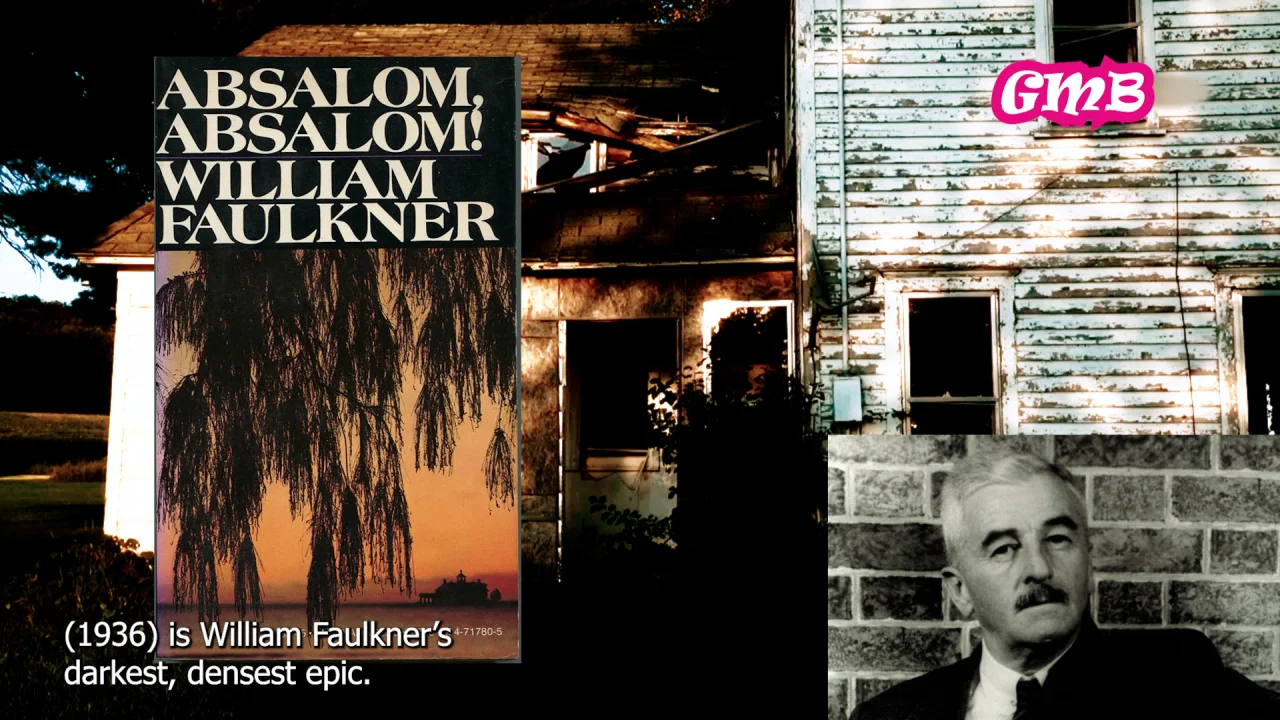
Let me tell you a story. A long one. The kind you hear from that one aunt who starts talking about how your great-grandfather once fought off a lion with a walking stick, and four hours later, she’s still describing the lion’s teeth.
William Faulkner’s 1936 masterpiece, Absalom, Absalom!, starts in 1820 and ends in 1910. It covers almost a hundred years of broken dreams, blood ties, and bitter fruit—all because a fourteen-year-old boy was once turned away from a nice white house by a well-dressed Black man. That single, bruised ego gave rise to a dynasty of despair and one of the most brooding, complex stories you’ll ever read.
The Scheme of Thomas Sutpen
Thomas Sutpen just… appeared one day in Yoknapatawpha County. He was a strange man with strange manners, traveling with an architect and a group of followers. No one knew where he came from, but he arrived with a "design."
After that childhood humiliation, Sutpen didn’t cry. He made a vow to have his own big white house, his own slaves, and his own dynasty. He hustled in the West Indies, acquired mysterious wealth, and eventually showed up in Jefferson with 100 square miles of land. He built a haunting mansion known as Sutpen’s Hundred. If you want to see the blueprint of this madness for yourself, you can grab a copy of the novel here.
A House Built on Rot
A house needs a wife—not for love, but for sons. Sutpen married Ellen Coldfield, the daughter of a stiff Methodist merchant. They had two children, Henry and Judith, and for a moment, the dream looked on track.
Until the past caught up. During his time in the West Indies, Sutpen had a son named Charles Bon. When Sutpen discovered the boy had African ancestry, he repudiated both mother and son and fled. Decades later, Charles Bon and Henry Sutpen meet at university and become best friends. When Bon falls in love with Judith, the "design" begins to crack. The struggle between brotherhood, incest, and the deep-seated racism of the era eventually leads to a breaking point: Henry kills Bon.
"The past is never dead. It’s not even past."
Why It’s a Masterpiece (and a Challenge)
Absalom, Absalom! is an excavation of memory, race, and the haunted South. The narrative is layered, told through multiple perspectives—Rosa Coldfield, Quentin Compson, and his roommate Shreve. It’s like watching four blindfolded people describe an elephant… only the elephant is on fire, and everyone’s got personal baggage.
Faulkner’s style is famous for:
-
Long Sentences: We’re talking sentences that span pages.
-
Fragmented Chronology: The truth is slippery and spiraling.
-
Atmospheric Dread: It is the pinnacle of Southern Gothic literature.
Final Thoughts
Thomas Sutpen is a paradox—a "Heathcliffian" villain whose sin is his refusal to see people as human beings. Women are tools; sons are vehicles for legacy. His downfall is the ultimate proof that you cannot build an empire on a foundation of secrets and human collateral.
It is a tough read, but if you can brave the storm and sit with the contradictions, you’ll find yourself changed. If you’re brave enough to tackle 100 pages of a single sentence, pick up your copy of Absalom, Absalom! via this link.