 English
 French
 German
 Russian
 中文
中文
The Quiet Rebellion of Reading in a Forbidden World
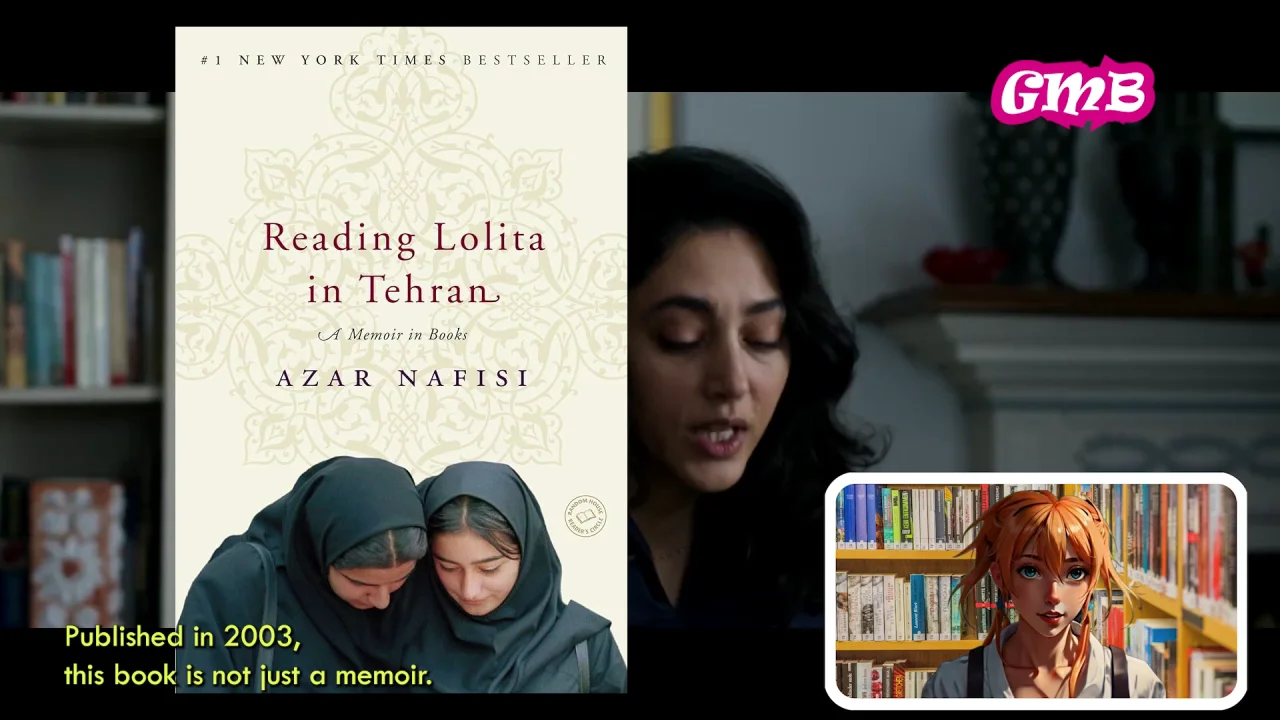
There’s a moment in this book that made me stop—not because it was loud or dramatic, but because it felt dangerously quiet.
A group of women sitting in a living room… reading.
That’s it. No protests. No shouting. Just pages turning. And yet, in the world they’re living in, that simple act feels more rebellious than anything else.
It made me wonder: What kind of society fears books this much? And what kind of courage does it take to read anyway?
What Kind of Novel Is This?
This is a memoir—literary, reflective, and quietly political—about the power of books in a world that tries to silence them.
Tone: Reflective, intimate, quietly defiant
Pace: Moderate, but emotionally layered
Themes: Freedom, identity, control, gender, literature as resistance
This book is for readers who:
- Love literature that reflects on other literature
- Enjoy memoirs that explore ideas more than events
This book is NOT for readers who:
- Prefer fast-paced, plot-driven storytelling
- Need clear structure and linear timelines
👉 The edition I read is available here:
https://amzn.to/4rXmZx0
Opening Hook (A Personal Reaction)
I kept thinking about how easy it is to take reading for granted.
You pick up a book, sit somewhere comfortable, and disappear into another world. No consequences. No fear.
But in this memoir, reading is never just reading. It’s risk. It’s resistance. It’s identity.
And that realization stayed with me long after I finished the last page.
Why This Story Matters (Emotional Core)
At its heart, Reading Lolita in Tehran isn’t really about Lolita or The Great Gatsby.
It’s about who gets to tell your story.
Azar Nafisi uses literature as a lens to examine what happens when a government begins rewriting not just laws—but lives. In her world, people are reduced to simplified versions of themselves, much like characters distorted by unreliable narrators.
And that’s where the connection to Lolita becomes so unsettling.
Just as Humbert Humbert reshapes Dolores into something that suits his narrative, the regime reshapes individuals—especially women—into something that fits its ideology. Voice is taken. Identity is edited.
What stayed with me most is the idea that freedom doesn’t always disappear all at once. Sometimes, it’s chipped away quietly—until even your thoughts don’t feel entirely yours.
This book asks a question it never fully answers:
If you can’t express yourself freely in the real world, can literature become your last refuge?
A Glimpse of the Story (No Spoilers)
After the Iranian Revolution, a literature professor watches her world transform into something unrecognizable.
Rules tighten. Books disappear. Voices shrink.
So she creates a private space—inviting a small group of former students to her home every week. There, they read banned Western novels and discuss them openly.
What begins as a book club slowly becomes something deeper:
A place where identity is reclaimed.
A space where truth can still exist.
A quiet rebellion against a system built on control.
Analysis & Review
What makes this memoir powerful isn’t just its story—it’s how it’s told.
Nafisi doesn’t separate her life from the books she reads. Instead, she blends them together so seamlessly that fiction and reality begin to mirror each other. A single idea—like Nabokov’s concept of poshlust (false, superficial values)—echoes across both literature and lived experience.
That layering is brilliant.
It turns reading into something active. Interpretive. Almost necessary.
But this approach also comes with drawbacks.
The structure can feel disorienting. Time jumps back and forth without warning. People appear, disappear, and reappear. At times, it feels less like a guided story and more like stepping into someone else’s memory—fragmented and nonlinear.
And maybe that’s the point.
Still, it can make the book harder to follow, especially if you’re expecting a traditional narrative.
There’s also a noticeable bias in how the world is framed. The West—particularly America—hovers in the background as a symbol of intellectual freedom, while other global complexities are barely explored. But this isn’t a history book. It’s a personal account. And personal accounts are never neutral.
What I appreciated most is the book’s honesty about contradiction.
Nafisi briefly acknowledges that even before the revolution, under a secular regime, people were still being controlled—just in different ways. The right to choose was missing on both sides.
And that’s really what this memoir is about:
Choice.
The right to think, to read, to exist without being rewritten by someone else.
Who This Book Is Perfect For
You’ll enjoy this novel if:
- You like books that make you reflect on freedom and identity
- You enjoy literary discussions woven into real-life experiences
- You read fiction to understand the world, not just escape it
You might struggle with this book if:
- You prefer clear, linear storytelling
- You want strong plot momentum
- You dislike books that leave questions unresolved
👉 If this sounds like your kind of book, you can get it here:
https://amzn.to/4rXmZx0
My Honest Verdict
This isn’t a perfect book—but it’s an important one.
What worked:
- The way literature is used to interpret real life
- The emotional depth and quiet intensity
- The themes of freedom, identity, and resistance
What didn’t:
- The fragmented structure can be confusing
- Some perspectives feel one-sided
- It demands patience and attention
And yet, I still recommend it.
Because books like this don’t just tell stories—they remind you why stories matter in the first place.
Final Thoughts & Recommendation
I keep coming back to that image of women sitting in a room, reading.
It’s such a simple thing. But in this context, it feels almost radical.
That’s what Reading Lolita in Tehran does best—it transforms something ordinary into something deeply meaningful. It reminds you that literature isn’t just entertainment. It’s memory. It’s identity. It’s resistance.
This book isn’t for everyone. But if you’re the kind of reader who likes to sit with ideas, question systems, and explore the deeper meaning behind stories—you’ll find something here.
👉 If you’d like to read the same edition I did, here’s the link:
https://amzn.to/4rXmZx0
Similar Books You Might Like
- The Republic of Imagination
- Persepolis
Best Format to Read This Book
Paperback.
This is a book you’ll want to pause, reread, and reflect on. A physical copy makes that experience feel more personal—like you’re part of those quiet Thursday discussions.