 English
 French
 German
 Russian
 中文
中文

The Making of a Monster: Power, Blood, and the Tragedy of Chaka
Have you ever heard the saying, “What doesn’t kill you makes you stronger?”
I used to think that was comforting.
Then I read Chaka.
Because in this story, what doesn’t kill you doesn’t make you gentle. It doesn’t make you wise. It doesn’t make you compassionate.
It makes you unstoppable. And terrifying.
There’s a moment in this novel where you realize you’re no longer watching the rise of a hero — you’re witnessing the birth of something far darker. And the unsettling part? You understand exactly how he got there.
What Kind of Novel Is This?
This is a historical epic tragedy about the human choice between good and evil.
Tone: dark, mythic, reflective
Pace: moderate, but heavy with inevitability
Themes: power, exile, trauma, ambition, fate, moral choice
This book is for readers who:
-
Love African historical fiction rooted in oral storytelling
-
Enjoy tragic arcs like Macbeth
-
Appreciate morally complex protagonists
This book is NOT for readers who:
-
Want a clean hero’s journey
-
Prefer light, fast-paced adventure
-
Need clear moral comfort
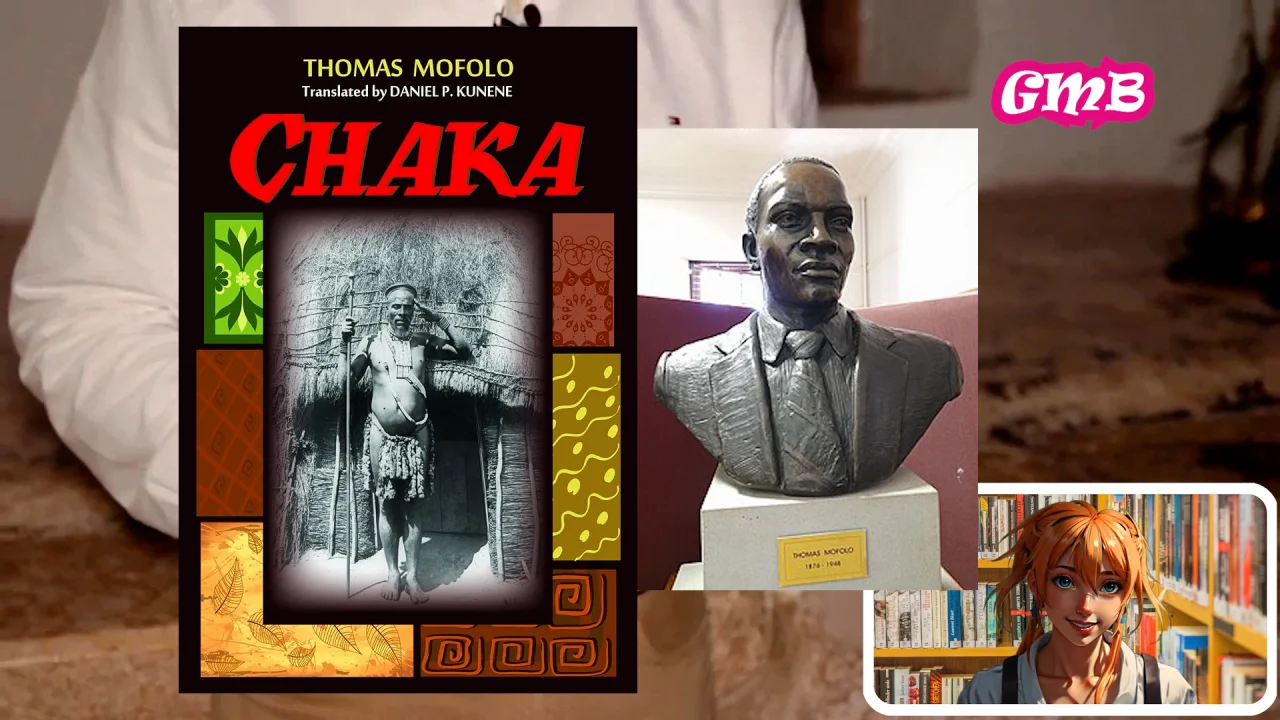
👉 The edition I read (translated by Daniel P. Kunene) is available here:
Get Chaka by Thomas Mofolo on Amazon
Why This Story Matters (The Emotional Core)
At its heart, Chaka isn’t about war.
It’s about choice.
Mofolo doesn’t simply portray Chaka as a bloodthirsty tyrant. He shows us a wounded boy — born out of wedlock, rejected by his father Senzangakhona, exiled with his mother Nandi, persecuted by jealous villagers who believe killing him would be “a good riddance.”
Imagine growing up knowing the world wishes you dead.
When Chaka meets the mysterious diviner Isanusi — who offers him unlimited power at the cost of blood — the novel shifts from history into myth. The deal feels eerily familiar, like the witches in Shakespeare’s Macbeth. The medicine Isanusi offers is described as “extremely evil, but also extremely good.”
And Chaka chooses.
That’s the key.
Yes, there is magic. Yes, there is prophecy. But ultimately, Mofolo makes it clear: Chaka binds himself to this path. He isn’t possessed. He isn’t tricked.
He chooses power over humanity.
What stayed with me after finishing this book wasn’t the massacres — though they are described on a staggering scale — but the nightmares. The repetition of dreams. The subtle fear Chaka develops toward Isanusi, the very source of his power.
The guilt.
The unraveling.
The way ambition slowly isolates him until he stands alone, feared by everyone.
And reading this in our time — when power still corrupts, when leaders still justify violence in the name of destiny — feels uncomfortably relevant.
This story exists to ask a question that refuses to go away:
If given the chance, what would you sacrifice for greatness?
A Glimpse of the Story (No Spoilers)
A boy is born under scandal.
Rejected by royal wives and driven into exile with his mother, he grows up hardened by humiliation and survival.
He encounters a spiritual force that promises him invincibility — if he is willing to spill blood.
He rises to power under King Dingiswayo’s protection.
Then he must decide what matters more: loyalty… or destiny.
That’s all I’ll say.
Curiosity works better than spoilers.
History vs Fiction: A Necessary Context
One of the most fascinating things about Chaka is that it isn’t a strict biography.
The historical Shaka Zulu appears differently in other accounts like AmaZulu by Walton Golightly. In some versions, Shaka deeply loved his mother and never killed her. Even the spelling differs — “Shaka” versus “Chaka.”
Mofolo takes literary license.
He admits he selects only one part of Chaka’s life to serve his purpose. And that purpose feels moral, almost allegorical.
It’s also important to remember that Thomas Mokopu Mofolo was publishing within missionary influence. Reverend A. Casalis played a significant role in bringing the manuscript to print. Colonial narratives often painted powerful African leaders as tyrants, and some scholars argue that this framing may have shaped aspects of the portrayal.
So when you read Chaka, you’re not just reading a story.
You’re reading:
-
African oral tradition
-
Colonial-era literary mediation
-
Myth layered over memory
And that complexity makes the novel even richer.
Who This Book Is Perfect For
You’ll enjoy this novel if:
-
You like books that explore the psychology of power
-
You enjoy epic storytelling rooted in African history
-
You read fiction to think, not just escape
You might struggle with this book if:
-
You prefer fast-paced action over reflective narration
-
You need morally “good” protagonists
-
You dislike tragic inevitability
👉 If this sounds like your kind of book, you can find it here:
Read Chaka by Thomas Mofolo
My Honest Verdict
This isn’t an easy novel.
The pacing can feel deliberate. The repetition — drawn from oral tradition — may challenge readers used to modern narrative structure.
And yes, the portrayal of Chaka as overwhelmingly bloodthirsty might feel exaggerated if you’re looking for strict historical accuracy.
But here’s what worked beautifully:
-
The mythic atmosphere
-
The psychological depth
-
The moral tension between destiny and choice
-
The haunting inevitability of tragedy
This isn’t a perfect novel.
But it’s an honest one.
And honest tragedies are rare.
About the Author
Thomas Mokopu Mofolo (1876–1948) is widely regarded as the greatest Basotho writer. Born in Khojane, educated in missionary schools, and later a teacher and bookstore worker in Morija, he helped pioneer the novel in Southern Sotho.
His earlier work, Moeti oa Bochabela, was one of the first major novels written in the language. But Chaka, first published in Sesotho in 1931 and translated into English in 1981, remains his most influential work — and a cornerstone of classic African literature.
Final Thoughts & Recommendation
Reading Chaka feels like sitting around a fire while an elder recounts the rise and fall of a legend — voice rising and falling, repeating, warning.
It’s part history.
Part myth.
Part moral reckoning.
If you’re the kind of reader who doesn’t mind discomfort… who wants to wrestle with questions about power, ambition, and human darkness… this novel will stay with you.
It certainly stayed with me.
👉 If you’d like to read the same edition I did, here’s the link:
Get your copy of Chaka here
Until next time — choose wisely.