 English
 French
 German
 Russian
 中文
中文
When Cities Rot from the Inside
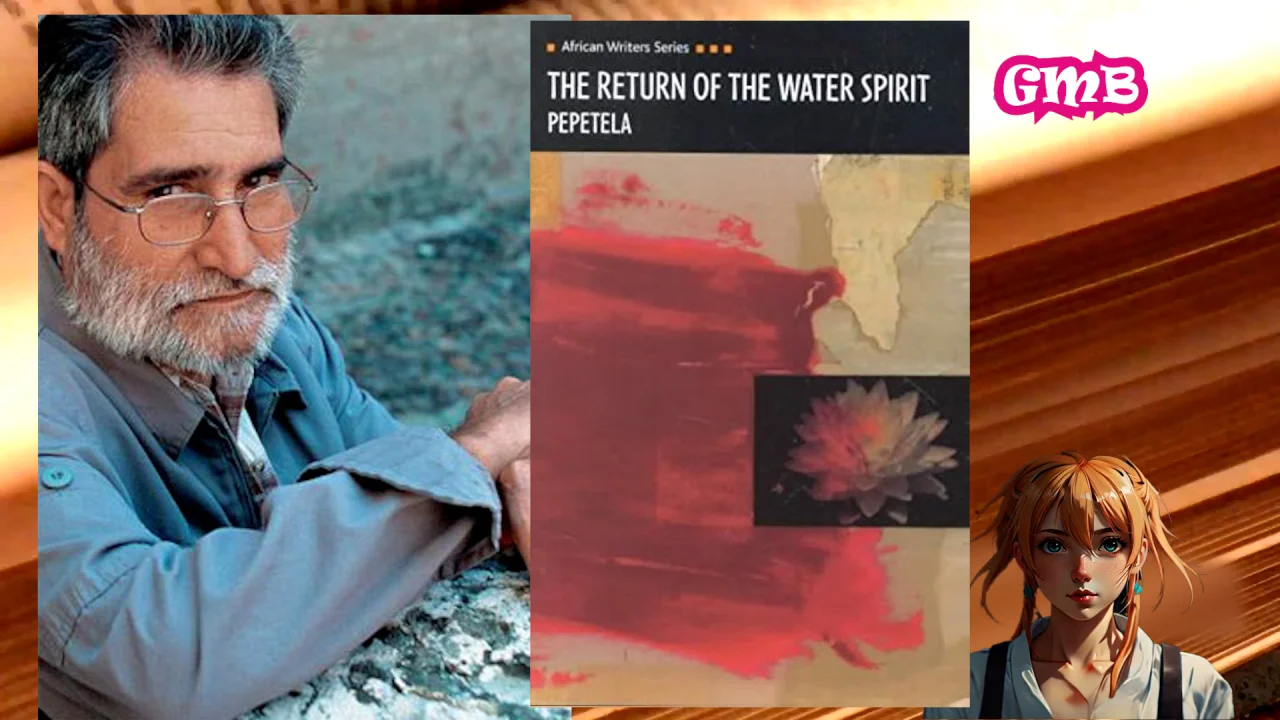
A novel where buildings collapse — and so does everything else
There’s a moment early in this book where you stop asking why things are happening and start asking what it means that everyone has learned to live with it.
Buildings in Luanda are falling.
Not bombed.
Not shaken down by earthquakes.
They simply dissolve — turning into powder, as if reality itself has grown tired of pretending.
No one dies. People are removed. Property is lost. The buildings vanish.
Tourists arrive. Scientists scratch their heads. Investigators collect samples that say nothing.
And then there’s a little girl who hears songs.
Songs rising from the water. Songs that grow louder and more triumphant with every fallen structure.
That’s the strange, unsettling heartbeat of The Return of the Water Spirit — a story that feels absurd until you realize it’s painfully honest.
What Kind of Novel Is This?
This is a satirical, surreal, politically charged novella about collapse — not just of buildings, but of ideals, systems, and moral certainty.
Tone: Dry, ironic, quietly disturbing
Pace: Moderate and deceptively light
Themes:
-
Corruption and survival
-
Post-communist disillusionment
-
Class inequality
-
Myth versus modernity
-
The commodification of disaster
This book is for readers who:
-
Enjoy magical realism that means something
-
Like political satire that doesn’t shout
-
Are curious about African urban life beyond clichés
This book is not for readers who:
-
Need clear answers and tidy endings
-
Prefer fast-paced, plot-driven fiction
-
Dislike ambiguity or unresolved symbolism
👉 The edition I read is available here:
The Return of the Water Spirit (Amazon paperback)
Why This Story Matters
What Pepetela captures so sharply here is not chaos — but normalization.
Angola is transitioning from communism to a market economy while still trapped in war. Everyone is hustling. Everyone is adapting. And everyone knows the system is broken — but pretending otherwise is how you survive.
“Thousands of homeless children loitered in the streets… At the same time, important people had luxury cars with smoked glass. No one ever saw their faces.”
Corruption isn’t portrayed as shocking. It’s routine. Almost boring.
Even theft becomes classed:
“The poor are so poor that even when they steal they are poor at it – they get caught in no time.”
And that’s where the satire cuts deepest.
Not in outrage — but in resignation.
This novel exists because it refuses to pretend that political transitions are clean, moral, or fair. It asks a harder question:
What happens when people adapt so well to injustice that collapse becomes entertainment?
A Glimpse of the Story (No Spoilers)
The story unfolds in Luanda during this fragile economic shift.
Buildings collapse along a mysterious path.
Tourists arrive to watch.
Locals sell souvenirs.
Entire businesses spring up around destruction.
Meanwhile, a woman named Carmina works relentlessly to secure her place in the new economy — while her husband João Evangelista, the narrator, sits at home thinking about everything and doing very little.
And beneath it all, there’s the quiet suggestion that the city was built where it never should have been — on blocked water, on erased memory, on borrowed land.
Maybe the Water Spirit has simply come back for what was always hers.
Absurdity as Protest
One of the most unforgettable elements of this book is how desperation mutates into spectacle.
Displaced citizens, ignored by the state, begin protesting by walking naked through the city.
The idea spreads.
Clothes become symbols of inequality.
Wearing them becomes provocation.
“In no time we'll be millions… the moment to impose social equality by force.”
It’s hilarious.
It’s grotesque.
And it feels uncomfortably plausible.
Pepetela understands that when systems fail completely, protest stops being polite — and starts being theatrical.
My Honest Verdict
This isn’t a perfect novella — but it’s a sharp one.
What worked:
-
The satire is restrained and intelligent
-
The social commentary is razor-focused
-
The humor lands quietly, then lingers
What didn’t fully land for me:
-
I wanted more closure with the Water Spirit
-
The mythological thread feels intentionally unresolved — which may frustrate some readers
And yet… that unresolved quality feels deliberate.
This is a book about living inside uncertainty. About systems that crumble without explanation. About people who adapt because they have no choice.
👉 If you enjoy politically aware fiction with a surreal edge, you can find the book here:
The Return of the Water Spirit (Amazon paperback)
About the Author: Pepetela
Pepetela is not writing from theory.
Born Artur Carlos Maurício Pestana dos Santos in 1941, he was a political activist, guerrilla fighter, sociologist, and later a government minister. He fought in Angola’s war for independence and belonged to the ruling MPLA.
His fiction reflects lived experience — not nostalgia.
Notable works include:
-
Mayombe
-
The Generation of Utopia
-
Parable of the Old Tortoise
In 1997, he became the youngest recipient of the Camões Prize, the highest honor in Portuguese-language literature.
👉 If you’d like to explore more of his work, this book is a great entry point:
The Return of the Water Spirit (Amazon edition)
Final Thoughts
This is a small book that thinks big.
It doesn’t explain everything.
It doesn’t comfort the reader.
And it doesn’t pretend collapse is temporary.
Instead, it asks you to listen — carefully — for what lies beneath the city.
If you’re drawn to stories that mix myth, politics, and absurdity without hand-holding, this novella will stay with you long after its final page.
And who knows — next time you hear a city cracking under pressure, you might wonder whether it’s decay… or memory… or something older, waiting patiently beneath the concrete.