 English
 French
 German
 Russian
 中文
中文

When the Revolution Is Over… But Nothing Has Changed
There’s a strange moment that happens after every revolution. The gunfire stops. The flags go up. Speeches are made. And then—slowly, painfully—you realize something feels off.
That’s the feeling Matigari gave me.
Not anger at first. Not even sadness. Just that quiet, sinking realization that the struggle you thought was finished has only changed uniforms.
Ngũgĩ wa Thiong’o doesn’t ease you into this novel. He drops you straight into the aftermath of a war that should have meant freedom—and asks an uncomfortable question: What happens when the people who suffered the most are pushed aside by those who waited safely for victory?
What Kind of Novel Is Matigari?
This is a political allegory wrapped in satire, but told like a folktale passed around a fire at night.
-
Genre: Political fiction / Allegorical satire
-
Tone: Darkly humorous, confrontational, prophetic
-
Pace: Moderate, with moments that feel deliberately repetitive
-
Themes:
-
Betrayal after independence
-
Power and corruption
-
Truth vs propaganda
-
Revolution vs reform
-
Collective struggle vs individualism
-
This book is for readers who:
-
Love fiction that questions power instead of comforting it
-
Are drawn to post-independence African literature
-
Enjoy symbolism, irony, and uncomfortable truths
This book is not for readers who:
-
Want escapist fiction
-
Prefer neat resolutions and clear heroes
-
Dislike political confrontation in novels
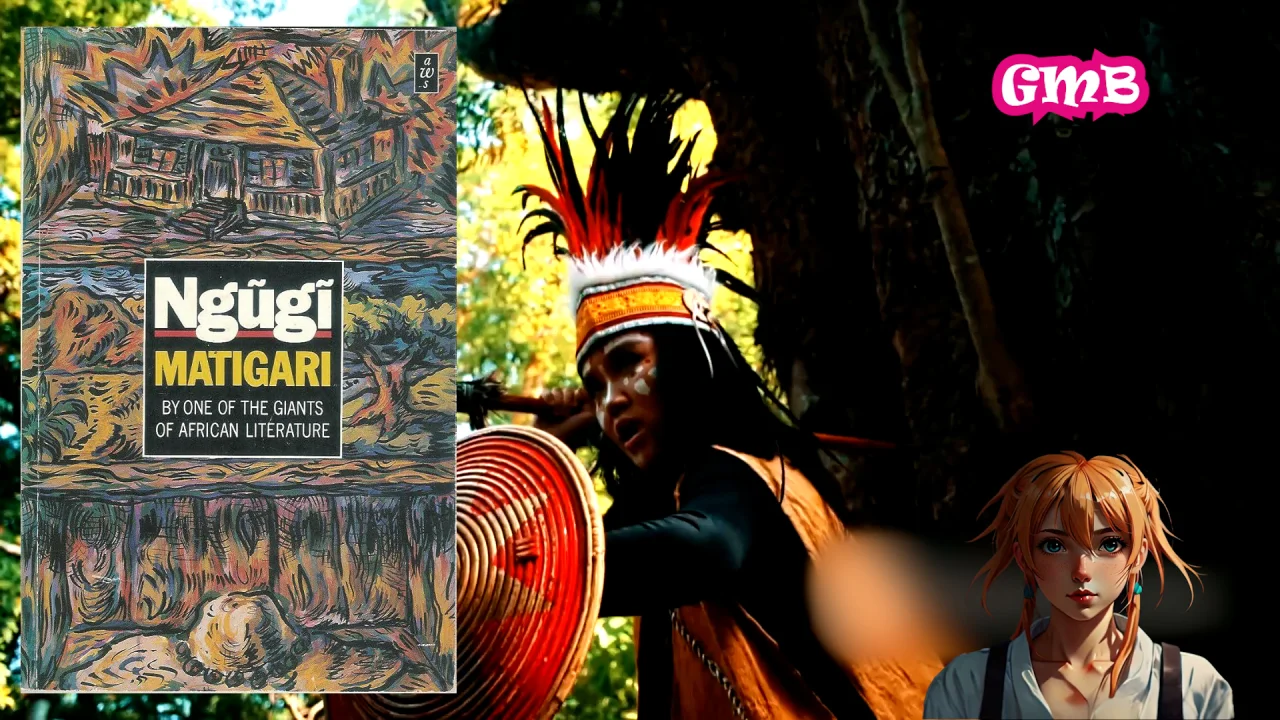
👉 The edition I read is available here:
Matigari by Ngũgĩ wa Thiong’o (Amazon)
A Man Steps Out of the Forest
Matigari ma Njiruungi—whose name literally means “the patriots who survived the bullets”—emerges from the forest after years of fighting in the resistance.
He’s done with war. He has buried his weapons. He believes independence means justice has finally arrived. All he wants now is simple: his land back.
Reasonable, right?
Instead, Matigari discovers that nothing has really changed. The colonial masters are gone, but the system they built is still intact—now operated by local elites who are very comfortable at the top.
So Matigari does something dangerously naïve.
He starts asking people where he can find truth and justice.
In a country where truth and justice are literally locked in a maximum-security prison, this is the equivalent of lighting a match in a fuel depot.
People don’t know what to do with him.
Some think he’s mad.
Some think he’s a ghost.
Some whisper that he might be Jesus Christ returned.
Others say he isn’t even a man at all.
But his name spreads. And so does the discomfort he causes.
Why This Story Still Hurts
At one point, Matigari says:
“My only thirst and hunger are to do with my troubled spirit. I have travelled far and wide looking for truth and justice…”
That line stayed with me long after I closed the book.
Because this isn’t really about Matigari.
It’s about every liberation movement that promised freedom and delivered hierarchy. About every revolutionary who believed sacrifice would be rewarded with dignity—only to be told to stay quiet now that power has settled.
Ngũgĩ exposes the cruelty of post-independence betrayal without pretending it’s accidental. The new rulers aren’t confused. They’re comfortable. And anyone who challenges that comfort must be silenced.
So Matigari is arrested.
Then arrested again.
Then declared insane and sent to a mental institution.
Because in an unjust system, believing in justice is treated as madness.
Words, Weapons, and the Limits of Peace
Matigari escapes imprisonment twice, and by then, something has shifted. The people who laughed at him begin to listen. The idea that the revolution isn’t finished starts to feel… possible.
But Matigari reaches a devastating conclusion:
“One cannot defeat the enemy with arms alone, but one could also not defeat the enemy with words alone.”
That sentence is the moral breaking point of the novel.
Peace fails. Dialogue fails. Morality fails.
So Matigari returns to the forest. He retrieves the weapons he once buried. Not because he loves violence—but because the system has made violence inevitable.
And that’s the warning at the heart of this book.
The Sellouts and the Patriots
One of Ngũgĩ’s sharpest critiques comes through characters like John Boy—a man educated by his community who later turns around and preaches individualism to the very people who raised him.
He declares that the masses are ignorant. That progress belongs to individuals, not communities.
It’s betrayal disguised as enlightenment.
Matigari sees it clearly:
“There are two types of people in this country. There are those who sell out, and those who are patriots.”
That line hits hard because it refuses neutrality. Ngũgĩ isn’t interested in polite moral gray areas. He’s asking readers to choose—and to accept the cost of that choice.
Why Matigari Was Feared
When Matigari was published in 1987, Kenyan authorities reportedly sent police officers to search for Matigari himself—believing he was a real revolutionary organizing resistance.
When they realized he was fictional, the book was banned anyway.
That tells you everything you need to know.
This novel doesn’t ask permission. It doesn’t soften its message. It doesn’t care about being “balanced.” It understands that stories can mobilize people—and that terrifies power.
👉 You can find the same edition here:
Matigari by Ngũgĩ wa Thiong’o on Amazon
My Honest Verdict
This isn’t a comfortable novel.
It’s repetitive at times.
It’s deliberately blunt.
It refuses subtlety when subtlety would weaken the point.
And yet—it works.
Because Matigari isn’t trying to entertain you. It’s trying to wake you up.
This isn’t a perfect novel.
But it’s an honest one.
And those are rare.
Final Thoughts
Matigari is for readers who believe literature should do something—disturb, provoke, unsettle. It’s for anyone who has ever wondered why freedom feels unfinished, why independence didn’t end injustice, or why those who fought hardest are often the first to be forgotten.
Ngũgĩ wa Thiong’o doesn’t offer solutions here. He offers a mirror. And what you see in it depends on which side of history you’re standing on.
👉 If you’d like to read the same edition I did, here’s the link again:
Matigari by Ngũgĩ wa Thiong’o (Amazon)
If you’ve read Matigari—or any of Ngũgĩ’s work—I’d love to hear what stayed with you. Some books end when you close them.
This one doesn’t.