 English
 French
 German
 Russian
 中文
中文

The Story That Asks You to Choose Your Truth
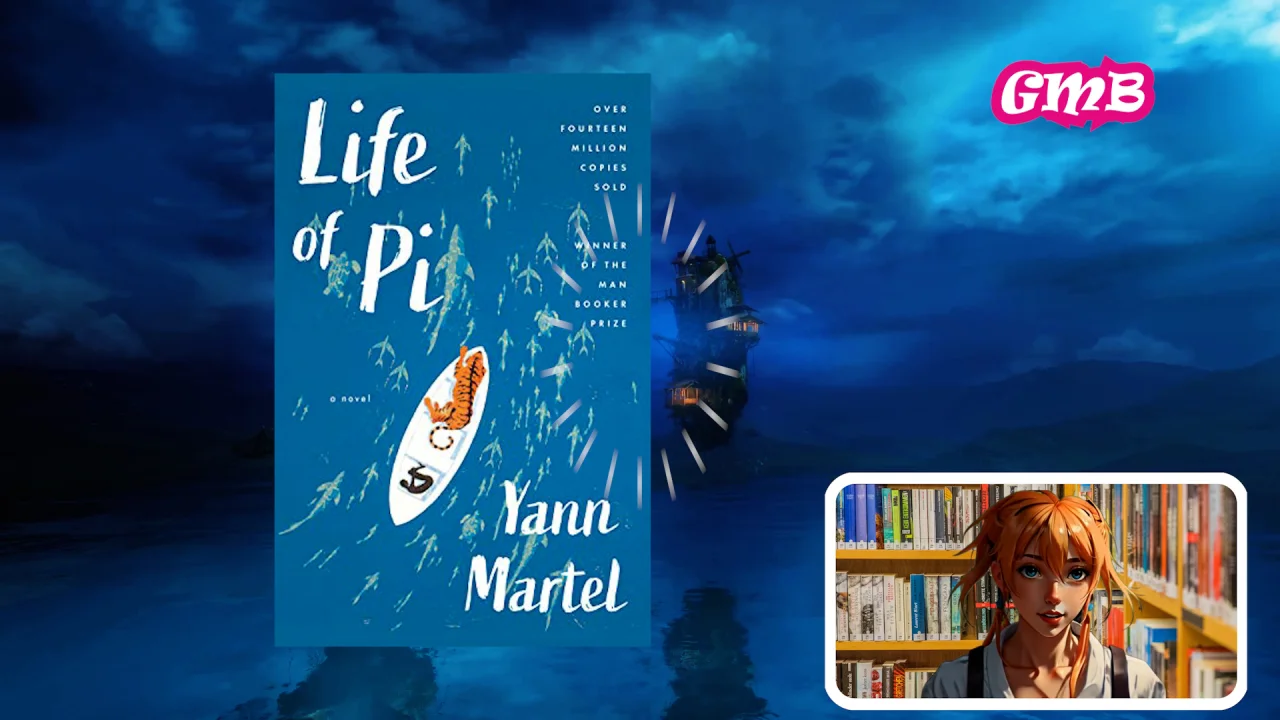
I kept pausing while reading this book—not because it was confusing, but because it kept asking me something I wasn’t ready to answer:
What kind of story do you choose to believe when survival is at stake?
There’s a moment where everything feels unreal—too strange, too poetic, too perfectly symbolic—and instead of rejecting it, I found myself leaning in. Not because I believed it… but because I wanted to.
That’s the quiet power of Life of Pi by Yann Martel. It doesn’t just tell you a story. It makes you complicit in it.
What Kind of Novel Is This?
This is a philosophical survival novel about belief—what we hold onto when everything else is stripped away.
Tone: reflective, strange, quietly intense
Pace: moderate (slow at first, then gripping)
Themes: faith, survival, storytelling, truth, identity
This book is for readers who:
-
Enjoy stories that blur reality and imagination
-
Like fiction that leaves questions unanswered
This book is NOT for readers who:
-
Want clear, straightforward narratives
-
Prefer action over introspection
👉 The edition I read is available here:
https://amzn.to/3XFAP9f
Summary (No Spoilers… Mostly)
Piscine Molitor Patel—who wisely renames himself Pi—grows up in India, surrounded by animals in his family’s zoo. He’s curious, deeply spiritual, and oddly comfortable living between worlds—religious, cultural, and intellectual.
But everything changes when his family decides to move to Canada.
What follows is a shipwreck in the Pacific Ocean—and Pi’s unimaginable survival on a lifeboat… with a Bengal tiger named Richard Parker.
That’s not even the strangest part.
Analysis & Review: Why This Story Stays With You
What makes Life of Pi unforgettable isn’t just the premise—it’s the way Yann Martel uses that premise to explore something deeper.
This is not really a story about a boy and a tiger.
It’s about how the human mind copes with the unbearable.
There’s a constant tension between beauty and brutality. One moment, the ocean feels like a place of wonder. The next, it becomes a stage for survival so raw it’s almost uncomfortable to witness. And somehow, Martel manages to hold both truths at once.
Pi himself is fascinating—not because he’s heroic in the traditional sense, but because he refuses to let go of meaning. His faith—spanning Hinduism, Christianity, and Islam—isn’t presented as confusion, but as hunger. A need to believe that existence, even in its harshest form, is still worth something.
And then there’s Richard Parker.
The tiger is not just an animal. He’s fear. Instinct. Discipline. Survival. Without him, Pi might not have made it. And that’s the unsettling part—you start to wonder whether the things that terrify us are sometimes the very things keeping us alive.
But the real twist—the part that lingers long after you close the book—is the question of truth.
Martel gives you two versions of the story.
One is magical, surreal, almost unbelievable.
The other is grounded, dark, and disturbingly realistic.
He doesn’t tell you which one is true.
He asks you which one you prefer.
And that question doesn’t leave you.
Strengths and Weaknesses
What worked:
-
The originality of the premise—completely unforgettable
-
The philosophical depth without feeling heavy-handed
-
The emotional undercurrent beneath the surreal events
What didn’t always work:
-
The beginning can feel slow and overly descriptive
-
Some readers may find the ambiguity frustrating rather than meaningful
Still, this isn’t a book that tries to please everyone.
This isn’t a perfect novel—but it’s an honest one.
And those are rare.
Conclusion & Recommendation
If you’re looking for a simple survival story, this might not satisfy you.
But if you’re willing to sit with uncertainty—to question truth, belief, and the stories we tell ourselves—then Life of Pi offers something deeper.
It’s a novel that respects your intelligence. It doesn’t hand you answers. It gives you a choice.
And somehow, that choice feels personal.
👉 If this sounds like your kind of book, you can find it here:
https://amzn.to/3XFAP9f
Final Thoughts
I keep thinking about that lifeboat.
Not the tiger. Not even the ocean.
But the silence. The isolation. The need to make sense of something that doesn’t make sense.
That’s what this book captures so well.
It reminds you that sometimes, survival isn’t just about staying alive—it’s about choosing the story that allows you to keep going.
And whether you believe Pi… or not…
You’ll remember him.