 English
 French
 German
 Russian
 中文
中文

A Severed Leg, No Answers — And a Story That Refuses to Explain Itself
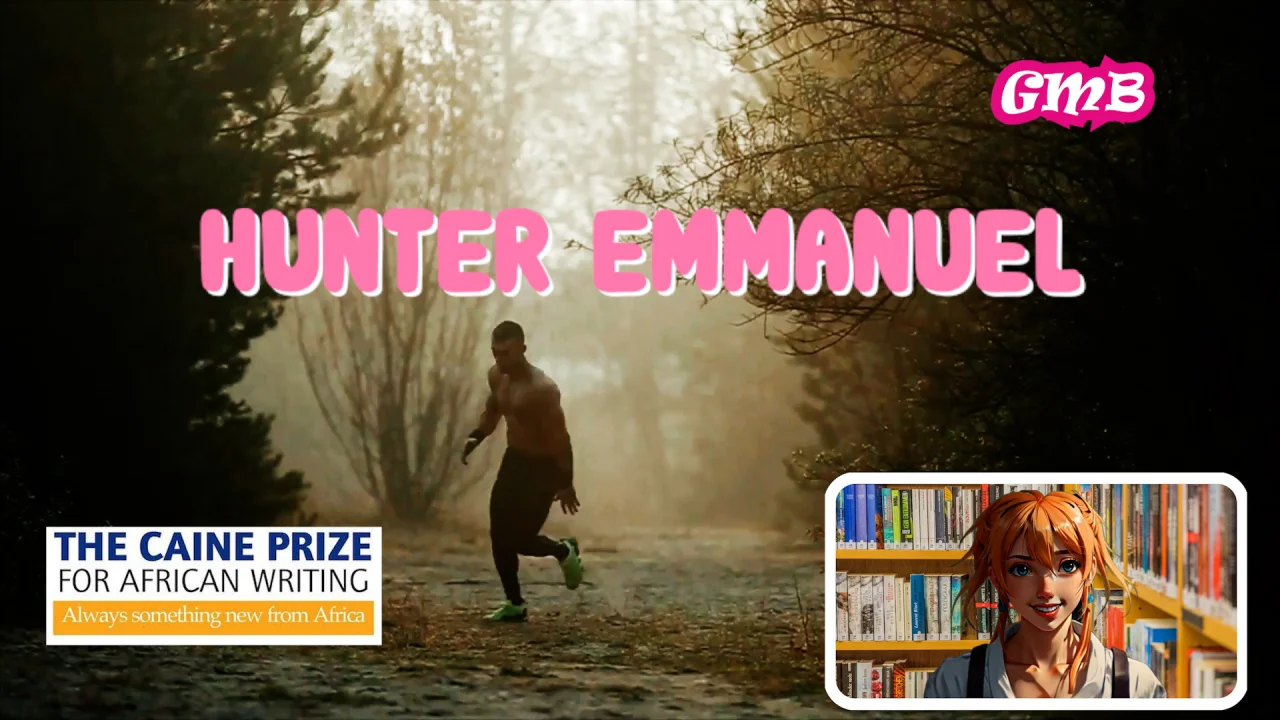
There’s a moment early in Hunter Emmanuel that genuinely stopped me.
Not because it was shocking in the usual thriller sense—but because it felt… wrong. Quietly wrong. A human leg hanging from a pine tree. No chaos. No panic. Just this still, unsettling image sitting there like it belongs.
And what stayed with me wasn’t the horror of it. It was the reaction to it—or lack of one.
Because in this story, even something that disturbing doesn’t trigger urgency. It triggers something colder. Something distant. And that tone never really lets you go.
What Kind of Novel Is This?
This is a noir, experimental, slow-burning psychological mystery about detachment, violence, and the absence of meaning in places where meaning should exist.
Tone: Dark, distant, unsettling
Pace: Slow
Themes: Moral ambiguity, violence, apathy, identity, silence
This book is for readers who:
-
Enjoy stories that withhold answers
-
Appreciate atmosphere over plot
-
Like fiction that feels uncomfortable and unresolved
This book is NOT for readers who:
-
Want clear resolutions and satisfying conclusions
-
Expect sharp detective work or logical progression
-
Need emotional connection to characters
👉 The edition I read is available here:
https://amzn.to/4s0Bxfk
Summary (No Spoilers)
Hunter Emmanuel is a drifting, almost indifferent man—once a security officer, now just… existing.
One day, he stumbles upon a severed human leg hanging in a forest.
That’s it. No body. No crime scene. No urgency.
The woman it belongs to—Zara—is somehow still alive, recovering in a hospital. She knows exactly who did it. And why.
But she refuses to say.
And for reasons that are never fully explained, Hunter decides he must investigate.
What follows isn’t a traditional mystery—but a slow, frustrating dance between a man who wants answers and a woman who won’t give them.
Analysis & Review
1. A Mystery That Refuses to Be Solved
If you go into this expecting a classic detective story, this book will test your patience.
Hunter isn’t Sherlock Holmes. He’s not even particularly competent as an investigator. There’s no clever deduction, no trail of clues, no satisfying breakthroughs.
At one point, his “investigation” literally leads to him being knocked unconscious and waking up in a hospital.
That tells you everything you need to know.
This isn’t a story about solving a crime—it’s about sitting with the fact that some things remain unsolved.
2. Emotional Distance as a Deliberate Choice
One of the most striking things about this novel is how emotionally distant it feels.
Hunter is hard to connect with. Zara is even harder.
You don’t root for them. You don’t fully understand them. You’re not invited to.
And that’s what makes the story unsettling.
There’s no emotional anchor—just two people circling around a truth that never fully surfaces.
It feels intentional. Like the author is pushing you away on purpose.
3. The Power of Atmosphere
Where the book truly shines is in its imagery and tone.
That opening scene with the severed leg? It lingers.
The writing is gritty, vivid, and sometimes almost tactile. You can feel the environments—smell the pine, sense the decay, sit in the discomfort.
It’s not a plot-driven experience. It’s an atmospheric one.
And in that sense, it works.
4. Strange Dialogue & Fragmented Reality
The dialogue feels… off.
Conversations between Hunter and Zara don’t flow naturally. They feel staged, almost artificial. Like two people speaking lines they don’t fully believe.
At first, it feels like a flaw.
But over time, it starts to feel like part of the design.
The same goes for how the story blends dreams and reality. They don’t merge smoothly—they collide. Abruptly. Uncomfortably.
Instead of creating a seamless surreal experience, the narrative feels fractured.
And again—it seems intentional.
5. Frustration vs Meaning
This is not an easy book to enjoy.
It withholds information. It avoids resolution. It refuses to reward your curiosity in the way most stories do.
And yet…
It’s not empty.
It feels like it’s saying something about violence. About how certain lives are treated as less important. About silence—chosen or forced.
It reminded me of Tail of the Blue Bird, where the lack of resolution becomes the point.
Sometimes, not knowing forces you to sit longer with the story.
To think harder.
To feel more.
About the Author
Constance Myburgh—also known as Jenna Bass—is not your typical novelist.
She’s a filmmaker, photographer, writer, and even a former magician.
Her work spans multiple creative fields, including her award-winning short film The Tunnel, which screened at Sundance and Berlin.
That experimental, visual background shows in this novel.
This isn’t someone trying to follow literary conventions. This is someone deliberately breaking them.
Conclusion & Recommendation
Hunter Emmanuel is not a comfortable read.
It’s quiet, strange, and often frustrating. It sets up a mystery and then refuses to solve it. It introduces characters and keeps them just out of reach.
But that’s also what makes it memorable.
This isn’t a book you “enjoy” in the traditional sense. It’s one you sit with. One that lingers—not because of what it tells you, but because of what it doesn’t.
If you’re the kind of reader who values atmosphere over answers, and questions over closure, this might be worth your time.
👉 If you’d like to explore this unsettling story yourself, here’s the edition I read:
https://amzn.to/4s0Bxfk