 English
 French
 German
 Russian
 中文
中文

How We Buried Puso Is the Book That Exposes the Lie of “Making It Abroad”
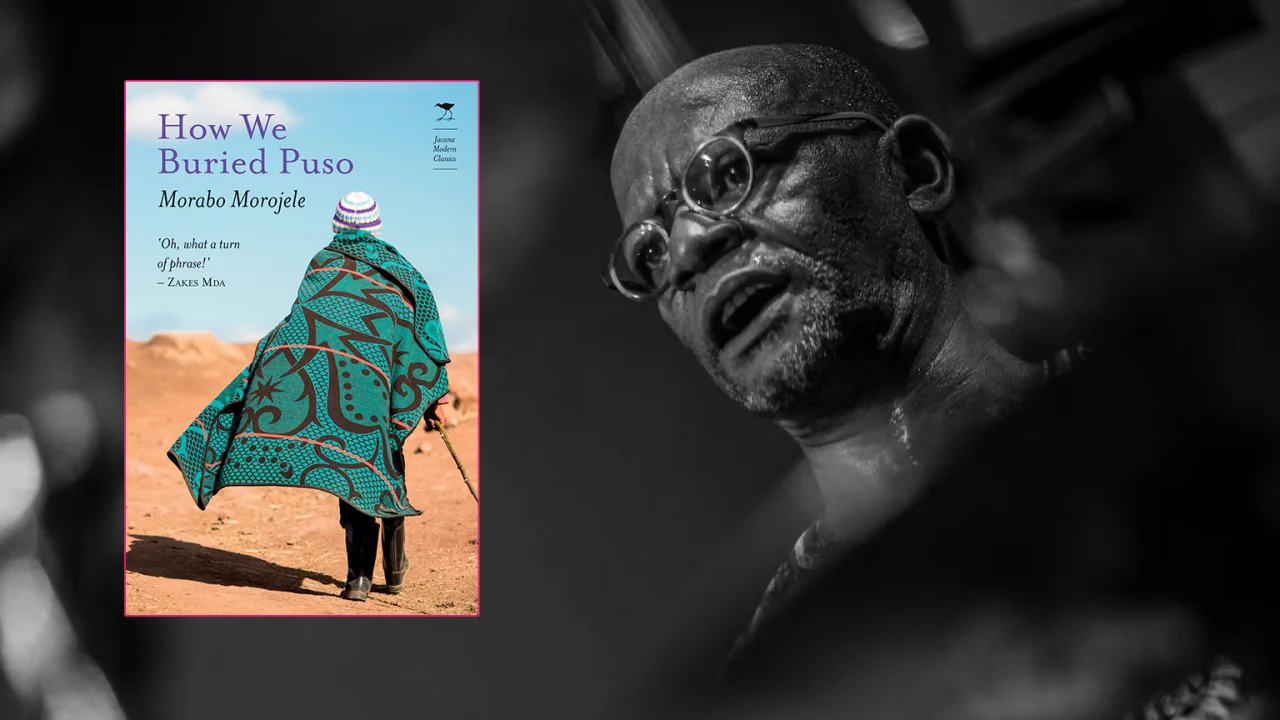
There’s a particular kind of lie we tell when we leave home.
It’s the lie you tell over crackly phone calls.
The lie you post on Facebook with a borrowed smile.
The lie you rehearse so often it starts sounding like truth.
While reading How We Buried Puso, I kept thinking about that moment when someone back home asks, “How’s life over there?” And you pause—just long enough—before replying, “It’s amazing. Never better.”
Morabo Morojele’s novel lives inside that pause.
It’s funny in places, painful in others, and quietly devastating in the way only honest stories can be. This isn’t a novel that begs for your attention. It waits for you to slow down, listen, and catch its rhythm.
What Kind of Novel Is This?
How We Buried Puso is a lyrical, reflective literary novel about migration, performance, grief, and the cost of pretending.
Tone: Poetic, melancholic, quietly humorous
Pace: Slow, deliberate, jazz-like
Themes:
-
Migration and disillusionment
-
Masculinity and silence
-
Family, guilt, and return
-
Political decay and inherited trauma
This book is for readers who:
-
Enjoy African literary fiction that experiments with language
-
Like stories that sit with emotion instead of explaining it
-
Appreciate symbolism, ambiguity, and layered meaning
This book is not for readers who:
-
Want fast-paced plots and clear resolutions
-
Prefer straightforward narration
-
Get frustrated by poetic or unconventional prose
👉 The edition I read is available here:
How We Buried Puso on Amazon
Why This Story Matters (The Emotional Core)
At its heart, How We Buried Puso isn’t really about death.
It’s about what we bury in order to survive.
Molefe—Lefe to his friends—leaves home for “The Empire,” chasing the familiar dream of success abroad. But instead of wealth and dignity, he finds loneliness, low-paying work, and the exhausting labor of keeping up appearances. Back home, people imagine luxury. In reality, he’s counting coins, skipping meals, and hiding shame.
When his grandmother dies—the one person who anchored him—he can’t afford to return home. Not emotionally. Not financially. So he lies.
Then his brother Puso dies.
And the lie collapses.
What stayed with me long after finishing this book is how quietly it exposes the violence of expectation. The pressure to succeed. The pressure to send money. The pressure to be proof that migration works.
This novel refuses to answer easy questions.
It doesn’t tell us whether leaving was right or wrong.
It simply asks: What does pretending cost us?
And that question lingers.
A Glimpse of the Story (No Spoilers)
The novel follows Lefe, a migrant living abroad in a place simply called “The Empire.” When his brother Puso dies back home, Lefe is forced to return—physically and emotionally—to a place he’s been running from.
What follows isn’t a neat homecoming.
It’s an uncomfortable reckoning with family, memory, guilt, and the realization that some losses can’t be dressed up or explained away.
This is less a plot-driven story and more a moral and emotional journey—one where burial is both literal and symbolic.
What Makes How We Buried Puso Unique
1. The Language
This book doesn’t behave.
Nouns become verbs.
Sentences bend and break.
The prose swings like a jazz improvisation—unpredictable, disorienting, but deeply intentional.
At first, it can feel confusing. Then suddenly, it clicks.
And once it does, you realize the language mirrors Lefe’s inner chaos—his fragmented memories, his guilt, his exhaustion.
2. The Setting
Places are deliberately unnamed: The Empire, the country neighboring ours. This vagueness gives the novel a dreamlike, almost mythical quality.
But don’t mistake ambiguity for softness.
The political commentary is sharp—colonial legacies, unemployment, migration, HIV/AIDS, and social decay all pulse beneath the surface without ever turning into lectures.
3. The Character of Twice
Twice, one of Lefe’s friends, is unforgettable.
He stutters. He disappears. He survives a war that’s never named.
Is he a symbol of trauma?
A ghost of history?
A reminder of what violence does to memory?
The book never tells you—and that’s the point.
Who This Book Is Perfect For
You’ll enjoy this novel if:
-
You like books that sit with discomfort
-
You enjoy African literature that challenges form
-
You read fiction to feel, reflect, and question
You might struggle with this book if:
-
You prefer linear storytelling
-
You need clear heroes and villains
-
You dislike open endings and unresolved questions
👉 If this sounds like your kind of book, you can find it here:
How We Buried Puso on Amazon
About the Author: Morabo Morojele
Morabo Morojele isn’t just a writer—he’s also a jazz musician, and you feel that influence on every page.
This was his debut novel, and it reads like the work of someone unconcerned with pleasing everyone. He writes with confidence, restraint, and trust in the reader’s intelligence.
The rhythm, the pauses, the silences—this is prose composed, not merely written.
My Honest Verdict
This isn’t an easy novel.
The fragmented structure, poetic phrasing, and lack of narrative hand-holding can be challenging. At times, you may feel lost.
But the reward is worth it.
How We Buried Puso is raw, honest, and deeply human. It captures a migrant experience rarely discussed—the emotional debt of pretending everything is fine.
This isn’t a perfect novel — but it’s an honest one.
And those are rare.
Final Thoughts & Recommendation
How We Buried Puso is the kind of book that doesn’t shout for attention.
It hums.
It stays with you quietly, resurfacing days later when you think about home, distance, or the stories people tell to survive.
If you’ve ever felt caught between who you are and who you’re expected to be—this book will feel uncomfortably familiar.
👉 If you’d like to read the same edition I did, here’s the link:
How We Buried Puso on Amazon
Optional Add-Ons
Similar Books You Might Like
-
The Beautyful Ones Are Not Yet Born – Ayi Kwei Armah
-
Season of Migration to the North – Tayeb Salih
Best Format
Paperback works best—you’ll want to slow down, reread, and sit with the language.