 English
 French
 German
 Russian
 中文
中文

Living in the Shadow of Revolution: A Review of Burger’s Daughter by Nadine Gordimer
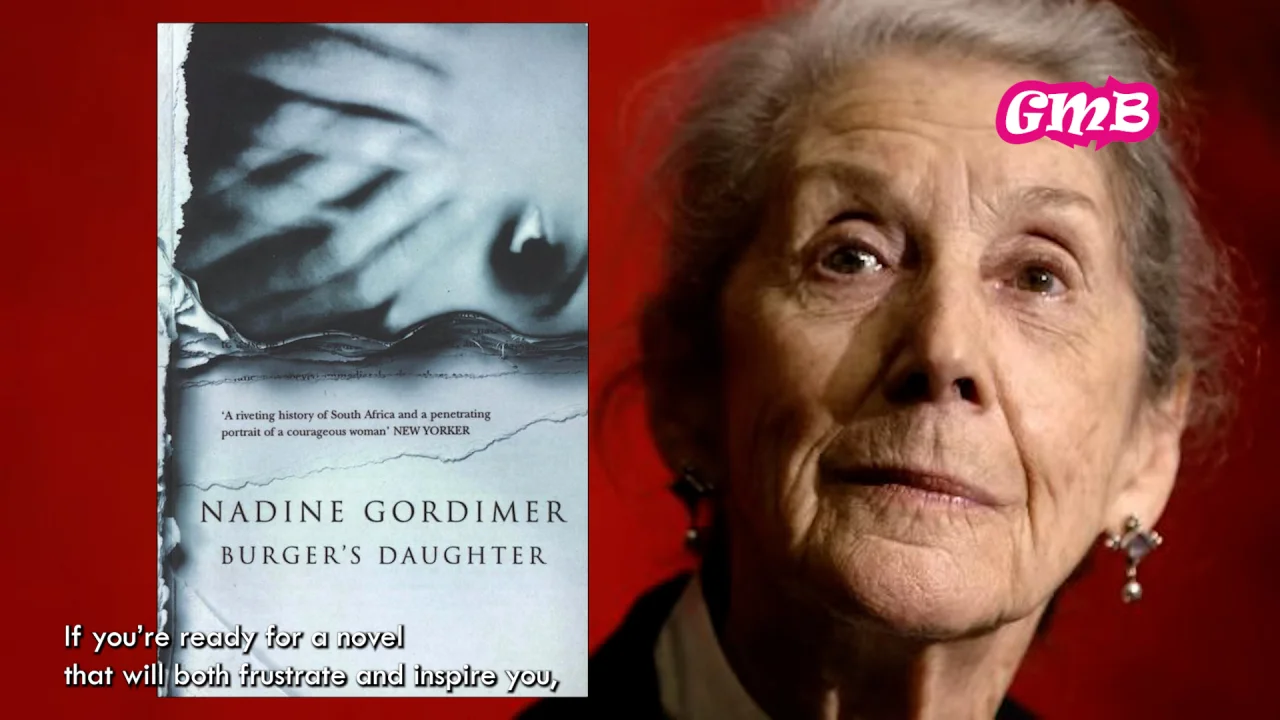
Have you ever wondered what it’s like to grow up as the child of someone legendary, someone whose life and death carry the weight of a nation? That’s the world Rosa Burger inhabits in Burger’s Daughter, a novel by Nobel Prize–winning author Nadine Gordimer. Unlike most coming-of-age stories, Rosa’s childhood isn’t about scraped knees or first crushes—it’s about revolutionary ideals, imprisonment, and the heavy burden of a family name that carries both fame and tragedy. Gordimer’s prose captures this tension in a way that is both piercing and unflinchingly honest, making the novel as enlightening as it is emotionally taxing.
This isn’t a light read for a casual afternoon. Gordimer’s South Africa is suffused with the oppression of apartheid, the quiet despair of those living under constant surveillance, and the moral complexities that arise when fighting for justice comes at a personal cost. And yet, she delivers all of this without drowning the reader in adjectives or overly flowery language—the pain is present, raw, and persistent, quietly pulsing through every line.
A Legacy of Resistance: Rosa’s Childhood and Family
Rosa Burger is the daughter of Lionel Burger, a white revolutionary who literally walked into a life sentence in prison for opposing apartheid. Her mother, Cathy, shares the same steadfast courage, standing beside Lionel through danger and heartbreak. Their home is not just a household—it’s a hub of resistance. Within its walls, blacks and whites mingle freely, plotting and debating as if apartheid doesn’t exist.
Rosa grows up acutely aware of her family’s struggles, though not indoctrinated—this is simply her reality. The Burgers endure profound losses, from the death of a young son to betrayals from trusted comrades. Rosa’s childhood friendships, like the one with Baasie, the son of her father’s black comrade, are eventually torn apart by the harsh laws of segregation, creating fissures that will reverberate throughout her adult life.
When both her parents die, Rosa finds herself unmoored. Her family home is sold, and she drifts, working as a physiotherapist while carrying the heavy legacy of her parents’ fight against apartheid. Gordimer’s narrative here is intimate, reflective, and suffused with the quiet agony of a childhood lost to politics.
Searching for Identity: Rosa in Europe
Seeking distance from South Africa, Rosa travels to France, entering a new phase of her personal journey. Told in the form of letters and introspective monologues, this section explores Rosa’s attempt to define herself beyond her father’s revolutionary shadow. She encounters Lionel’s first wife, engages in a complex affair, and, crucially, reunites with Baasie.
This reunion is far from sentimental. Baasie, shaped by the brutal realities of apartheid, confronts Rosa with a harsh truth: her father’s martyrdom has drawn global attention, while countless black South Africans suffer and die largely unnoticed. This confrontation forces Rosa—and the reader—to grapple with questions of privilege, recognition, and the moral weight of inherited legacies.
Gordimer masterfully shows that resistance is never clean or simple; it is tangled with guilt, identity, and the impossible desire to do justice in a profoundly unjust world.
Returning Home: South Africa and the Weight of the Past
Back in South Africa, Rosa resumes her work as a physiotherapist, but the ghosts of her family’s political legacy follow her relentlessly. The year is 1976, the time of the Soweto Uprising. The streets are alive with rebellion, met by brutal police crackdowns. Rosa, despite her attempts to stay on the sidelines, becomes ensnared in the struggle, facing arrest for supporting the African National Congress (ANC) and inciting revolt.
Her journey illustrates the inexorable pull of history and the moral responsibility of those born into privilege, even when they seek a quieter life. Gordimer’s portrayal of Rosa’s internal conflict—the tension between personal desire and inherited duty—is one of the novel’s most compelling elements.
Themes and Insights
Burger’s Daughter explores the weight of identity, the complexity of morality, and the burdens inherited from parents who lived extraordinary lives. It asks uncomfortable but necessary questions:
-
Can someone who benefits from an oppressive system ever claim a clean conscience?
-
How does one reconcile personal ambition with inherited responsibility?
-
Whose suffering gets recognized, and whose is ignored?
Gordimer doesn’t offer easy answers. Instead, she immerses the reader in the messy reality of apartheid-era South Africa, forcing reflection on privilege, resistance, and justice.
About Nadine Gordimer
Nadine Gordimer (1923–2014) was a South African novelist and political activist whose works explore race, morality, and political struggle. She won the Nobel Prize for Literature in 1991. Burger’s Daughter, published in 1979, was immediately controversial and banned in South Africa for its unflinching critique of apartheid. Gordimer’s writing remains a testament to courage, both literary and personal.
My Verdict
Burger’s Daughter is challenging, dense, and at times heavy, but it is essential reading for anyone seeking a deep understanding of apartheid’s moral and emotional landscape. Gordimer does not shy away from complexity, and the result is a novel that resonates long after the final page. Rosa’s story is both personal and political, a lens through which we witness the costs of resistance and the burdens of legacy.
If you are ready for a novel that will challenge your perspectives and leave you both frustrated and inspired, Burger’s Daughter is an unforgettable journey.
Who Should Read This Book
You’ll enjoy this novel if you:
-
Want a profound exploration of apartheid and resistance
-
Enjoy novels that mix personal and political narratives
-
Like introspective, character-driven stories
You might struggle if you:
-
Prefer light, fast-paced fiction
-
Need clear heroes and villains
-
Dislike morally complex, open-ended stories
👉 You can find Burger’s Daughter on Amazon here.