 English
 French
 German
 Russian
 中文
中文

Fathers and Sons by Ivan Turgenev — When Generations Go to War
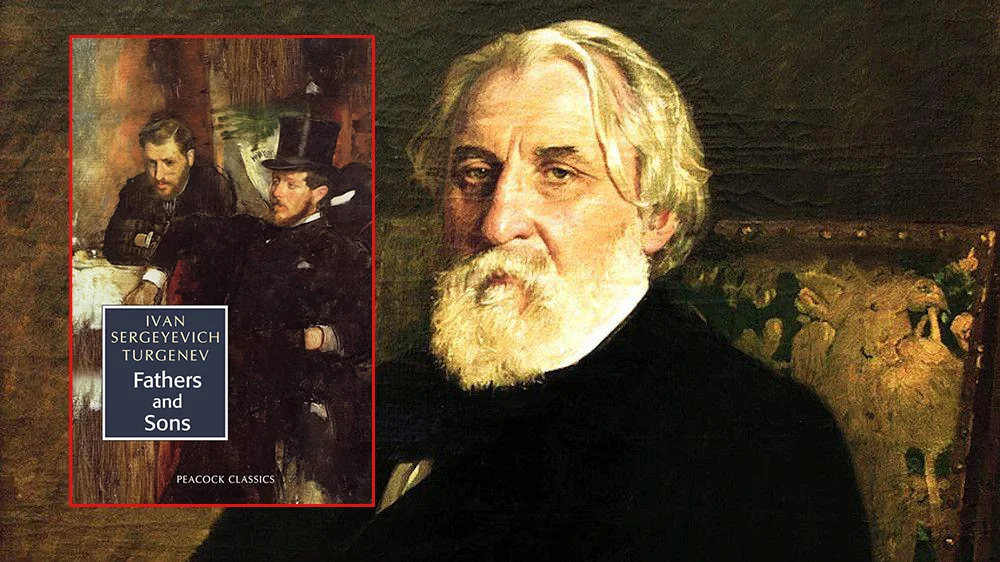
Have you ever brought home a friend who not only criticizes your family, your traditions, and your taste in poetry… but also kisses your stepmother, shoots your uncle, and still insists he’s the smartest person in the room?
Yeah. Family reunions can be rough.
Now imagine all of that unfolding in 19th-century Russia—carriages rattling down dirt roads, pistols loaded at dawn, and heated debates over whether Pushkin’s poetry matters more than a biology textbook. That’s the emotional battlefield Ivan Turgenev drops us into in Fathers and Sons, a novel that feels like part soap opera, part philosophical duel, and part tragic comedy.
This is not a quiet, polite classic. It’s loud, uncomfortable, and still painfully relevant.
👉 The edition I read is available here:
Fathers and Sons (Amazon paperback edition)
What Kind of Novel Is Fathers and Sons?
This is a philosophical realist novel about generational conflict rather than plot twists.
-
Tone: reflective, tense, occasionally ironic
-
Pace: moderate, with bursts of emotional intensity
-
Themes: tradition vs. progress, nihilism, love, pride, family, identity
This book is for readers who:
-
Enjoy novels that argue with you instead of entertaining you politely
-
Like character-driven stories where ideas matter as much as events
This book is not for readers who:
-
Want fast-paced action or constant drama
-
Prefer clear heroes and villains
A Glimpse of the Story (No Spoilers)
The year is 1859. On a modest Russian estate, Nikolai Petrovich—a widowed landowner—waits anxiously for his son Arkady to return from university. Like most parents, he’s hoping for warmth, connection, maybe even pride.
What he gets instead is change.
Arkady arrives from St. Petersburg armed with new ideas and accompanied by his close friend Bazarov—a medical student who believes in nothing. No religion. No art. No tradition. No authority. Only science and cold reason.
From the moment Bazarov steps into the household, the estate becomes an ideological pressure cooker. Breakfast conversations turn into debates. Family affection turns into quiet resentment. And before long, ideas spill over into love, jealousy, scandal—and even a duel.
Why This Story Still Hurts (and Matters)
What stayed with me long after finishing Fathers and Sons wasn’t the duel or the romance—it was the feeling that I had just watched an entire generation talk past another one.
Turgenev doesn’t caricature the older generation. Nikolai and Pavel aren’t fools clinging blindly to the past. They value poetry, dignity, and moral structure because those things once worked. Their world made sense to them.
But then there’s Bazarov.
Bazarov is magnetic and unbearable at the same time. He represents the intoxicating arrogance of youth—the belief that everything before you was wrong and everything after you will be better because you are here now. He mocks art, dismisses love, and bulldozes tradition with confidence that feels almost admirable… until it collapses.
Because the cruel irony is this: the man who denies emotion is destroyed by it.
When Bazarov falls for Anna Odintsova, his entire worldview fractures. He doesn’t know how to live with love, vulnerability, or contradiction. His death feels less like tragedy and more like symbolism—pure nihilism cannot survive contact with real human feeling.
Arkady’s journey runs in the opposite direction. He starts by parroting Bazarov’s ideas, mocking poetry and tradition. But quietly, almost shyly, he discovers that fulfillment doesn’t come from tearing things down. It comes from building something livable—love, work, family, continuity.
Turgenev refuses to give us an easy answer. He doesn’t crown a winner. Instead, he shows us that progress and tradition are doomed to collide—and that something human, painful, and necessary is born from that collision.
The Duel That Says Everything
The duel between Pavel and Bazarov is one of the most revealing moments in the novel.
On the surface, it’s absurd—two grown men standing in a forest with pistols over pride and jealousy. But underneath, it’s deeply personal. Ideas aren’t just ideas here. They’re tied to honor, love, masculinity, and identity.
And when Bazarov, after shooting Pavel, immediately tends to his wound as a doctor, Turgenev delivers a quiet reminder: even the most radical minds are still human.
My Honest Verdict
This isn’t a perfect novel—but it’s an honest one.
What worked:
-
Exceptionally sharp psychological insight
-
Nuanced portrayal of both generations
-
A protagonist who is deeply flawed yet unforgettable
What didn’t:
-
Some readers may find the philosophical debates heavy
-
The pacing may feel slow if you’re expecting plot-driven drama
And yet, I still recommend Fathers and Sons because it doesn’t preach. It listens. It observes. It allows contradictions to exist without resolving them neatly.
👉 You can find the same edition I read here:
Fathers and Sons by Ivan Turgenev (Amazon link)
Final Thoughts
Every generation believes it’s the one that finally figured everything out. And every generation eventually realizes it didn’t.
That’s why Fathers and Sons still works. It understands that progress doesn’t come from destroying the past—or worshipping it—but from enduring the uncomfortable tension between the two.
If you’ve ever argued with your parents about values, rolled your eyes at tradition, or felt quietly disappointed by the future promised to you, this book will feel uncomfortably familiar.
👉 If this sounds like your kind of read, the edition I recommend is available here:
Fathers and Sons – Paperback Edition on Amazon