 English
 French
 German
 Russian
 中文
中文

The Book That Got a President Overthrown
There was a moment while reading this book when I had to pause.
Not because the writing was complicated. Not because the arguments were confusing.
But because of a disturbing thought: What if this man was right?
Imagine writing a book so politically explosive that it gets banned in the United States. And then—exactly one year after publication—you are overthrown in a coup while serving as the president of your country.
That’s not the plot of a thriller.
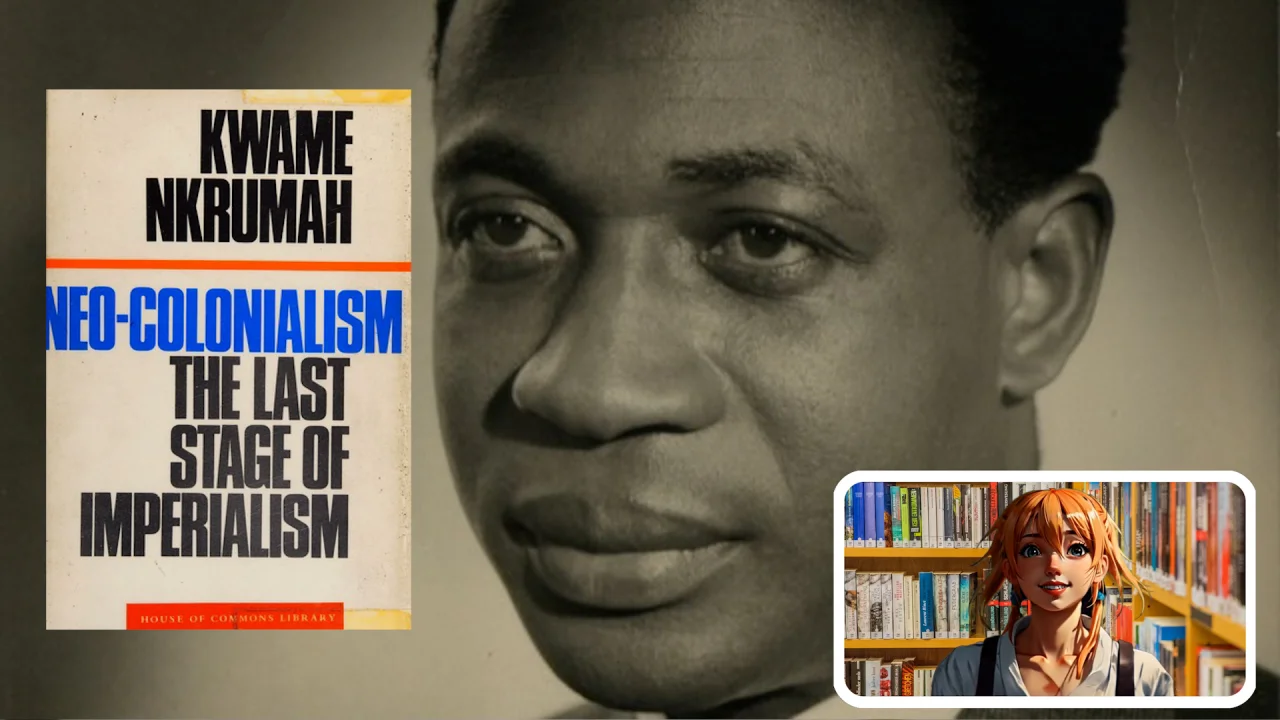
That’s the real history behind Neo-Colonialism: The Last Stage of Imperialism by Kwame Nkrumah.
And once you start reading it, you begin to understand why powerful people wanted it silenced.
What Kind of Book Is This?
This is a political analysis / historical critique about the hidden systems that shape Africa’s relationship with global powers.
Tone: analytical, urgent, confrontational
Pace: moderate
Themes: power, exploitation, economics, independence, imperialism, African unity
This book is for readers who:
-
Want to understand the economic forces shaping African politics
-
Enjoy books that challenge accepted narratives
-
Are interested in Pan-African thought and global power structures
This book is NOT for readers who:
-
Prefer light or purely entertaining reads
-
Want simple answers instead of complex realities
👉 The edition I read is available here:
Neo-Colonialism: The Last Stage of Imperialism
Why This Book Still Matters
The central idea of the book is brutally simple.
Africa gained political independence.
But economic control never really left.
Nkrumah opens with a powerful observation:
Africa is rich in resources, yet the wealth produced from its soil continues to enrich others.
In other words, the paradox of Africa.
The continent has gold, oil, diamonds, copper, fertile land—and yet many of its nations struggle with poverty, debt, and dependency.
Nkrumah argues that this contradiction is not accidental.
It is the result of a system he calls neo-colonialism.
Instead of ruling territories directly, powerful nations now influence them economically and politically from a distance.
Countries may have their own flags, parliaments, and presidents.
But the real decisions often lie elsewhere—in foreign corporations, banks, and geopolitical alliances.
Reading this argument today feels almost eerie.
When you see foreign military interventions in places like Libya.
When multinational corporations control massive mining operations across Africa.
When aid flows into the continent but development still struggles to keep pace.
You begin to see the patterns Nkrumah described decades ago.
A Glimpse of the System (No Spoilers Needed)
One of the most fascinating parts of the book is how methodically Nkrumah explains the mechanics behind global economic control.
He describes how corporations dominate industries through vertical and horizontal integration.
In simple terms:
They don’t just mine resources.
They control:
-
the mines
-
the transportation networks
-
the processing industries
-
the global markets
-
and even the final manufactured products
Imagine owning every stage of bread production—from the wheat farm to the bakery to the grocery store.
You would essentially control the price of bread everywhere.
That’s the level of power some multinational corporations hold over natural resources.
Nkrumah also highlights how seemingly independent financial institutions are often deeply interconnected.
Banks, mining companies, shipping corporations, and international markets form a vast network—one that allows wealth to flow outward while leaving resource-rich countries struggling to develop.
It’s like an octopus with tentacles reaching into every sector of the economy.
The Cultural Dimension of Power
What surprised me most was that Nkrumah didn’t limit his argument to economics.
He also talks about culture, education, and media.
According to him, neo-colonial influence works not only through money but also through ideas.
Cultural institutions, foreign media, educational programs, and diplomatic networks can shape how people think about their own countries.
Over time, societies may begin to believe that development must always come from outside—that progress requires foreign direction.
Whether one agrees fully with Nkrumah or not, the argument forces you to question something uncomfortable:
How much of the global narrative about Africa is shaped by those who benefit from the existing system?
Who This Book Is Perfect For
You’ll enjoy this book if:
-
You like books that challenge political assumptions
-
You enjoy historical analysis mixed with economics
-
You read nonfiction to understand power structures
You might struggle with this book if:
-
You prefer fast-paced storytelling
-
You want purely neutral historical writing
-
You dislike politically charged ideas
👉 If this sounds like your kind of book, you can find it here:
Neo-Colonialism: The Last Stage of Imperialism
My Honest Verdict
This is not an easy book to review.
Not because it is poorly written—quite the opposite.
It’s difficult because the amount of information is overwhelming.
Nkrumah fills the book with statistics, economic data, corporate structures, and historical examples. At times it reads almost like a political report rather than a traditional book.
That density can slow the reading experience.
But it also makes the argument harder to dismiss.
This isn’t just rhetoric. It’s documentation.
What worked for me:
-
The clarity of Nkrumah’s central argument
-
The historical insight from a leader who experienced colonialism firsthand
-
The boldness of naming specific corporations and institutions
What didn’t work as well:
-
The heavy economic detail may overwhelm casual readers
-
Some sections feel more like policy analysis than narrative
Still, this isn’t meant to be comfortable reading.
It’s meant to expose systems.
And in that sense, it succeeds.
About the Author
The author, Kwame Nkrumah, was not just a political thinker.
He was Ghana’s first Prime Minister and first President, leading the country to independence from Britain in 1957.
He was also a major figure in the Pan-African movement and helped establish the Organization of African Unity, the institution that later evolved into today’s African Union.
Nkrumah believed deeply that Africa’s future depended on unity. Fragmented states, he argued, would always be vulnerable to economic domination.
His presidency ended in 1966 when he was removed from power in a military coup while traveling abroad.
Decades later, declassified documents revealed that foreign intelligence agencies had indeed taken interest in his government.
Which makes the story behind this book even more chilling.
Final Thoughts
Some books entertain you.
Others challenge you.
And then there are books like Neo-Colonialism: The Last Stage of Imperialism, which force you to rethink the way the world works.
Whether you agree with every argument or not, Nkrumah’s analysis raises questions that still feel painfully relevant today.
Why do resource-rich nations remain poor?
Why do international corporations wield so much power over developing economies?
And what would true independence actually look like?
These are not comfortable questions.
But they are necessary ones.
If you’re interested in understanding the deeper forces shaping Africa’s past and present, this is a book worth reading—and thinking about long after the final page.
👉 If you’d like to read the same edition I did, you can find it here:
Neo-Colonialism: The Last Stage of Imperialism