 English
 French
 German
 Russian
 中文
中文

African Agenda by Camynta Baezie — When a Village in Ghana Holds the World Hostage
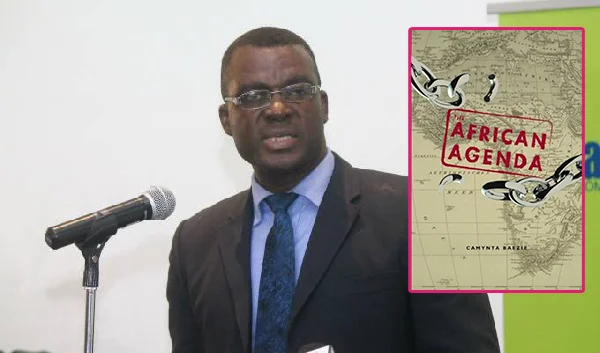
There’s a moment early in African Agenda that made me stop and laugh in disbelief—not because it was funny, but because of how audacious it was. Three African intellectuals. A forgotten village in Ghana. And a plan bold enough to force the world’s most powerful nation to reconsider how it treats Africa.
This isn’t one of those novels that politely asks for your attention. It grabs you by the collar and says, “Sit down. Let’s talk about power.”
Camynta Baezie’s African Agenda is the kind of book that feels like it was written out of frustration, hope, anger, and stubborn belief all at once. And somehow, it works.
👉 The edition I read is available here: African Agenda by Camynta Baezie on Amazon
What Kind of Novel Is This?
This is a political thriller with a deeply Afrocentric soul.
It’s not really about hacking nuclear weapons—though that does happen. It’s about agency. About what happens when Africans stop asking for permission and start rewriting the rules of global power.
Tone: Bold, intense, occasionally humorous, and emotionally heavy
Pace: Moderate, with bursts of high tension
Themes:
-
Power and global inequality
-
African unity
-
Sacrifice and obsession
-
Friendship and betrayal
-
The cost of vision
This book is for readers who:
-
Enjoy political thrillers with real-world implications
-
Like fiction that challenges Western-dominated narratives
-
Believe stories can imagine different futures for Africa
This book is not for readers who:
-
Want light, escapist entertainment
-
Prefer clear heroes and villains
-
Dislike political or ideological fiction
A Brotherhood Forged in Brilliance
The story begins quietly enough at Ghana’s University of Science and Technology, where three students—Kutini, Mike Zinbalan, and Kofi Mensah—are thrown together by circumstance.
They become inseparable. Different backgrounds, different temperaments, but the same hunger to matter. People call them the Three Musketeers, and for once, the nickname fits.
Kutini is driven and idealistic, shaped by life in Ghana’s Upper West.
Mike carries the weight of a military household and unspoken trauma.
Kofi balances them out, practical and politically minded.
At first, it feels like a campus story about friendship and ambition. But Baezie doesn’t let that comfort last long.
Violence Changes Everything
Ghana’s unstable political climate bleeds into their personal lives when Mike’s father—a military colonel—uncovers damning evidence against a dangerous figure within the armed forces.
What follows is brutal and sudden.
During yet another coup, Mike’s entire family is wiped out.
No theatrics. No mercy.
Mike survives, but survival comes at a cost. He’s left hollowed out, haunted by insomnia and grief. And this is where African Agenda quietly shifts gears—from a story about friendship to a story about what trauma turns people into.
Education as Escape — and Weapon
Mike buries himself in books and earns his way to the United States. Kutini heads to the UK, diving deep into computer science. The boys who once shared dorm rooms now sharpen their minds on opposite sides of the Atlantic.
They don’t just succeed—they dominate.
Kutini becomes a tech prodigy with a PhD.
Mike evolves into a master programmer.
And back home, Kofi rises through political ranks to become Ghana’s Foreign Minister.
This is one of the novel’s quiet strengths: Baezie understands power not as brute force, but as access, knowledge, and timing.
Kutini’s Dangerous Dream
Kutini has always believed in one thing—a united Africa, free from foreign manipulation and internal decay.
That belief nearly kills him.
On a diplomatic mission to the Democratic Republic of Congo, his plane is shot down by rebels. Stranded in hostile territory, Kutini does the unthinkable: he negotiates peace.
Not with guns. With words.
It’s here that he meets Yaro Tunde, a Nigerian diplomat equally disillusioned with how Africa is treated on the global stage. Their meeting feels inevitable—as if the novel has been quietly steering them toward each other all along.
Together, they decide dreaming isn’t enough anymore.
The Plan That Shouldn’t Work — But Does
This is where African Agenda crosses into full political thriller territory.
Kutini, Mike, Yaro, and a hacker named Frank establish a secret headquarters in Kutini’s rural hometown in Ghana. From there, they execute a plan so audacious it sounds absurd on paper:
They hack into the United States’ nuclear weapons system.
Not to destroy the world—but to save it.
With America forced into negotiations, the group demands denuclearization and a fundamental shift in how Africa is treated globally. It’s Mission: Impossible energy filtered through postcolonial rage and idealism.
And somehow, Baezie makes it feel disturbingly plausible.
👉 You can check out the novel here: African Agenda by Camynta Baezie on Amazon
The Cost of Vision
What makes African Agenda linger isn’t the hacking—it’s the aftermath.
Kutini pays for his dream in pieces of his life:
-
Friends die
-
Others walk away
-
His marriage collapses
-
His child is lost to him
And still, he refuses to let go of the vision.
Baezie doesn’t romanticize this. Kutini isn’t presented as a flawless hero. He’s obsessive, emotionally distant, and willing to sacrifice everything—including himself.
The novel quietly asks an uncomfortable question:
How much should one person give up for an idea?
It never answers it.
Why This Story Matters Now
African Agenda feels urgent because it speaks to a frustration many Africans recognize—the sense that global systems are rigged, and that moral appeals rarely work.
This book isn’t anti-peace. It’s anti-powerlessness.
It imagines a world where Africa isn’t begging for a seat at the table, but flipping the table entirely.
That’s provocative. And necessary.
About the Author
Camynta Baezie, a Ghanaian author, makes a bold debut here. He writes in a genre rarely explored by African novelists—high-stakes geopolitical thrillers—and infuses it with local detail, cultural texture, and unapologetic Afrocentric thinking.
From village life and pito brewing to cyber warfare and diplomacy, Baezie shows serious research and ambition. The comparisons to Tom Clancy or Robert Ludlum aren’t accidental—but African Agenda has a heartbeat those novels often lack.
My Honest Verdict
This isn’t a perfect novel.
Some ideas stretch plausibility. Some characters exist more as symbols than fully fleshed people. But what it lacks in polish, it makes up for in conviction.
This is an honest, daring book. And those are rare.
👉 If this sounds like your kind of read, you’ll find it here: African Agenda by Camynta Baezie on Amazon
Final Thoughts
African Agenda isn’t just asking what if Africa united?
It’s asking what if Africa stopped being polite about it?
Long after finishing the book, I kept thinking about Kutini—not as a hero, but as a warning. Big dreams can change the world. They can also burn everything around them.
If you like fiction that makes you uncomfortable in the best way—fiction that dares to imagine Africa as a global force rather than a global concern—this book deserves your time.
Read it slowly. Argue with it. Let it provoke you.
And then decide what you believe.