 English
 French
 German
 Russian
 中文
中文

An Artist of the Floating World: When Your Past Ruins the Vibe
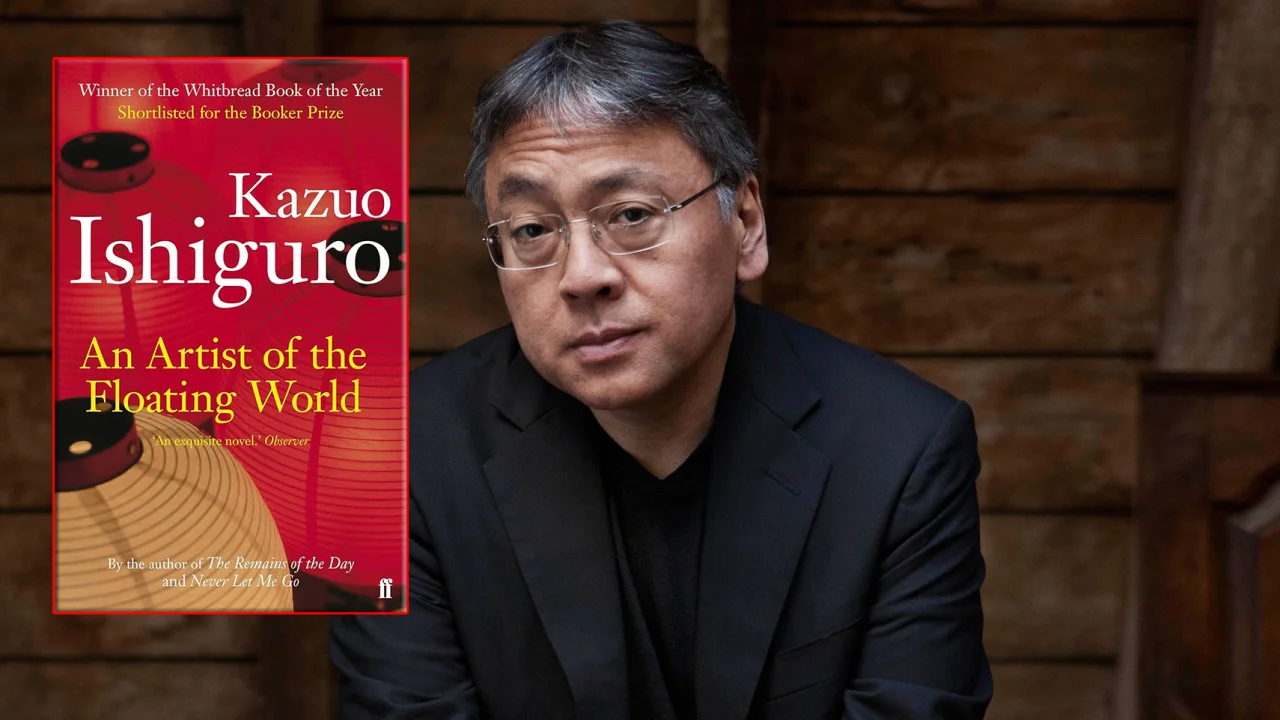
Picture this: Japan, 1948. The war is over, the country is rebuilding, and an aging artist named Masuji Ono is sitting in his creaky old house, quietly panicking that his past might be sabotaging his daughter’s marriage prospects.
Yes — marriage prospects.
Welcome to An Artist of the Floating World by Kazuo Ishiguro, a novel that’s part historical reflection, part unreliable memory, and part awkward family therapy session. It’s funny in a dry, uncomfortable way, deeply sad if you sit with it long enough, and quietly devastating once you realize what Ishiguro is actually doing.
👉 You can find the edition I read here:
An Artist of the Floating World – Kazuo Ishiguro (Amazon)
The Family Problem No One Wants to Name
Masuji Ono believes he’s a respected man. Or at least… he used to be.
The novel opens with Ono worrying about his daughter Noriko, who is 26 years old — an age that, in post-war Japan, apparently qualifies you for archaeological study. Her previous engagement fell apart, and Ono’s daughters keep giving him that look. You know the one. The “Dad… what did you do?” look.
Ono, however, is blissfully distracted. He’s far more interested in taking his grandson Ichiro to see monster movies than confronting his own past. Priorities matter, and giant radioactive lizards clearly rank higher than self-examination.
This contrast is one of the novel’s quiet strengths: while the younger generation is moving on, Ono is stuck replaying old memories, trying to make sense of who he was — and whether that still matters.
Art, Guilt, and the Things We Don’t Say Out Loud
Here’s where things get uncomfortable.
Ono was once a celebrated artist. His work mattered. It influenced people. And unfortunately… it aligned a little too neatly with wartime nationalism.
What makes An Artist of the Floating World fascinating isn’t that Ono did something terrible — it’s that he never fully admits it. Instead, he circles the truth, softens details, and constantly reframes events to make himself sound… reasonable.
Take Kuroda, one of Ono’s former students. During the war, Ono reported him to the authorities for ideological reasons. Kuroda was imprisoned and beaten. Now, years later, Ono considers visiting him — only to be quietly shut out.
No dramatic confrontation. No forgiveness scene. Just silence.
And that silence says everything.
The Miai: When Confession Meets Indifference
At the heart of Ono’s anxiety is a formal miai — a marriage meeting between Noriko’s family and her new suitor’s parents. Ono decides this is his moment. Time to come clean. Time to acknowledge his past.
So he delivers a carefully worded confession about his wartime activities, fully expecting shock… or judgment… or at least interest.
Instead?
Nothing.
Dr. Saito, the future father-in-law, barely reacts. The conversation moves on. The meal continues. Ono’s grand moment dissolves into awkward irrelevance.
This scene is quietly brilliant. Ono believes his past carries enormous weight — but the world has already moved on. His guilt matters far more to him than to anyone else.
Memory as Self-Defense
By the time the novel shifts to 1950, Ono’s daughters are married, grandchildren are on the way, and the old world he once knew is gone.
His friend Matsuda has died. His former colleagues have faded into obscurity. And Ono is left asking a question he never quite answers:
Did my life actually mean something?
The tragedy of Ono isn’t that he was influential — it’s that he needs to believe he was. His memories bend just enough to protect his pride. His regrets never fully crystallize into accountability.
Ishiguro doesn’t condemn him. He simply lets him speak — and trusts the reader to hear what Ono himself cannot.
👉 If you want to sit with this quiet tension yourself, the novel is available here:
An Artist of the Floating World – Paperback Edition
What This Novel Is Really About
This is not a war novel.
It’s not even really a political novel.
This is a book about memory — and how we use it to survive ourselves.
Ishiguro explores:
-
How people rewrite their past to remain functional
-
The gap between personal importance and historical reality
-
The quiet shame of realizing your “great purpose” may have been misguided
Ono lives in a Japan that wants to forget the war. But forgetting is easy only when you didn’t help shape it.
A Glimpse of the Story (No Spoilers)
An aging artist reflects on his life as post-war Japan changes around him. As his daughter’s marriage negotiations unfold, buried memories surface — not as confessions, but as carefully curated recollections.
The tension lies not in what happens…
…but in what Ono chooses to remember.
Who This Book Is For (and Who It Isn’t)
You’ll enjoy this novel if:
-
You like slow, reflective literary fiction
-
You’re interested in unreliable narrators
-
You enjoy books that ask moral questions without answering them
You might struggle with it if:
-
You prefer fast-paced plots
-
You need clear heroes and villains
-
You dislike ambiguity or emotional restraint
👉 If this sounds like your kind of book, here’s the link again:
An Artist of the Floating World by Kazuo Ishiguro
My Honest Verdict
This isn’t a loud novel.
It doesn’t beg for attention.
But it lingers.
What works:
-
Subtle psychological depth
-
Masterful use of unreliable memory
-
A painfully realistic portrayal of denial
What might not:
-
Very slow pacing
-
Emotional distance from the narrator
Still, I recommend it — because it respects the reader enough to let silence do the work.
Final Thoughts
Masuji Ono spends the entire novel trying to decide whether he was a hero, a fool, or just a man who floated along with the tide of his time.
And maybe that’s the point.
An Artist of the Floating World reminds us that history doesn’t always judge us loudly. Sometimes, it simply moves on — and leaves us alone with our memories.
👉 If you’d like to read the same edition I did, you can find it here:
An Artist of the Floating World – Amazon