 English
 French
 German
 Russian
 中文
中文

A Perfect Day That Slowly Turns Terrifying
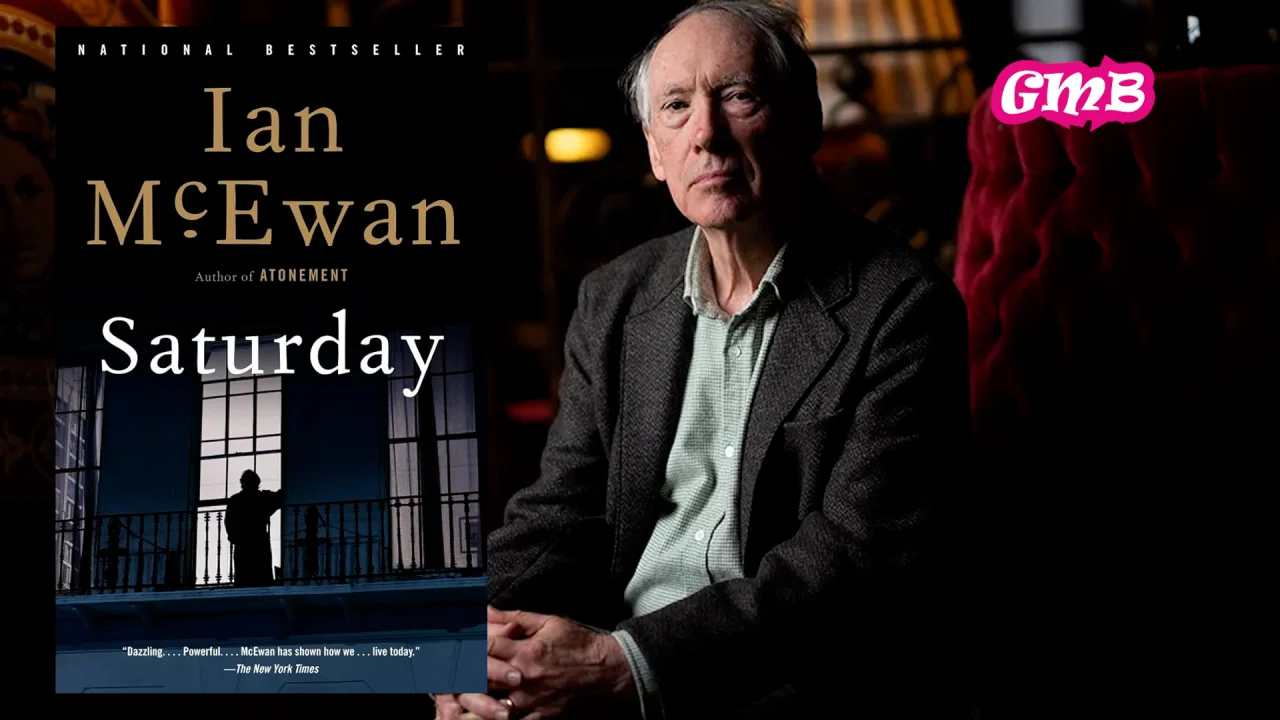
There’s something unsettling about a life that looks… perfect.
Reading Saturday by Ian McEwan, I kept waiting for the crack to appear. You know that feeling? When everything is just a little too calm. A little too ordered. Like something is quietly gathering itself in the background.
And then it happens—not all at once, but in a way that feels disturbingly plausible.
That’s what stayed with me. Not the violence. Not even the politics. But how easily an ordinary, beautiful day can tilt into something else entirely.
What Kind of Novel Is This?
This is a literary realism novel about control—and the illusion of it.
Tone: Quiet, reflective, occasionally tense
Pace: Slow (very slow… until it isn’t)
Themes: Fear, morality, privilege, violence, fate, political uncertainty
This book is for readers who:
-
Enjoy deeply introspective, thought-driven fiction
-
Like novels that explore ideas more than action
This book is NOT for readers who:
-
Want fast-paced plots or constant tension
-
Prefer clear moral answers or dramatic twists
👉 The edition I read is available here:
https://amzn.to/4j1Ne1j
Why This Story Matters (Emotional Core)
What Saturday really explores is a question we don’t like asking:
How secure is your life, really?
Henry Perowne has everything—status, intelligence, a loving family, stability. He represents the kind of life many people are working toward. And yet, none of that protects him from randomness, from violence, from other people.
That’s what makes this novel feel relevant, even years after its 2003 setting.
The backdrop of the Iraq War debates isn’t just political noise—it mirrors Henry’s own internal uncertainty. He wants to believe in reason, in order, in measured outcomes. He wants the world to make sense.
But the novel keeps quietly undermining that belief.
What stayed with me is how fragile everything feels by the end. Not in a dramatic, cinematic way—but in a quiet, uncomfortable realization that intelligence, success, and even morality don’t shield you from chaos.
And maybe they never did.
A Glimpse of the Story (No Spoilers)
The novel follows Henry Perowne, a successful neurosurgeon in London, over the course of a single Saturday.
It begins with small things: a strange plane in the sky, news reports, family plans, errands.
Then comes a minor car accident.
Then a confrontation.
Then a decision—one that Henry believes he has handled intelligently.
But that moment doesn’t end when he drives away.
It follows him home.
Analysis & Review
What Works
The realism here is almost obsessive—and that’s both the novel’s strength and its identity.
McEwan pays attention to everything: the way Henry thinks, the way he observes the world, the way he rationalizes even the smallest interaction. It creates a deeply immersive psychological experience.
The political backdrop is also handled in an interesting way. Instead of presenting clear answers, the novel places you inside a debate—one that, in hindsight, feels painfully ironic. Henry’s cautious optimism about the Iraq War hasn’t aged well, and that adds an unintended layer of tragedy to his worldview.
And then there’s the moral dilemma at the center of the novel:
When someone harms you, what do you owe them in return?
Henry’s final decision forces you to sit with that question longer than you might want to.
What Doesn’t Work
Let’s be honest—the pacing is a challenge.
The first half of the novel feels like you’re simply following Henry through his day. He drives, he shops, he thinks, he observes. And while this builds character, it can also feel… exhausting.
The real tension arrives late—very late.
There’s also the issue of technical detail. McEwan clearly did extensive research into neurosurgery, and it shows. But sometimes, the descriptions cross the line from immersive into overwhelming. At certain points, it feels less like a novel and more like a medical lecture.
If you’re not interested in the inner workings of the brain, this might test your patience.
Who This Book Is Perfect For
You’ll enjoy this novel if:
-
You like books that explore the fragility of everyday life
-
You enjoy introspective, idea-driven storytelling
-
You read fiction to reflect, not just to escape
You might struggle with this book if:
-
You prefer fast-moving plots
-
You need constant tension or action
-
You dislike dense, detailed writing
👉 If this sounds like your kind of book, you can get it here:
https://amzn.to/4j1Ne1j
My Honest Verdict
This isn’t an easy novel to love.
It’s slow. It’s dense. And at times, it feels like it’s testing your patience on purpose.
But it’s also thoughtful, precise, and quietly unsettling.
I didn’t enjoy every moment of reading it—but I can’t deny that it stayed with me. The questions it raises about control, morality, and vulnerability linger long after the final page.
This isn’t a perfect novel—but it’s an honest one.
And those are rare.
Final Thoughts & Recommendation
If you’re new to Ian McEwan, this probably isn’t the best place to start. A novel like Atonement offers a more engaging entry point into his work.
But if you’re willing to sit with a slow, reflective story—one that quietly builds toward something unsettling—then Saturday might be worth your time.
It’s a novel about a single day.
And yet, by the end, it makes you look at your own days a little differently.
👉 If you’d like to read the same edition I did, here’s the link:
https://amzn.to/4j1Ne1j