 English
 French
 German
 Russian
 中文
中文

Weep Not, Child: A Story of Dreams, Colonialism, and Heartbreak
There are two kinds of people in this world: those who believe education is the key to success… and those who think you should skip school and start working as soon as possible. But what happens when a young boy’s dream of learning collides with colonial oppression, land theft, and a revolution simmering in the forests of Kenya?
This is not your typical “study hard and you’ll succeed” story. Here, textbooks meet bullets, hope meets tragedy, and the promise of a brighter future is constantly snatched away by the ghosts of the past.
The Waning Light: Dreams Meet Reality
Our story begins in a small Gikuyu village in Kenya during the 1950s, a time when colonial rule was tightening its grip and whispers of rebellion were growing louder. Njoroge, the youngest son in a hardworking family, jumps at the chance to go to school, thanks to his mother Nyokabi’s support. The family can barely afford it, but Njoroge is undeterred — education is his gateway to a better life.
Meanwhile, his half-brother Kamau is apprenticed to a carpenter. Sawdust and hammers become his companions while Njoroge’s world revolves around blackboards and textbooks. Both brothers dream of a brighter future, but their paths couldn’t be more different.
Their father, Ngotho, works on land stolen from his own family for a British settler, Mr. Howlands. The weight of history presses heavily on Ngotho, yet when he learns his son will be the first in the family to attend school, he glimpses hope — perhaps education could restore some dignity to his family.
At school, Njoroge struggles, but with help from his childhood friend Mwihaki — the daughter of wealthy landlord Jacobo — he starts to thrive. Together, they navigate English, arithmetic, and even the Bible. Njoroge sees parallels between his people’s suffering and that of the Israelites, believing that if God delivered them, maybe he can deliver his own community too.
But not everyone shares Njoroge’s optimism. His older brother Boro, a war veteran haunted by family loss, is consumed by anger and vengeance. Meanwhile, Ngotho faces impossible choices as strikes erupt and colonial authorities tighten their grip. A moment of defiance spirals into tragedy: the family is evicted, their home lost, yet kind neighbors like Kamau’s boss, Nganga, offer temporary refuge.
Time passes. Kenya teeters on the edge. Jomo Kenyatta is arrested, the Mau Mau movement grows, and the cost of freedom becomes terrifyingly real.
Darkness Falls: Hope in a World of Violence
As political tensions seep into daily life, fear grips the village. Njoroge’s older brothers clash with authorities, while colonial figures like Mr. Howlands and Jacobo plot revenge. Njoroge’s school faces threats from all sides, yet Kamau urges him to keep learning — education remains his only hope.
When Mwihaki returns from boarding school, their bond rekindles, and for a moment, the future seems possible. But brutal realities intrude: Njoroge witnesses police executions, Boro secretly plans murder, and the weight of injustice crushes dreams.
By the time Njoroge reaches high school, he flourishes intellectually, befriends Stephen Howlands, and sees humanity even among the oppressors. Yet nineteen brings devastating loss. Njoroge is tortured, his father grievously injured, and the family shattered. Love, hope, and ambition all collide in an ending that is both heartbreaking and painfully human.
Discover the Novel
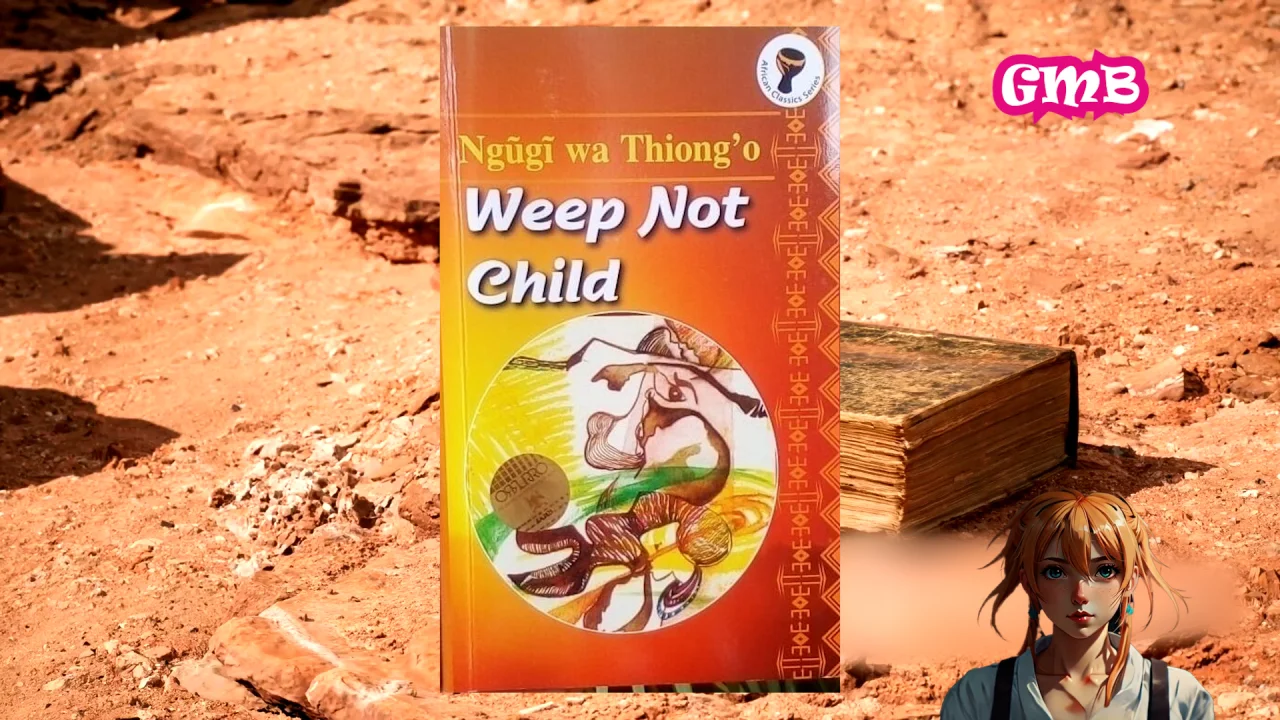
The story above comes from Weep Not, Child by Ngũgĩ wa Thiong’o — a novel that explores hope, resistance, and the crushing weight of colonialism.
Why This Story Matters
At its core, Weep Not, Child is a coming-of-age story unlike any other. It’s not about individual triumph but about how historical forces shape lives. Njoroge’s journey mirrors Kenya itself: full of hope yet scarred by injustice, betrayal, and sacrifice.
Education, a recurring motif, represents liberation but is not enough to shield against systemic oppression. Generational conflict — between Ngotho’s patience, Boro’s vengeance, and Njoroge’s idealism — highlights the impossible choices forced upon ordinary people. And the tender yet tragic relationship between Njoroge and Mwihaki captures a future that is desired but denied.
About the Author
Ngũgĩ wa Thiong’o, born in 1938 in Kenya, is one of Africa’s literary giants. Weep Not, Child, published in 1964, was his first novel and the first English-language novel by an East African writer. Ngũgĩ’s work consistently interrogates colonialism, culture, identity, and resistance, making him not just a novelist but a revolutionary voice for African self-determination.
Who Should Read This Book
You’ll love Weep Not, Child if you:
-
Enjoy literary fiction that blends personal stories with history
-
Seek narratives that explore the human cost of political struggle
-
Appreciate coming-of-age tales steeped in realism
You might struggle with it if you:
-
Prefer fast-paced, plot-driven novels
-
Need clearly defined heroes and villains
-
Avoid open-ended or tragic conclusions
You can find the edition I read here: Weep Not, Child on Amazon
Final Thoughts
Weep Not, Child isn’t an easy read, but it is profoundly moving. It confronts the reader with uncomfortable truths about power, justice, and the cost of freedom while reminding us that resilience can endure even in the darkest times.
Njoroge’s dream may be broken, but his story is unforgettable — a timeless reminder of the human spirit’s courage in the face of history.
If you’ve ever wondered how colonialism shapes lives far beyond politics and borders, this novel is essential reading. For hope, heartbreak, and a masterclass in storytelling, grab your copy here.