 English
 French
 German
 Russian
 中文
中文

Dimples on the Sand — When Poetry Carries the Weight of a Nation
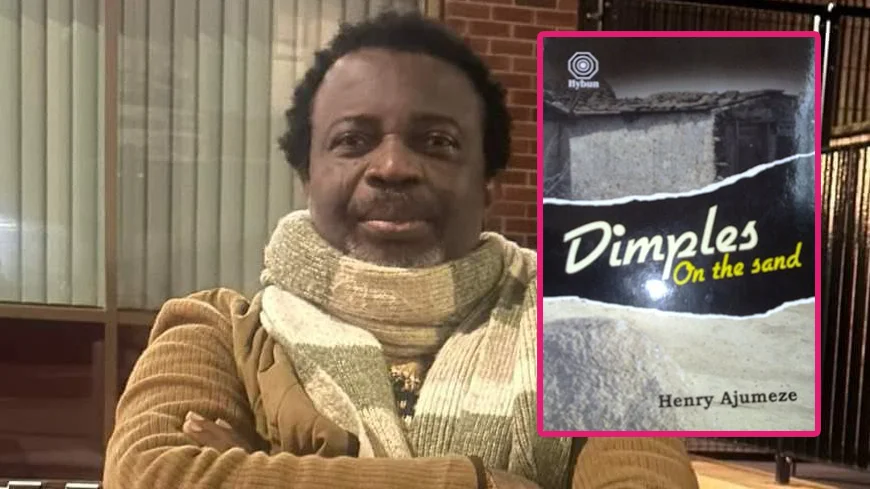
There are books you read quickly, and then there are books that slow you down without asking permission. Dimples on the Sand did the latter for me.
It’s a slim collection—just 81 pages, 36 poems—but somewhere between the first and last poem, it began to feel much heavier than its size suggests. Not heavy in a burdensome way, but in the way memory is heavy. In the way land, loss, and history sit quietly on the chest.
Henry Ajumeze’s Dimples on the Sand is not just a poetry collection. It’s a journey through Nigeria—its landscapes, its politics, its griefs, and its stubborn hope—filtered through a deeply personal voice.
What Kind of Book Is This?
This is a reflective, politically conscious poetry collection about identity, belonging, and resistance.
Tone: Thoughtful, mournful, occasionally witty
Pace: Slow and deliberate
Core themes:
-
Ancestry and land
-
Love and loneliness
-
Political violence and environmental injustice
-
Memory, fatherhood, and legacy
This book is for readers who:
-
Enjoy poetry rooted in place and history
-
Appreciate African literature that engages politics without shouting
-
Like poems that linger rather than explain themselves
This book is not for readers who:
-
Want light, decorative poetry
-
Prefer fast, easily digestible verses
-
Avoid political or historical themes in art
A Journey Through the Five Parts
Ajumeze divides the collection into five distinct sections, each widening the emotional and thematic scope.
Part One: Anioma, Roots, and Ancestry
The opening section grounds the collection firmly in Anioma, the homeland of the Delta Igbo people. These poems feel like conversations with the land itself—with history woven into memory.
In poems such as “In the beginning, was Anioma” and “My Anioma,” land and identity become inseparable. Ajumeze treats ancestry not as nostalgia, but as inheritance—something carried forward whether one wants to or not.
“The Rumba drums are lost in our head full of jazz and reggae,
But the winds from your nostril rediscover the cadence of a dying echo.”
Modern influences clash with ancestral rhythms, and yet the land persists. You don’t just read Anioma here—you hear it.
Part Two: Love, Loneliness, and Private Grief
The second section turns inward. These poems are addressed to a loved one, but they quickly expand into meditations on solitude and emotional dislocation.
In “Night opens my mind,” grief is not dressed up or softened:
“I stand livid in the crossroad of metaphors;
I become one with grief.”
Yet Ajumeze refuses to stay solemn for long. Humor slips in unexpectedly, especially in poems like “I stood in the middle of the empty flat,” where an imagined exchange during a bath adds levity to emotional isolation.
That balance—between heaviness and wit—keeps the collection human rather than indulgent.
Part Three: Ken Saro-Wiwa and the Wounded Land
The emotional center of the book lies in its tribute to Ken Saro-Wiwa, the activist, writer, and Ogoni leader executed by the Nigerian state.
Poems such as “Battered Earth” and “The Trial” mourn Saro-Wiwa while indicting the systems that destroyed both a man and his land. The Niger Delta here is not abstract—it bleeds.
“I’d trudge along the corridors of pidgin,
In the broken pages of verse…”
These poems feel less like memorials and more like unfinished conversations. They ask the reader to remember—and to notice how little has changed.
Part Four: Power, Coups, and Political Satire
The fourth section widens the lens to Nigeria’s broader political history. Ajumeze critiques authority with a mix of irony and restraint.
In poems like “Oil and Blood” and “Now that coup is no more treason,” power is shown as fragile, absurd, and often brutal.
“Storms gather, but their might falters
against the whispers of winds beyond the soldier’s reach.”
There is no shouting here—just steady pressure. The satire works because it trusts the reader to see the cracks.
Part Five: Fatherhood, Dedication, and Hope
The final section closes the collection quietly. Poems dedicated to Niyi Osundare and Ajumeze’s daughter shift the focus toward continuity and tenderness.
In “Flanked by Lullabies,” love becomes a form of resistance—a way of imagining a future that history has tried to erase.
It’s a fitting ending: personal without being small, hopeful without being naïve.
Why This Book Matters
What stayed with me after finishing Dimples on the Sand was its refusal to simplify.
Ajumeze doesn’t offer easy answers about nationhood, identity, or justice. Instead, he sits with contradictions—with beauty and violence occupying the same space. The book feels especially relevant now, in a world where political fatigue often leads to forgetting.
This collection exists to remind us that memory itself is an act of resistance.
A Glimpse of the Story (No Spoilers)
At its core, Dimples on the Sand presents:
-
A poet in conversation with his land
-
A nation wrestling with its conscience
-
A father imagining what comes after survival
Nothing here is rushed. The poems unfold like footprints on sand—visible, temporary, but meaningful.
My Honest Verdict
This isn’t a perfect collection—but it’s an honest one.
What worked:
-
Strong sense of place
-
Emotional restraint paired with political urgency
-
Effective balance of grief and wit
What didn’t:
-
Some poems demand rereading to fully land
-
Readers unfamiliar with Nigerian history may need patience
And yet, I still recommend it—because books like this don’t try to impress. They try to remember.
Final Thoughts
Dimples on the Sand is the kind of book that doesn’t chase relevance—it earns it. It speaks quietly, trusts its reader, and leaves behind questions rather than conclusions.
If you read poetry to understand people, places, and the emotional cost of history, this collection deserves your attention.
Similar Books You Might Like
Best Format to Read This Book
Paperback — the spacing and pacing work best when read slowly, poem by poem.