 English
 French
 German
 Russian
 中文
中文

Unexpected Joy at Dawn by Alex Agyei-Agyiri — A Journey Through Exile, Identity, and Survival
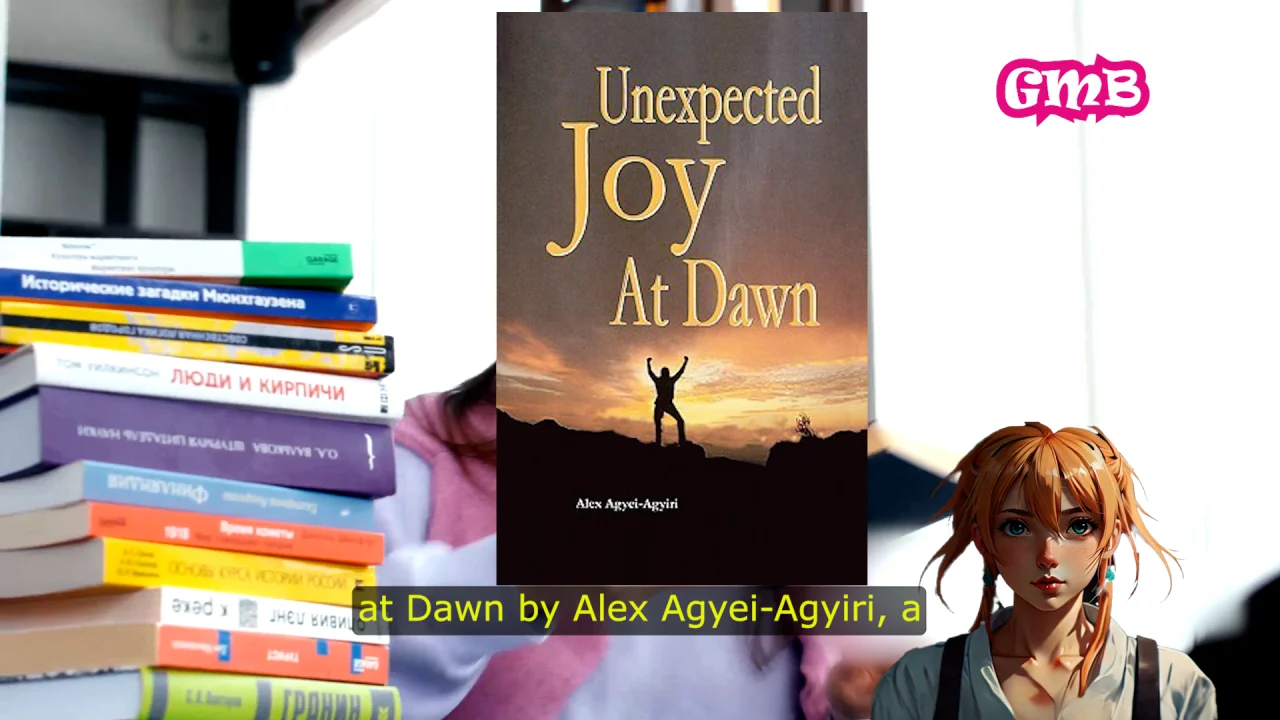
There are books that comfort you. And then there are books that look at your problems, laugh softly, and say, “Relax. It could be worse.”
Unexpected Joy at Dawn is firmly in the second category.
While reading this novel, I kept thinking about how thin the line is between belonging and exile. One political decision. One border. One accent spoken “wrong.” And suddenly, your entire life is reduced to a suitcase and a label you didn’t choose.
Set against the turbulent backdrop of 1980s West Africa, Alex Agyei-Agyiri’s novel pulls us into a world of deportations, broken families, and people desperately trying to anchor themselves to something solid—culture, memory, love, or home. What makes it remarkable is not just what happens, but how human it feels while it’s happening.
What Kind of Novel Is This?
Unexpected Joy at Dawn is a historical, social realist novel about identity, displacement, and survival in postcolonial West Africa.
-
Tone: Gritty, reflective, occasionally darkly humorous
-
Pace: Moderate, with moments of intense urgency
-
Themes:
-
Deportation and exile
-
National identity vs lived identity
-
Economic hardship
-
Family separation and reunion
-
The silent cruelty of political decisions
-
This book is for readers who:
-
Enjoy African historical fiction rooted in real events
-
Like stories about ordinary people caught in political chaos
-
Appreciate novels that make you think long after the final page
This book is not for readers who:
-
Want fast-paced, action-heavy plots
-
Prefer clean resolutions and neat happy endings
-
Dislike heavy social commentary in fiction
👉 The edition I read is available here:
Unexpected Joy at Dawn by Alex Agyei-Agyiri (Amazon)
A Story Built on Misfortune (and Stubborn Hope)
At the center of the novel is Nii, a man whose life seems cursed by timing and geography.
Born in Ghana to Nigerian parents, Nii is left behind when his family flees to Nigeria after Ghana’s Aliens Compliance Order of 1969. Fourteen years later, he’s still in Ghana—technically successful on paper, working as an Assistant Bank Manager—but practically drowning. He lives in a slum, is harassed by market women, and is unable to afford the burial of his dead wife. Respectability means nothing when poverty refuses to loosen its grip.
Desperate for belonging, Nii does what seems logical: he goes to Nigeria to find his roots.
That decision turns his life into something close to a punishment.
In Nigeria, Nii is neither fully Ghanaian nor convincingly Nigerian. His name and tribal marks aren’t enough. He doesn’t speak the language fluently. He doesn’t dress right. He doesn’t carry the confidence people expect. Everywhere he goes, he’s dismissed as “omo Ghana”—a foreigner wearing borrowed identity.
From exploitative farm labor to slums and deportation camps, Nii’s Nigerian experience strips him down to survival mode. And just when you think he’s hit rock bottom, he’s accused of armed robbery—because in a system built on suspicion, innocence is optional.
The Other Half of the Story: Mama Orojo
While Nii spirals in Nigeria, his sister Mama Orojo remains in Ghana, searching for him.
Her storyline offers a slight emotional counterbalance. She’s managing, surviving, and even falling in love with Joe, a gold dealer whose connections quietly pull her back into Nii’s unresolved past—including the haunting matter of his wife’s unburied body.
Agyei-Agyiri cleverly allows their stories to circle each other until they finally collide in a scene that is as chaotic as it is symbolic: an uncompleted building, an angry mob, mistaken identities, and a last-minute rescue.
It’s messy. It’s tense. And it feels painfully real.
Why This Story Matters
This is the heart of the novel.
Unexpected Joy at Dawn isn’t just about Nii or Mama Orojo. It’s about what happens when governments make sweeping decisions and forget the people trapped underneath them.
The novel forces uncomfortable questions:
-
What does nationality really mean?
-
Who gets to decide where you belong?
-
How much suffering is considered “acceptable” in the name of policy?
What stayed with me after finishing this book wasn’t a single scene—it was the quiet realization that identity can be revoked without warning. That home is fragile. That borders are often sharper than they look on maps.
And disturbingly, the story doesn’t feel distant. Deportations, forced migrations, and identity crises are still happening—just with new headlines.
A Glimpse of the Story (No Spoilers)
This is a novel about:
-
A man searching for a homeland that doesn’t fully want him
-
A woman trying to reunite her family across borders
-
Two countries caught in economic and political turmoil
-
Survival in systems that treat people as disposable
Agyei-Agyiri doesn’t rely on twists. The tension comes from inevitability—the slow realization that good intentions don’t protect you from cruel systems.
The Flaws (Because Honesty Matters)
This isn’t a perfect novel.
Some economic explanations run long and occasionally read like a history textbook rather than fiction. A few character reactions—especially Mama Orojo’s calm acceptance of certain revelations—feel a bit too convenient.
But these flaws don’t erase the book’s emotional power. If anything, they remind you that this is a writer deeply committed to documenting reality, even when it gets messy.
About the Author: Alex Agyei-Agyiri
Alex Agyei-Agyiri was a Ghanaian poet, novelist, and academic, known for blending historical truth with personal struggle. His writing consistently examines postcolonial identity, migration, and the emotional costs of political instability.
In Unexpected Joy at Dawn, he doesn’t lecture. He exposes. He places human beings at the center of history and lets their suffering—and resilience—do the talking.
Who This Book Is Perfect For
You’ll enjoy this novel if:
-
You like African literature that confronts history head-on
-
You enjoy reflective, character-driven stories
-
You read fiction to understand society, not escape it
You might struggle with this book if:
-
You need fast-moving plots
-
You dislike unresolved tension
-
You prefer lighter, purely entertaining reads
👉 If this sounds like your kind of book, you can find it here:
Unexpected Joy at Dawn by Alex Agyei-Agyiri (Amazon)
My Honest Verdict
This isn’t a comforting novel—but it’s an important one.
What works:
-
Powerful themes
-
Authentic portrayal of displacement
-
Emotional realism
What doesn’t:
-
Occasional heavy exposition
-
A few overly convenient character moments
Still, I recommend it. Not because it’s flawless—but because it’s honest.
And honest novels tend to stay with you longer than polished ones.
Final Thoughts
Unexpected Joy at Dawn is a reminder that identity is more than a name, and home is more than a birthplace. It’s about the quiet endurance of people caught between nations, languages, and expectations.
If you’ve ever questioned where you belong—or watched others struggle for recognition—you’ll feel this book deeply.
👉 If you’d like to read the same edition I did, here’s the link:
Unexpected Joy at Dawn by Alex Agyei-Agyiri (Amazon)