 English
 French
 German
 Russian
 中文
中文

The Glitter Fades, But the Girls Remember
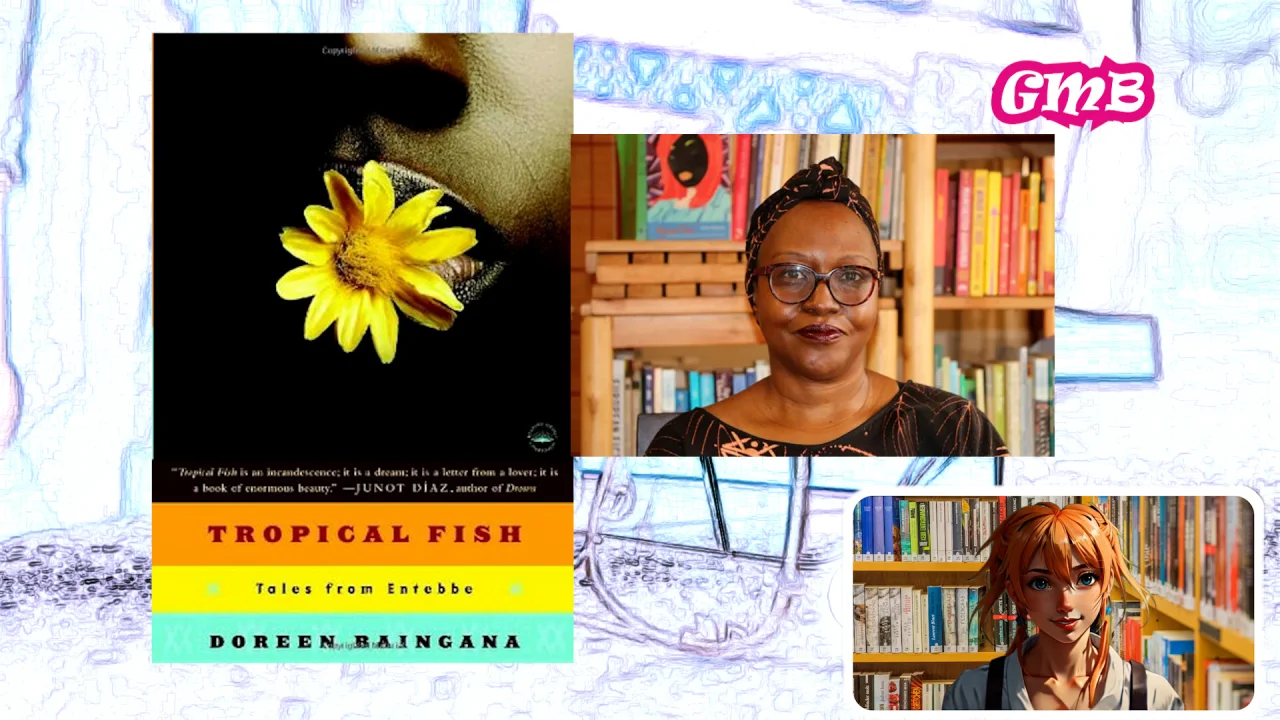
There’s a moment in this book that quietly unsettled me.
A young girl sits admiring her mother’s green stones—beautiful jewelry brought home by a father who has seen the world. The stones sparkle. They promise stability. Glamour. A kind of safety.
And then, slowly, the sparkle dims.
Her father drinks. He loses his job. He drinks more. And one day, he is simply gone.
That’s how Tropical Fish begins—not with a dramatic explosion, but with a quiet unraveling. And somehow, that felt more honest.
What Kind of Book Is This?
Tropical Fish: Stories Out of Entebbe by Doreen Baingana** is a linked short story collection—a coming-of-age portrait of three sisters growing up in Entebbe, Uganda.
This is a literary, reflective, emotionally layered book about girlhood, womanhood, survival, and the complicated hunger for love.
Tone: Quiet, intimate, occasionally sharp
Pace: Moderate
Themes: Family, sexuality, religion, disease, independence, exile, identity
This book is for readers who:
-
Love character-driven fiction
-
Enjoy African literature that feels lived-in and authentic
-
Appreciate subtle emotional depth rather than dramatic twists
This book is NOT for readers who:
-
Need fast-paced plots
-
Want neat resolutions
-
Prefer clear heroes and villains
👉 The edition I read is available here:
Tropical Fish: Stories Out of Entebbe by Doreen Baingana
Why This Story Matters
At its core, this book isn’t about plot. It’s about what it means to grow up female in a space where religion, tradition, poverty, and global modernity are constantly colliding.
The three sisters—Patti, Rosa, and Christine—grow up under the shadow of loss. Their father’s death isn’t just emotional; it’s economic. Their mother, Maama, must hold everything together. The glitter of jewelry is replaced by hunger, boarding school struggles, and the silent shame of not having enough.
But hunger in this book is never just about food.
It’s hunger for love.
Hunger for escape.
Hunger for validation.
Hunger for freedom.
Rosa’s story, told through the heartbreaking “A Thank-You Note,” lingers the longest. Writing to her boyfriend while living with HIV—what was then called the “slim disease”—she captures how quickly and quietly the epidemic spread. There’s no melodrama. Just the devastating normalcy of it.
Christine, the youngest, becomes the emotional anchor of the collection. Carefree. Curious. Defiant. She resists marriage, resists expectations, resists being contained. And yet, her independence comes with its own loneliness. In “Tropical Fish,” she begins a relationship with an older expat who exports fish. Wealth and whiteness shimmer around her again—another kind of green stone—but the power imbalance is impossible to ignore.
When she travels to Los Angeles in “Lost in Los Angeles,” the promise of the West doesn’t heal her. It exposes new emptiness. Independence without belonging can feel like floating.
And when she returns home in “Questions of Home,” she finds a civil service that barely functions—a quiet commentary on postcolonial disillusionment.
What stayed with me after finishing this book was this question:
How do you define freedom when every version of it costs you something?
That question refuses to leave.
A Glimpse of the Story (No Spoilers)
Three sisters grow up in Entebbe after their father drinks himself into an early grave.
One becomes deeply religious, clinging to moral certainty.
One lives freely and pays a terrible price.
One searches—through love, sex, travel, and rebellion—for a self that feels whole.
Each story is a snapshot: boarding school hunger, first kisses, whispered shame, expat lovers, letters written in illness, a mother who believes marriage is protection.
It’s less about what happens—and more about what it means.
Who This Book Is Perfect For
You’ll enjoy this novel if:
-
You like books that explore identity and womanhood with honesty
-
You enjoy intimate, reflective storytelling
-
You read fiction to understand people, not just escape reality
You might struggle with this book if:
-
You prefer tightly plotted narratives
-
You need strong external conflict
-
You dislike open-ended emotional journeys
👉 If this sounds like your kind of book, you can get it here:
Tropical Fish: Stories Out of Entebbe by Doreen Baingana
My Honest Verdict
This isn’t a loud book.
It doesn’t scream. It doesn’t shock for the sake of it. Even the sex and illness are handled with restraint.
What worked:
-
The emotional layering
-
The authenticity of Ugandan dialogue and cultural detail
-
The distinct personalities of the three sisters
What didn’t fully work for me:
-
At times, I wanted deeper interior exploration in certain transitions between stories
-
Some arcs feel intentionally unresolved—which may frustrate readers who want closure
But here’s the thing: the unresolved nature of it feels intentional. Life rarely wraps itself up neatly. Especially not for young women navigating religion, disease, poverty, and globalization all at once.
This isn’t a perfect book—but it’s an honest one.
And honest books stay with you longer.
About the Author
Doreen Baingana grew up in Entebbe and later moved between Uganda and the United States. This collection won the Commonwealth Writers’ Prize for the Africa Region in 2006 and was a finalist for the Hurston-Wright Legacy Award.
The recognition makes sense. These stories feel lived before they feel written.
Final Thoughts
I started this book thinking about green stones—about glamour and illusion.
I finished it thinking about survival.
Tropical Fish reminds us that growing up is rarely glamorous. It’s messy. It’s contradictory. It’s full of choices that don’t have clear answers.
If you’re drawn to stories about women negotiating identity between home and elsewhere… between tradition and independence… between faith and freedom… this book will speak to you quietly but persistently.
And sometimes, the quiet books are the ones that echo the longest.
👉 If you’d like to read the same edition I did, here’s the link:
Tropical Fish: Stories Out of Entebbe by Doreen Baingana