 English
 French
 German
 Russian
 中文
中文

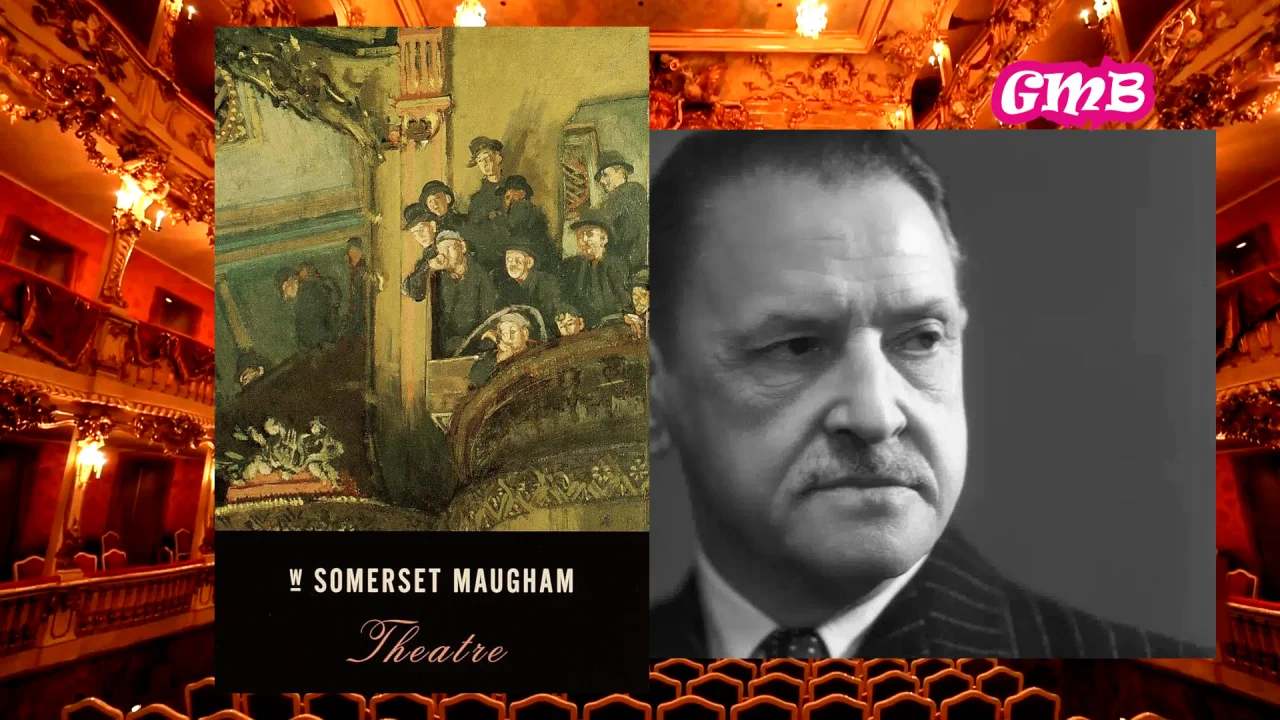
The Dangerous Charm of Acting Your Way Through Life: A Review of Theatre by W. Somerset Maugham
Some people lie badly. You can see the cracks immediately—the nervous laugh, the wandering eyes, the clumsy explanations.
And then there are people like Julia Lambert.
The kind of person who could look you straight in the eye, invent an entire emotional universe on the spot, and leave you applauding the performance.
That’s the unsettling magic at the heart of Theatre by W. Somerset Maugham. This novel isn’t just about an actress navigating love, jealousy, and ambition—it’s about a woman who has spent so long performing for the world that the line between truth and illusion has almost completely disappeared.
While reading it, I kept asking myself a strange question: If someone plays a role long enough, do they eventually become it?
Julia Lambert might be the answer.
What Kind of Novel Is This?
Theatre is a witty, psychologically sharp novel about ego, aging, love, and the masks we wear in everyday life.
Tone: Wry, elegant, and quietly ruthless
Pace: Moderate
Themes: Identity, performance, aging, ego, love as power, self-delusion
This book is for readers who:
-
Enjoy character-driven literary fiction
-
Like psychological insight mixed with sharp humor
-
Appreciate stories about flawed, complicated people
This book is not for readers who:
-
Want fast-paced plots with constant twists
-
Prefer clear heroes and villains
-
Need moral clarity in their protagonists
If you’re curious about the novel itself, the edition I read can be found here:
👉 https://amzn.to/4oHBli8
A Quick Summary of Theatre (No Major Spoilers)
Julia Lambert is the reigning queen of the London theatre world. She’s talented, charismatic, and adored by audiences everywhere.
But long before she became the star everyone worships, she was simply a drama student deeply in love with a handsome but emotionally limited man named Michael Gosselyn.
Michael may not be the greatest actor in the world, but he has other talents—particularly when it comes to business. Together, the two climb the theatre ladder: Julia shines on stage while Michael manages the financial and logistical side of their careers.
On the surface, their life looks perfect.
They have fame.
Money.
A comfortable marriage.
A clever son.
But beneath the polished surface, something has quietly died.
Their marriage has grown cold. Their emotional connection is more professional than romantic. And Julia—now approaching middle age—begins to feel something she hasn’t felt in years:
The creeping fear of becoming irrelevant.
Then she meets Tom Fennell.
Tom is young, charming, and dazzled by Julia’s world. What begins as a flattering friendship soon turns into an affair—one that rekindles Julia’s sense of youth, desirability, and power.
But the affair brings complications.
Tom has his own ambitions.
Julia’s emotions spiral.
And a young aspiring actress named Avice Crichton enters the picture, threatening both Julia’s pride and her position.
What follows is less a melodramatic scandal and more a psychological chess match—one where Julia ultimately proves that her greatest weapon isn’t love.
It’s performance.
The Real Story: Identity, Performance, and Self-Deception
What makes Theatre fascinating isn’t the plot itself.
At its core, the story is fairly simple: a successful actress has an affair with a younger man and becomes jealous of a younger rival.
But Maugham transforms this familiar setup into something far more intriguing by turning Julia Lambert into one of the most psychologically complex characters in modern fiction.
Julia is:
-
Brilliant
-
Manipulative
-
Vulnerable
-
Narcissistic
-
Deeply human
She’s the kind of character you simultaneously admire and distrust.
You watch her manipulate situations with the precision of a seasoned performer, yet you also sense the insecurity beneath it all. Her affair with Tom isn’t really about love—it’s about reclaiming something she feels slipping away.
Youth. Desire. Importance.
For Julia, being loved isn’t enough.
She needs to be admired.
The Brutal Truth from Her Own Son
One of the most powerful moments in the novel comes when Julia’s son Roger confronts her.
His words cut through the illusion she has built around herself:
“You don't know the difference between truth and make-believe. You never stop acting… You don't exist, you're only the innumerable parts you've played.”
It’s a devastating observation.
Roger suggests that Julia doesn’t simply act on stage—she acts everywhere. At home. With friends. Even with her own family.
The terrifying implication is that the real Julia Lambert might not exist at all.
She may simply be a collection of roles.
And that question lingers long after the novel ends.
Maugham’s Brilliant Observations on Human Nature
One of the reasons W. Somerset Maugham remains such a compelling writer is his ability to dissect human behavior with almost surgical precision.
His prose is clean, sharp, and quietly humorous.
He rarely dramatizes emotions in an exaggerated way. Instead, he lets characters expose themselves through small actions, subtle remarks, and ironic situations.
Julia’s affair, for example, never feels like melodrama. Instead, it becomes a study of vanity, insecurity, and emotional manipulation.
Maugham also excels at portraying the strange power dynamics within relationships:
-
Michael, the practical husband who quietly controls the financial side of Julia’s career
-
Tom, the opportunistic young lover drawn to wealth and glamour
-
Dolly, the devoted friend whose affection borders on obsession
-
Roger, the son who sees through everyone
Each character reveals a different side of Julia—and each one exposes the fragile illusion she lives within.
Themes That Make the Novel So Powerful
1. Performance vs Reality
This is the central theme of the entire novel.
Julia doesn’t just perform on stage. She performs in life.
Her emotions, reactions, and even relationships often feel like carefully crafted scenes.
And the frightening question becomes:
If everything is a performance, where does reality begin?
2. Aging and Relevance
Julia’s affair with Tom isn’t really about romance.
It’s about time.
She senses youth slipping away and desperately wants proof that she still matters—that she still has the power to captivate someone young and desirable.
In this way, the novel becomes a subtle exploration of aging in a world obsessed with youth.
3. Love as Power
Almost every relationship in the novel involves some form of emotional leverage.
People admire Julia.
Manage Julia.
Desire Julia.
And Julia, in turn, learns how to use love as both a shield and a weapon.
4. Self-Delusion
Perhaps the most fascinating aspect of Julia’s character is her ability to lie to herself.
Even when confronted with uncomfortable truths, she finds ways to reinterpret reality in her favor.
And she does it with such conviction that even the reader occasionally believes her.
A Few Minor Weaknesses
While Theatre is a remarkably sharp novel, it isn’t perfect.
Readers looking for fast-paced drama might find the pacing a bit slow. The story unfolds gradually through dialogue and psychological observation rather than action.
Additionally, some modern readers might find the emotional detachment of the narrative unusual. Maugham rarely tells you how to feel about the characters—he simply shows them as they are.
But for many readers, that restraint is exactly what makes the book so powerful.
Who Should Read Theatre?
You’ll likely enjoy this novel if:
-
You love character-driven fiction
-
You enjoy psychological insight in literature
-
You’re fascinated by stories about fame, ego, and identity
You might struggle with it if:
-
You prefer plot-heavy novels
-
You need highly sympathetic protagonists
-
You want clear moral resolutions
If it sounds like your kind of book, you can explore the novel here:
👉 https://amzn.to/4oHBli8
Final Verdict
Theatre is one of those novels that quietly sneaks up on you.
At first, it feels like a clever social comedy about actors and relationships.
But as the story unfolds, it becomes something deeper—a reflection on identity, ego, and the strange roles we all play in everyday life.
Julia Lambert may spend her life performing for audiences, but by the end of the novel, you realize something unsettling:
She’s not the only one wearing a mask.
And that’s what makes this book linger in your mind long after you finish it.
If you’d like to read the same edition I did, you can find it here:
👉 https://amzn.to/4oHBli8