 English
 French
 German
 Russian
 中文
中文
The Samaritan by John Lara – When a School App Exposes an Entire Town’s Rot
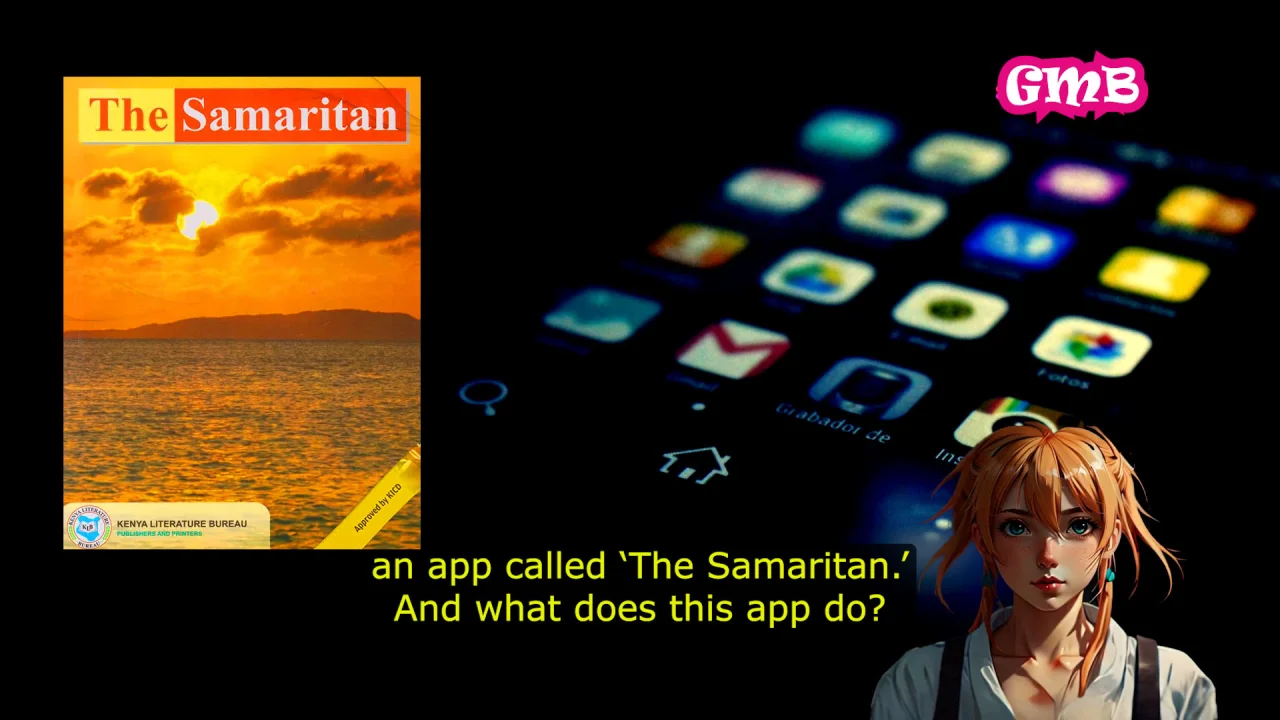
Imagine sitting through your high school’s end-of-year ceremony. Everyone’s relaxed. Parents are bored. Teachers are counting the minutes. Then two students step up and casually unveil an app that exposes every corrupt deal in town. That’s the moment The Samaritan grabbed me and refused to let go.
Alvita and Montano don’t invent a game or a productivity tool. They create The Samaritan—an app designed to reveal corruption, one scandal at a time. And just when you think this is a harmless school project, they invite the town’s most powerful man, Mayor Mossi, to officially launch it. That’s when things go sideways. Fast.
Instead of applause, Mossi panics. He calls the app fake. He demands it be shut down. Unfortunately for him, the app is already spreading like wildfire, exposing secrets he’d rather keep buried. From that point on, The Samaritan turns into a sharp, often darkly funny takedown of power, fear, and desperate men trying to protect their stolen authority.
A Town Built on Corruption
What follows is chaos disguised as leadership.
Mayor Mossi gathers his inner circle for what might be the most painfully realistic secret meeting in modern fiction. There’s Bembe, the police chief who’s somehow also running drugs. Harvester, a CEO abusing his influence without even pretending otherwise. And then there’s Ted, Ramdaye, and Jaden—each corrupt in their own uniquely depressing way.
Their solution? Daily press conferences. Manufactured distractions. Public disorder. Anything to shift attention away from the app that’s tearing their reputations apart. It’s absurd, yes—but it’s also uncomfortably familiar. Lara leans into satire here, and it works. You laugh, then immediately realize you probably shouldn’t.
This is where The Samaritan shines. It doesn’t just show corruption—it shows how fragile corrupt power really is once light touches it.
Nicole: The Unlikely Moral Center
In the middle of all this stands Nicole, the teacher who helped Alvita and Montano build the app. She’s not loud. She’s not chasing glory. She’s just someone who refused to look away.
That refusal costs her dearly. She’s threatened, arrested, and framed for stealing a generator—a charge so ridiculous it would be funny if it weren’t so cruel. Yet Nicole doesn’t fold. She becomes the quiet spine of the novel, reminding us that resistance doesn’t always look dramatic. Sometimes it looks like standing your ground when it would be easier to disappear.
Her arc ties directly into the novel’s title. Like the biblical Good Samaritan, Nicole chooses action over silence, responsibility over safety.
Justice, Consequences, and a Rare Sense of Closure
Unlike many corruption novels that end in moral ambiguity, The Samaritan gives readers something deeply satisfying: consequences. Inspector Taajo enters the story like a pressure release valve. One by one, the carefully constructed lies collapse. Arrests are made. Power shifts.
It’s not flashy justice—but it’s earned. And in a genre that often avoids resolution, Lara’s choice feels intentional. He’s not saying corruption always loses. He’s saying it can—when people refuse to look away.
Why This Story Works
At its core, The Samaritan isn’t really about an app. It’s about tolerance. About how much rot a society accepts before saying “enough.” Technology, in Lara’s hands, becomes a metaphor for transparency—the kind leaders fear because it doesn’t negotiate.
The humor keeps the story readable. The tension keeps it sharp. And the social commentary keeps it relevant long after the final page.
John Lara clearly draws inspiration from real political scandals, but he never lectures. He trusts the story to do the work. That restraint is part of what makes the novel effective.
Final Verdict
The Samaritan is entertaining, unsettling, and surprisingly hopeful. It blends humor with moral urgency and asks a question that feels especially relevant now: What happens when truth stops asking permission?
This book is for readers who enjoy stories about power, accountability, and resistance—especially when those stories don’t pretend heroes are flawless or villains are subtle.
It’s not a perfect novel. But it’s an honest one. And those are rare.
If you’ve ever wondered what would happen if corruption had nowhere left to hide, The Samaritan is a story worth reading.