 English
 French
 German
 Russian
 中文
中文

The Family That Eats Itself Alive: A Novel So Honest It Was Banned
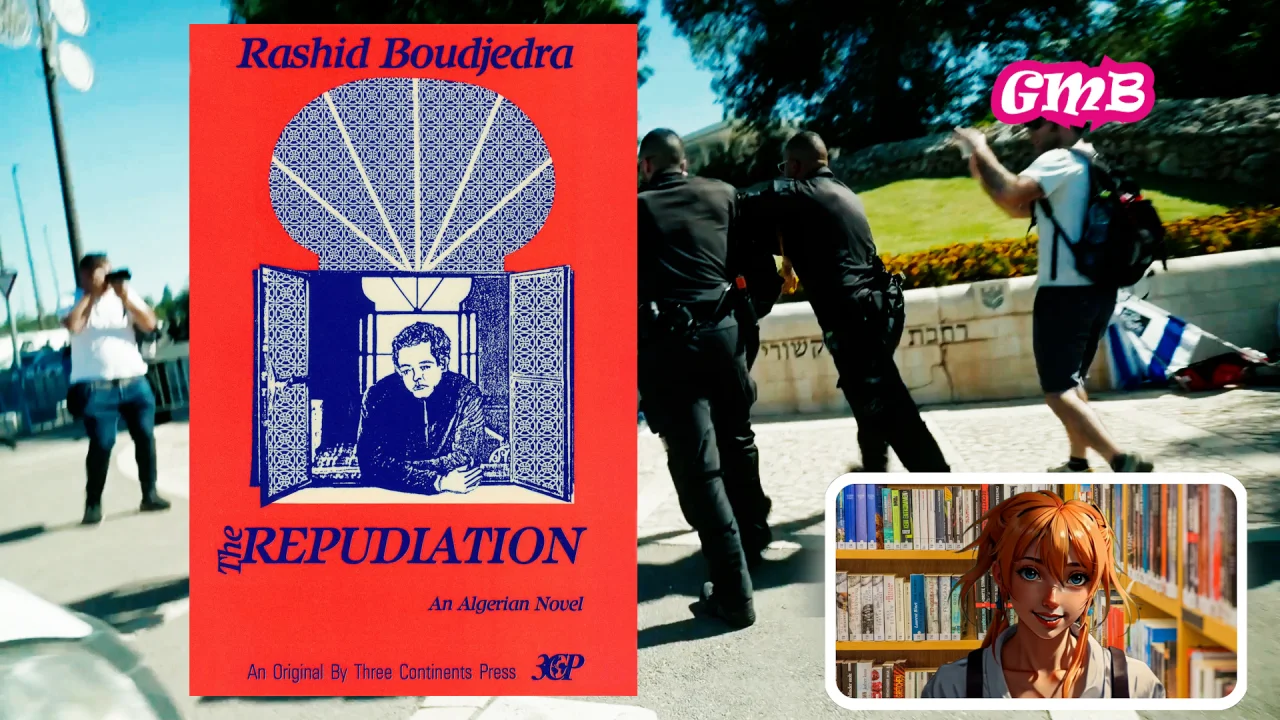
There’s a moment in this book where I had to stop reading—not because it was confusing, but because it was too clear. Too honest. The kind of honesty that feels almost invasive, like someone has peeled back the surface of society and forced you to look at what’s underneath.
Not the polished version. Not the version we defend in public.
The rot.
And the uncomfortable part? It doesn’t feel distant. It doesn’t feel like “their” story. It feels like a warning.
What Kind of Novel Is This?
This is a dark, disturbing, deeply political novel about power—who holds it, who suffers under it, and what happens when no one challenges it.
-
Tone: Harsh, unflinching, provocative
-
Pace: Moderate, but emotionally intense
-
Themes: Patriarchy, religious hypocrisy, repression, sexuality, rebellion, psychological trauma
This book is for readers who:
-
Want literature that challenges rather than comforts
-
Are interested in power structures and social critique
This book is NOT for readers who:
-
Prefer light, escapist storytelling
-
Need clear moral boundaries or emotional relief
👉 The edition I read is available here:
https://amzn.to/48DCKA7
A Glimpse of the Story (No Spoilers)
Set in Algeria, the novel follows Rashid, a man recounting his childhood to his French girlfriend.
At the center of his story is his father—a powerful patriarch who controls an entire extended household with absolute authority. When he takes a teenage girl as a new wife, the fragile balance of the family collapses.
What unfolds is not just domestic tension—but a slow, suffocating unraveling of morality, intimacy, and sanity.
This is a story about:
-
A family trapped under authority
-
A system that denies freedom, especially to women
-
And children who grow up watching hypocrisy—and eventually rejecting everything they were taught
Why This Story Matters (Emotional Core)
What stayed with me after finishing this book wasn’t any single event—it was the pattern.
The way power justifies itself.
The way religion is used not as guidance, but as control.
The way people adapt to oppression until it starts to feel normal.
At its core, this novel is about repudiation—not just in the literal sense of abandoning a wife, but in a much deeper, more unsettling way.
People here repudiate:
-
Love, by turning relationships into transactions
-
Faith, by emptying it of compassion
-
Truth, by pretending the system works
And eventually, the children repudiate everything.
That’s the part that hit hardest. This isn’t just a story about victims and oppressors—it’s about what happens to the next generation when they grow up inside a lie. When the people who are supposed to guide them are the very ones corrupting the system.
It forces a difficult question:
What do you become when everything you’re taught is built on hypocrisy?
Analysis & Review
What Works
The strength of Repudiation lies in its refusal to look away.
Rachid Boudjedra doesn’t soften anything. The patriarchy here isn’t symbolic—it’s suffocating, invasive, and deeply personal. You don’t just understand it—you feel it.
The structure is also brilliant. The story begins at the level of the family but gradually expands outward, showing how the same dynamics—control, repression, hypocrisy—exist at every level of society.
And then there’s the narration.
Rashid isn’t entirely reliable. His memories blur, distort, and contradict themselves at times. But that’s exactly what trauma does. It doesn’t give you clean narratives—it gives you fragments. And the novel leans into that beautifully.
What Doesn’t Fully Work
The book’s critique is powerful—but not always balanced.
There’s an underlying suggestion that less religious societies are inherently “healthier,” which can feel overly simplistic. The novel doesn’t fully engage with other systems of power—like colonialism or capitalism—that also shape oppression.
So while its attack on religious patriarchy is sharp, its broader conclusions can feel… incomplete.
About the Author
Rachid Boudjedra was born in 1941 in Algeria and educated in both North Africa and France, including at the Sorbonne. His work often challenges official narratives and exposes contradictions within post-independence Algerian society.
Repudiation, published in 1969, was his debut novel—and it was banned in Algeria for eleven years.
That alone tells you how dangerous truth can be.
My Honest Verdict
This isn’t a comfortable novel. And it’s not trying to be.
What works:
-
Its brutal honesty
-
Its psychological depth
-
Its willingness to confront taboo subjects
What doesn’t:
-
Its occasionally narrow focus on religion as the primary source of oppression
-
Its lack of nuance in comparing different cultural systems
This isn’t a perfect novel—but it’s an honest one.
And those are rare.
Who This Book Is Perfect For
You’ll enjoy this novel if:
-
You like books that leave you unsettled long after you finish
-
You enjoy writers like José Saramago who explore society through discomfort
-
You read fiction to understand the world—not escape it
You might struggle with this book if:
-
You prefer fast-paced, plot-driven stories
-
You need characters to root for
-
You dislike ambiguity or emotional heaviness
👉 If this sounds like your kind of book, you can get it here:
https://amzn.to/48DCKA7
Final Thoughts & Recommendation
There’s something unsettling about finishing a book and realizing it hasn’t really ended—it’s just followed you into your own thoughts.
That’s what Repudiation does.
It starts as a story about one family, in one place, under one system. But by the end, it stops feeling contained. It starts to feel like a lens—one that makes you question authority, tradition, and the quiet ways people accept what they shouldn’t.
This is not a book for everyone. But for the right reader—the one willing to sit with discomfort, to question deeply, to confront difficult truths—it’s unforgettable.
👉 If you’d like to read the same edition I did, here’s the link:
https://amzn.to/48DCKA7