 English
 French
 German
 Russian
 中文
中文
The Tragic Comedy of Trying to Outdo Yourself Forever
There’s a quiet kind of panic that sets in when you realize your best work might already be behind you.
Not loudly. Not dramatically. Just… subtly. Like when you try to recreate a perfect moment—a meal, a joke, a version of yourself—and it never quite lands the same way again.
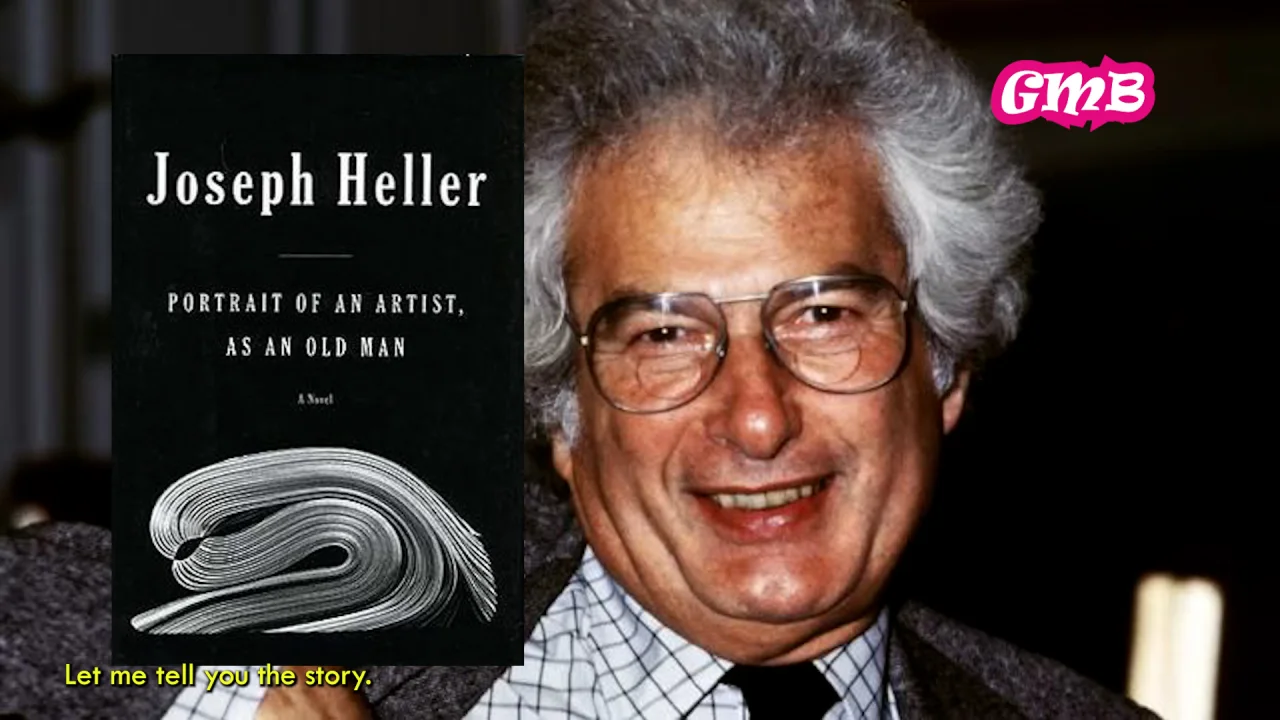
Reading Portrait of the Artist as an Old Man by Joseph Heller felt like sitting inside that panic. Except instead of resisting it, the book leans in, laughs, and then sighs.
And somehow, that makes it even more honest.
What Kind of Novel Is This?
This is a satirical, reflective, quietly melancholic novel about creative exhaustion and the burden of past success.
Tone: humorous, self-aware, bittersweet
Pace: slow, wandering, deliberately repetitive
Themes: legacy, identity, irrelevance, creativity, aging
This book is for readers who:
-
enjoy meta-fiction and self-referential storytelling
-
like novels that explore ideas more than plot
This book is NOT for readers who:
-
need strong plot progression or action
-
want clear structure or resolution
👉 The edition I read is available here:
https://amzn.to/4oDoFZu
Summary (No Spoilers)
Eugene Pota is an aging writer with a problem that feels almost cruel in its simplicity: he already wrote his best book.
Now, he’s stuck.
Every idea he has feels recycled—either something he’s written before or something the world has already seen. Yet he refuses to stop. Writing isn’t just what he does; it’s who he is.
So he keeps trying. Brainstorming. Restarting. Abandoning ideas halfway through. Talking with equally aging literary agents who seem just as tired as he is.
What unfolds isn’t a traditional story—it’s a portrait of a man circling the same question:
What do you do when you’ve already said your best thing?
Analysis & Review
1. The Brutal Honesty of Creative Burnout
What struck me most is how unapologetically honest this book is.
Eugene isn’t inspired. He’s frustrated. Petty, even. Sometimes ridiculous. He considers absurd titles, half-baked ideas, anything that might spark something resembling brilliance.
And that’s what makes it work.
There’s no romanticizing the creative process here. No “waiting for the muse.” Just a man sitting with the terrifying possibility that the muse might never come back.
2. Living in the Shadow of Catch-22
It’s impossible to read this without thinking about Catch-22.
Heller’s debut was so iconic that it essentially became a cage. And instead of pretending that pressure didn’t exist, he builds an entire novel around it.
There’s something almost rebellious about that.
Instead of trying to outdo his masterpiece, he writes a book about failing to outdo it. He turns expectation into material. Criticism into comedy.
It’s not just self-awareness—it’s self-defense.
3. The Fear of Becoming Irrelevant
Underneath the humor, there’s a quiet sadness that lingers.
Eugene isn’t just afraid of not writing another great book. He’s afraid of disappearing. Of becoming a footnote. Of being remembered only for something he did decades ago.
And that fear feels… very real.
Especially now, in a world that constantly demands newness, relevance, reinvention. The book doesn’t offer solutions. It just sits with the discomfort of it.
4. The Genius of the Ending
The final line reframes everything.
When Eugene casually suggests he might finally start writing the book we’ve just finished reading, it lands like a quiet punchline.
Suddenly, the chaos, the repetition, the false starts—they weren’t failures.
They were the story.
It’s clever. Maybe even a bit smug. But it works.
Why This Story Matters
This book isn’t really about writing.
It’s about what happens when your identity is tied to something you can no longer do the way you once did.
It asks uncomfortable questions:
-
What if your best work is behind you?
-
What if you can’t evolve?
-
What if the world moves on without you?
And instead of answering them, it laughs. Not dismissively—but knowingly.
That laughter stayed with me.
Because beneath it, there’s acceptance. Not defeat, not triumph. Just a quiet acknowledgment of reality.
A Glimpse of the Story (No Spoilers)
An aging writer, once celebrated, struggles to produce one final masterpiece.
Ideas come and go. Doubt lingers. Time keeps moving.
And the real conflict isn’t with the world—it’s with himself.
Who This Book Is Perfect For
You’ll enjoy this novel if:
-
you like books that explore the mind rather than events
-
you enjoy dry, intellectual humor
-
you read fiction to reflect, not just escape
You might struggle with this book if:
-
you prefer fast-paced plots
-
you need clear character arcs or resolution
-
you dislike repetition and circular storytelling
👉 If this sounds like your kind of book, you can get it here:
https://amzn.to/4oDoFZu
My Honest Verdict
This isn’t a perfect novel—but it’s an honest one.
What worked:
-
Sharp, self-aware humor
-
A deeply personal, almost confessional tone
-
A bold, unconventional structure
What didn’t:
-
The lack of plot can feel frustrating
-
Some sections drag or feel intentionally repetitive
-
It won’t resonate if you’re not interested in the writing process
And yet, I’d still recommend it.
Because books like this don’t try to impress you—they try to tell the truth.
Final Thoughts & Recommendation
Portrait of the Artist as an Old Man feels like a final conversation.
Not a grand farewell. Not a dramatic conclusion. Just a quiet, slightly amused reflection from someone who has seen it all—and knows there’s nothing left to prove.
It brought me back to that opening feeling—the pressure to outdo yourself, to keep being brilliant, to never decline.
This book doesn’t solve that problem.
But it does something better: it makes peace with it.
And maybe that’s enough.
👉 If you’d like to read the same edition I did, here’s the link:
https://amzn.to/4oDoFZu