 English
 French
 German
 Russian
 中文
中文

A Drunk Man Chases Death… and Somehow Wins
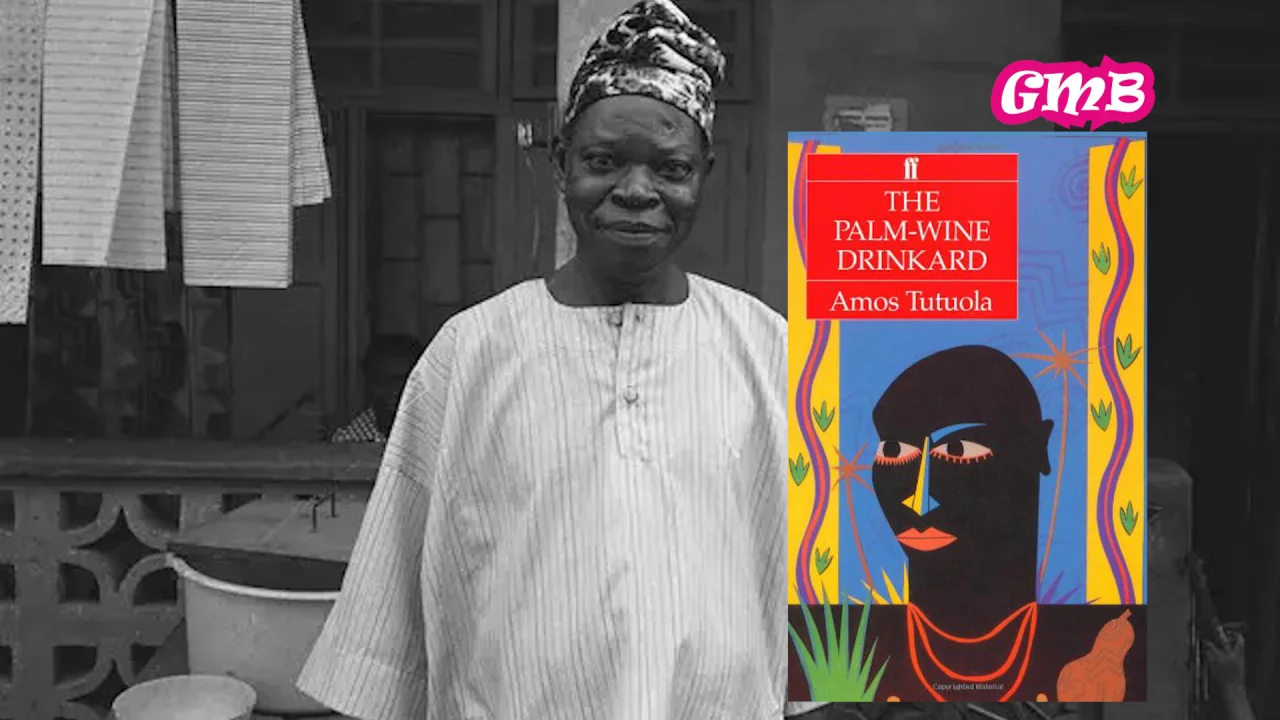
There’s a moment early in this book where I had to stop and just sit with what I’d read.
Not because it was confusing—but because it was so unapologetically absurd. A man drinks palm-wine like it’s oxygen. His supplier dies. And instead of adjusting his life, he decides to walk into the land of the dead to bring him back.
That’s when it hit me: this isn’t a story you analyze first. It’s a story you experience.
And once you surrender to it, The Palm-Wine Drinkard by Amos Tutuola becomes something unforgettable—strange, funny, unsettling, and deeply human.
What Kind of Novel Is This?
This is a fantastical, folkloric adventure about desire, survival, and the strange logic of human behavior.
Tone: Playful, surreal, sometimes disturbing
Pace: Episodic and fast-moving
Themes: Greed, loyalty, death, imagination, cultural memory
This book is for readers who:
-
Love myth, folklore, and oral storytelling traditions
-
Enjoy strange, unpredictable narratives that break rules
This book is NOT for readers who:
-
Need polished, “perfect” English prose
-
Prefer structured, conventional storytelling
👉 The edition I read is available here:
https://amzn.to/48oztWz
Why This Story Matters (Emotional Core)
At first glance, this feels like chaos.
A drunk man traps Death in a net. Marries a woman he rescues from a monster made of borrowed body parts. Carries a magical egg that can give him anything he wants.
But beneath that chaos is something uncomfortable—and familiar.
This story is about how people treat you when you have something to offer… and how quickly they disappear when you don’t.
When the drinkard has endless palm-wine, he has endless friends. The moment the supply stops, so does the loyalty. And when he returns with something valuable again, those same people come crawling back.
It’s not subtle. And it’s not meant to be.
The book also does something older, deeper—it tries to explain the world. Why is death everywhere? Why do people act selfishly? Why does misfortune feel random?
Instead of science or logic, it gives you story.
And strangely, that feels just as satisfying.
What stayed with me most wasn’t a specific scene—it was the freedom of it all. The sense that imagination has no limits. That stories don’t need permission to be wild, illogical, or even contradictory.
In a world obsessed with structure and realism, this book refuses to behave.
A Glimpse of the Story (No Spoilers)
A man who has spent his entire life drinking palm-wine loses the one person who supplies it.
Unwilling to live without it, he sets off on a journey into the land of the dead.
Along the way, he encounters spirits, monsters, impossible beings, and strange moral tests—each one forcing him to rely on trickery, magic, and sheer audacity to survive.
At its core, it’s a journey driven by obsession… but shaped by everything he learns along the way.
Who This Book Is Perfect For
You’ll enjoy this novel if:
-
You like books that feel like oral stories told around a fire
-
You enjoy surreal, dreamlike narratives
-
You read fiction to explore ideas, not just follow plots
You might struggle with this book if:
-
You prefer tight, structured storytelling
-
You need clear logic and realism
-
You dislike unconventional language
👉 If this sounds like your kind of book, you can get it here:
https://amzn.to/48oztWz
Analysis & Review
What makes this book powerful isn’t just the story—it’s how it’s told.
Tutuola’s language is famously unconventional. The grammar is simple, repetitive, sometimes “incorrect” by formal standards. But that’s exactly the point.
It feels spoken.
It feels alive.
Lines like:
“Then I changed the lady to a kitten and put her inside my pocket…”
There’s no effort to impress you. No polishing. Just pure storytelling.
And that rawness creates something rare: authenticity.
You’re not reading a Westernized version of African folklore—you’re experiencing something much closer to its original rhythm.
That said, this same quality can be a barrier.
If you’re expecting refined prose, this book will frustrate you. If you’re willing to adjust your expectations, it becomes one of its greatest strengths.
Structurally, the book is also unusual. It doesn’t follow a single, tight narrative arc. Instead, it unfolds as a series of episodes—almost like connected folktales.
Some readers will find that disjointed.
Others (like me) will find it freeing.
Because each encounter brings a new idea, a new moral, a new piece of imagination.
Conclusion & Recommendation
This isn’t a perfect novel—but it’s an honest one.
It doesn’t try to be neat. It doesn’t try to be universally accessible. It simply tells a story the way it wants to be told.
And that’s exactly why it still matters.
If you’re curious about African folklore, experimental storytelling, or books that break every rule you thought fiction had—this is worth your time.
If you’re looking for something conventional, this probably isn’t it.
👉 If you’d like to read the same edition I did, here’s the link:
https://amzn.to/48oztWz
Final Thoughts
I keep thinking about that opening decision.
A man loses his source of comfort—and instead of adapting, he chases it into the land of the dead.
It’s ridiculous.
But also… not entirely.
Because in quieter ways, people do this all the time. We chase what we’ve lost. We refuse to let go. We convince ourselves the impossible is worth pursuing.
Maybe that’s why this story works.
Underneath the spirits and magic and absurdity, it’s still about us.
And somehow, that makes all the madness feel real.