 English
 French
 German
 Russian
 中文
中文

This Book Made Me Angry in Ways I Wasn’t Prepared For
There are books that entertain you.
There are books that impress you.
And then there are books that grab you by the throat and refuse to let you look away.
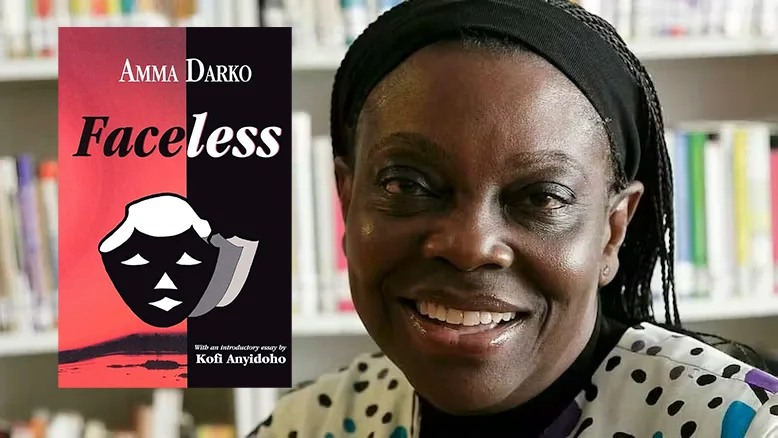
Faceless by Amma Darko is that kind of book.
I remember pausing while reading, not because the prose was difficult, but because I was furious. Furious at the adults. Furious at the systems. Furious at how familiar everything felt. This isn’t a distant dystopia or an exaggerated nightmare. This story is set in modern-day Ghana, and the things it exposes are happening right now, quietly, to people society has decided not to see.
By the time I finished the novel, I wasn’t asking whether I liked it.
I was asking why stories like this are still necessary.
What Kind of Novel Is Faceless?
Faceless is a social realist novel about street children, child trafficking, and the quiet violence of neglect.
Tone: Dark, disturbing, unflinching
Pace: Moderate, but emotionally heavy
Themes: Poverty, patriarchy, superstition, child exploitation, complicity, justice, visibility
This book is for readers who:
-
Want fiction that confronts reality head-on
-
Are interested in African urban life beyond stereotypes
-
Believe literature should challenge, not just entertain
This book is not for readers who:
-
Need comfort and emotional distance
-
Prefer escapist or light reading
-
Are not ready for difficult subject matter involving child abuse
👉 The edition I read is available here:
Faceless by Amma Darko on Amazon
Why This Story Matters (The Emotional Core)
At its heart, Faceless asks a brutal question:
What happens to children when everyone who should protect them fails?
The novel follows the life and death of Baby T, a teenage girl sold into prostitution by the very adults who were supposed to care for her. But this is not just her story. It’s about how society collaborates in abuse — through silence, superstition, poverty, and convenience.
What stayed with me after finishing the book wasn’t a single scene, but a realization:
No one in Baby T’s life woke up one day and decided to destroy her. They just kept choosing the easier option. Looking away. Taking money. Staying silent.
And that’s what makes the novel terrifyingly real.
A Glimpse of the Story (No Spoilers)
The novel opens with Fofo, a fourteen-year-old girl living on the streets, fleeing from a man known as Poison — a street lord tied to a trafficking ring. When a young girl’s body is discovered at a market, authorities attempt to dismiss her as an anonymous porter from the north.
But she isn’t anonymous.
She is Baby T.
And Fofo is her sister.
As an NGO worker named Kabria begins to investigate, the story slowly exposes the chain of decisions, betrayals, and abuses that led to Baby T’s death — and the systems that allowed it to happen without consequence.
Mothers, Men, and the Weight of Complicity
One of the most uncomfortable achievements of Faceless is how it refuses simple villains.
Maa Tsuru, the girls’ mother, is a deeply troubling character. She is poor, abandoned, and trapped in superstition — yet she accepts money while her daughter is abused. Darko does not excuse her actions, but she also refuses to flatten her into a monster. This complexity forces the reader to confront how victimhood and complicity can coexist.
The men in the novel — fathers, lovers, neighbors — are even harder to stomach. They are not exaggerated villains. They are ordinary men protected by culture, silence, and weak accountability. Darko shows how violence reproduces itself, how abused boys grow into abusive men — not as an excuse, but as a warning.
The Meaning of the “Curse”
The novel opens with a literal curse placed on a family, but as the story unfolds, it becomes clear that the real curse is structural.
Poverty.
Patriarchy.
Superstition.
Lack of social protection.
These forces combine to create a world where girls like Baby T are doomed long before they understand what danger looks like. The “curse” isn’t supernatural — it’s systemic.
Hope, But Not Comfort
Kabria and the NGO she works for represent the novel’s fragile hope. They rescue Fofo, provide medical care, and enroll her in catering school. It’s a relief — but not a fantasy ending.
Baby T is still dead.
Justice is partial.
The system remains broken.
And that honesty is one of the book’s greatest strengths.
Amma Darko’s Writing Style
Darko’s prose is direct and unsentimental. She doesn’t manipulate emotion with lyrical excess. She lets the events speak for themselves — and that restraint makes the story more devastating.
The structure, moving between present investigation and past trauma, creates a sense of inevitability. You know something terrible has already happened. The question is not if, but how — and who allowed it.
If you appreciate African novels that tell the truth without apology, you may also recognize Darko from her other works.
👉 You can find Faceless here:
Faceless by Amma Darko – Amazon Edition
Who This Book Is Perfect For
You’ll appreciate Faceless if:
-
You read fiction to understand society
-
You value African stories told from within
-
You believe literature should disturb complacency
You might struggle with this book if:
-
You prefer fast-paced thrillers
-
You need clear heroes and villains
-
You are sensitive to depictions of abuse
👉 If this sounds like your kind of book:
Check the current Amazon edition here
My Honest Verdict
This isn’t a perfect novel — but it is an honest one.
It’s painful.
It’s infuriating.
It’s necessary.
Faceless doesn’t ask to be loved. It asks to be taken seriously. And once you read it, you won’t forget Baby T or Fofo — because Amma Darko gives them what society denied them: a face, a name, and a voice.
Final Thoughts
Fofo dreams of “a home with a roof and a toilet.”
That’s it. That’s the dream.
The fact that basic dignity is framed as a fantasy should unsettle every reader. Faceless exists because too many children are still invisible — and because silence is the most powerful accomplice of violence.
If you can handle its difficult content, this book will change the way you see the world around you. And honestly — that’s what the best books are supposed to do.
Optional: Similar Books You Might Like
-
Beyond the Horizon – Amma Darko
-
The Housemaid – Amma Darko
Best Format to Read This Book
Paperback or Kindle.
This is a book you’ll want to pause, reread, and sit with.