 English
 French
 German
 Russian
 中文
中文

When Your Own Dog Terrifies You: The Quiet Anxiety Inside The Life of Worm
There’s a moment in this story that made me pause.
A man is walking his dog down the street. The dog’s name is Worm. People stop to admire it—because it’s beautiful, powerful, impressive. The kind of dog that turns heads.
But inside the man’s mind, something else is happening.
He’s afraid of it.
Not a little uneasy. Not slightly cautious. Actually afraid. Because deep down, he knows that if Worm decides to attack someone… there’s nothing he can do to stop it.
And suddenly the walk doesn’t feel normal anymore. It feels like walking beside a loaded weapon.
That strange tension—between appearance and reality—sits quietly at the heart of The Life of Worm.
What Kind of Story Is This?
The Life of Worm by Ken Barris is a psychological literary short story that feels deceptively simple on the surface.
This is a reflective, almost unsettling story about fear, control, and the fragile illusion of safety.
Tone: Quiet, unsettling, introspective
Pace: Slow and contemplative
Themes: Fear, control, paranoia, vulnerability, modern anxiety
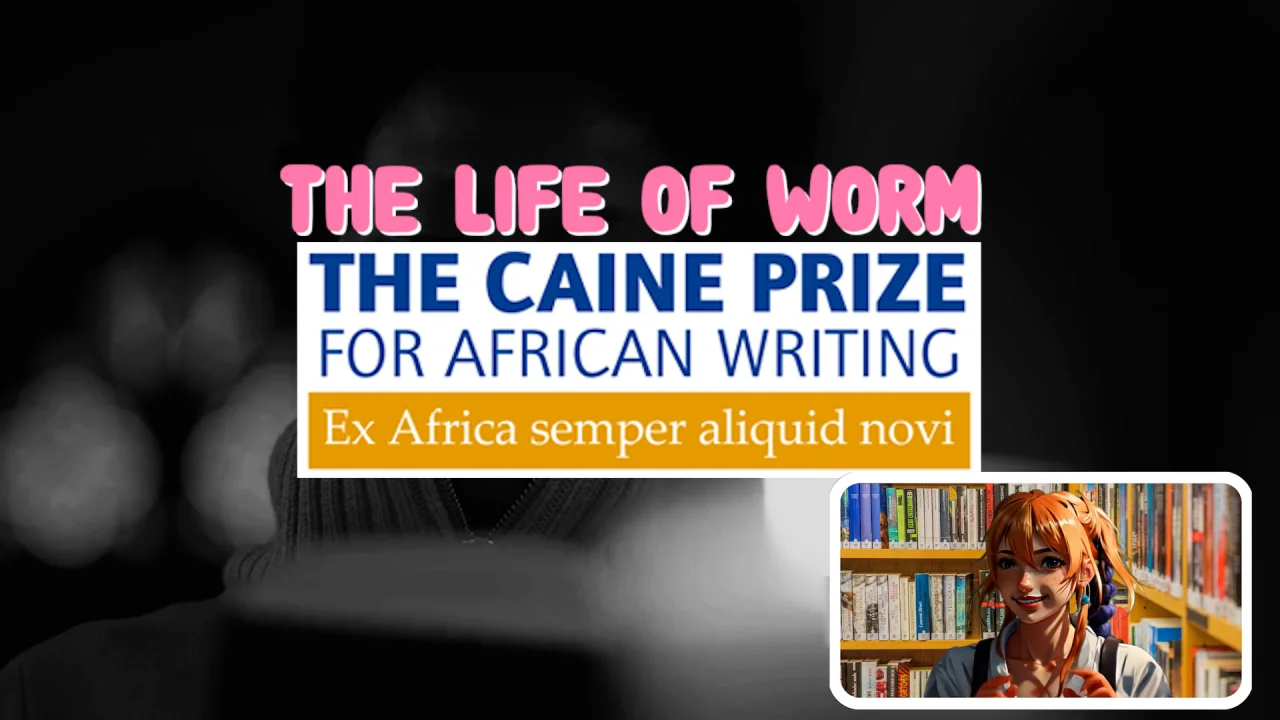
The story was shortlisted for the Caine Prize for African Writing in 2010 and appears in the anthology A Life in Full: Caine Prize for African Writing 2010.
👉 The edition I read is available here:
Read A Life in Full: Caine Prize for African Writing 2010 on Amazon
This book is for readers who:
-
Enjoy quiet literary fiction that explores psychology
-
Like stories that leave space for interpretation
-
Appreciate subtle, philosophical storytelling
This book is NOT for readers who:
-
Prefer action-heavy plots
-
Need clear explanations or resolutions
-
Want traditional beginning-middle-end narratives
Why This Story Matters (The Emotional Core)
On the surface, The Life of Worm looks like a story about three things:
A paranoid man.
A violent dog.
And a dangerously leaning oak tree.
But if you take the story at face value, it almost seems like nothing happens.
And yet… everything is happening.
The narrator lives inside a fortress of security: alarms, metal doors, motion sensors, backup systems. His house feels less like a home and more like a bunker built to survive the apocalypse.
But despite all that protection, he still feels unsafe.
That’s the quiet irony of the story.
He owns the most dangerous dog on the street—but he’s terrified of it.
He has alarms everywhere—but they constantly malfunction.
He worries about the neighbor’s massive oak tree falling—but he never confronts the neighbor.
He calculates risks endlessly. He imagines disasters in advance. He prepares for everything.
Except action.
And that is where the story becomes strangely relatable.
Because many of us live like this.
We lock doors. Install cameras. Set alarms. Plan for every possible disaster. Yet the things we fear most—loss, violence, death, unpredictability—are never things we can truly control.
The story quietly asks a disturbing question:
Are we protecting ourselves…
or just comforting ourselves?
A Glimpse of the Story (No Spoilers)
The narrator lives alone in a heavily fortified suburban house with his dog, Worm.
The dog is powerful, intimidating, and unpredictable.
Every day the narrator walks Worm through the neighborhood while silently worrying about what might happen if the dog loses control.
Meanwhile, another threat looms over his house: a massive oak tree from the neighbor’s yard that leans dangerously toward his property.
The narrator constantly calculates the odds of it falling.
But he never actually speaks to the neighbor.
Then one day, during an ordinary walk in the park, something happens with Worm that changes everything.
And the narrator discovers that the dangers he fears are not always the ones he can prevent.
Who This Story Is Perfect For
You’ll enjoy this story if:
-
You like fiction that explores anxiety and human psychology
-
You enjoy literary storytelling similar to Franz Kafka
-
You read fiction to think rather than simply escape
You might struggle with this story if:
-
You prefer fast-paced plots
-
You want obvious morals or conclusions
-
You dislike stories that leave meaning open to interpretation
👉 If this sounds like your kind of book, you can get it here:
Explore A Life in Full: Caine Prize for African Writing 2010 on Amazon
My Honest Verdict
This is not a dramatic story.
There are no grand adventures. No heroic characters. No clear resolutions.
Instead, it gives us something quieter—and perhaps more unsettling.
A man trapped inside his own mind.
What works beautifully in this story is the internal monologue. Because everything unfolds through the narrator’s thoughts, we experience the world exactly as he does: uncertain, tense, constantly calculating risk.
The atmosphere becomes almost claustrophobic.
Even ordinary events—walking a dog, hearing an alarm, looking at a tree—start to feel dangerous.
What didn’t work for some readers might actually be the point.
The story doesn’t explain itself. It doesn’t offer clear symbolism or answers. Its meaning depends heavily on what the reader brings to it.
And because of that, opinions about the story vary widely.
But that’s also why it stays with you.
This isn’t a perfect story.
But it’s a haunting one.
About the Author
Ken Barris is a South African writer based in Cape Town whose work spans poetry, novels, and short fiction.
Over the years he has earned significant literary recognition, including:
-
Winner of the Thomas Pringle Award for The Quick Brown Fox
-
Winner of the M-Net Book Prize for The Jailer’s Book
-
Honourable Mention at the Noma Award for Publishing in Africa
-
Winner of the Ingrid Jonker Prize for An Advertisement for Air
He has also been shortlisted twice for the Caine Prize for African Writing, once in 2003 and again in 2010 for The Life of Worm.
His writing often explores psychological tension and the strange inner lives of ordinary people.
Final Thoughts & Recommendation
When I finished reading The Life of Worm, I kept thinking about one question:
Who is actually in control?
The man believes he is protecting himself from danger. His house is a fortress. His dog is a weapon. His mind is constantly calculating threats.
And yet, everything around him feels unstable.
The alarms malfunction.
The oak tree leans closer.
The dog acts on instincts he cannot command.
Control, the story suggests, might be an illusion.
And maybe that’s what makes the story quietly disturbing.
It doesn’t shout its message. It whispers it.
👉 If you’d like to read the same edition I did, here’s the link:
A Life in Full: Caine Prize for African Writing 2010 on Amazon
Similar Books You Might Like
If you enjoy psychological and philosophical fiction, you might also like:
-
The Metamorphosis by Franz Kafka
-
Things Fall Apart by Chinua Achebe
Both explore how ordinary lives unravel under forces that feel strangely inevitable.