 English
 French
 German
 Russian
 中文
中文

The Novel That Broke a Bishop’s Patience and a Writer’s Career
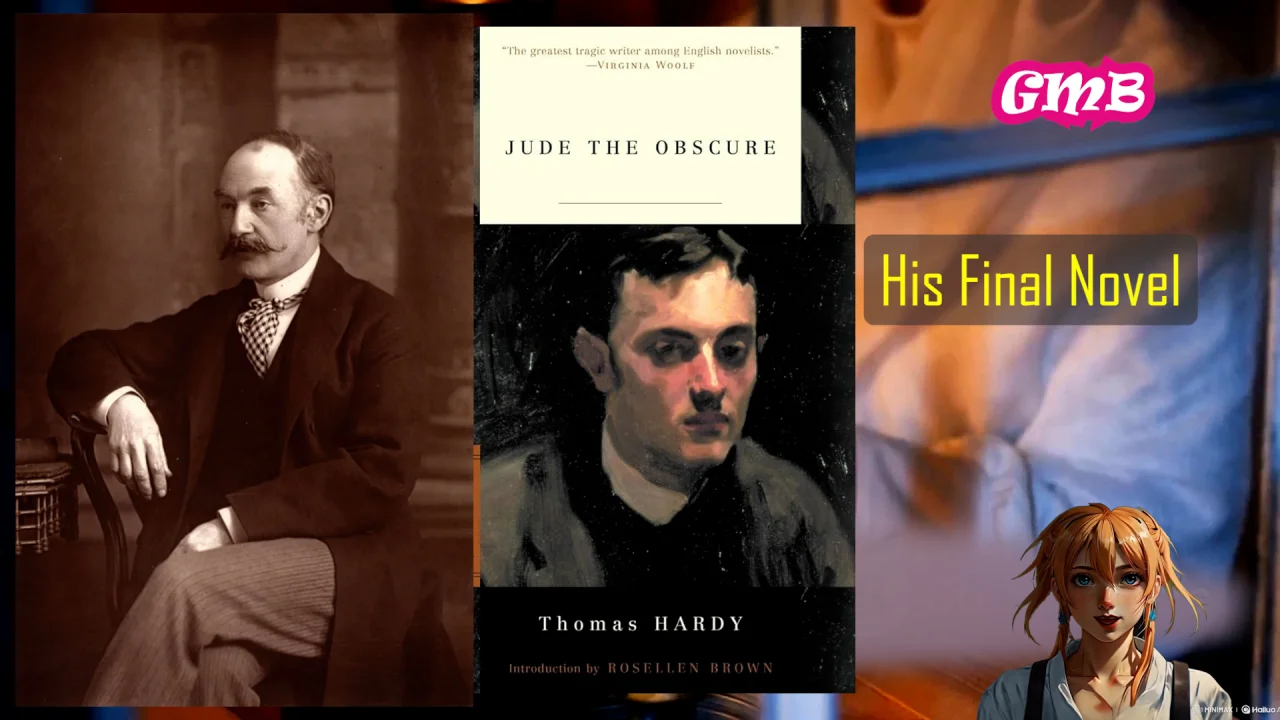
I remember the moment I realized this book wasn’t just “sad.” It was merciless.
There’s tragedy, and then there’s the kind of tragedy that feels like the universe itself is leaning over your shoulder whispering, You thought hope was allowed here?
When I turned the final pages, I didn’t feel shocked. I felt hollow. As if the novel had quietly dismantled every illusion about love, ambition, faith, and society — and then politely left me in the ruins.
This isn’t just a Victorian novel.
This is a rebellion written in grief.
What Kind of Novel Is This?
This is a dark, socially critical Victorian tragedy about ambition, love, class, and the crushing weight of social expectations.
Tone: bleak, reflective, quietly furious
Pace: moderate, gradually tightening like a noose
Themes: class barriers, marriage, religion, education, morality, individual desire vs. society
This book is for readers who:
-
Love classic fiction that challenges the morals of its time
-
Enjoy novels that provoke uncomfortable questions
This book is NOT for readers who:
-
Need hopeful endings
-
Prefer light romance or easy resolutions
👉 The edition I read is available here:
Jude the Obscure by Thomas Hardy
Why This Story Matters (Emotional Core)
Jude the Obscure isn’t really about Jude.
It’s about what happens when society builds gates — and then tells certain people they are unworthy of walking through them.
Jude Fawley dreams of studying at Christminster, a fictional Oxford-like university. He teaches himself Latin. He worships knowledge. He believes, with almost religious sincerity, that effort should be enough.
But Victorian England doesn’t run on effort.
It runs on class.
And that quiet rejection — that polite, institutional “no” — becomes the first crack in Jude’s life.
Then comes marriage. And Hardy doesn’t treat it as sacred. He treats it as a contract that can suffocate. Jude’s impulsive marriage to Arabella is manipulative from the start. His later connection with Sue Bridehead is intellectual, electric, deeply modern — and completely incompatible with the moral machinery of the time.
Through Jude and Sue, Hardy asks something radical for 1895:
What if marriage is not holy?
What if love and law are not the same thing?
What if morality is just a social performance?
Victorian society did not appreciate those questions.
The novel was condemned for attacking religion and marriage. A bishop famously burned his copy. Hardy later said the backlash essentially ended his career as a novelist.
And yet — more than a century later — the questions feel painfully current.
We still wrestle with class mobility.
We still debate the meaning of marriage.
We still watch institutions protect themselves at the expense of individuals.
What stayed with me most wasn’t just the tragedy.
It was the inevitability.
Hardy doesn’t present society as evil. He presents it as rigid. Mechanical. Unbending.
And when human longing collides with rigid systems, the system survives.
The people don’t.
A Glimpse of the Story (Minimal, No Spoilers)
A poor stonemason dares to dream of becoming a scholar.
He falls into a loveless marriage.
He later finds intellectual and emotional connection with a woman who questions every social rule he has tried to live by.
Together, they try to live honestly — outside the structures of marriage, class, and religious expectation.
Society answers.
Not kindly.
Who This Book Is Perfect For
You’ll enjoy this novel if:
-
You like books that explore emotional and moral tension
-
You enjoy authors who critique society instead of comforting it
-
You read fiction to think, not just escape
You might struggle with this book if:
-
You prefer fast-paced plots
-
You need clear heroes and villains
-
You dislike open-ended moral ambiguity
👉 If this sounds like your kind of book, you can get it here:
Jude the Obscure by Thomas Hardy
The Controversy That Changed a Career
Thomas Hardy was no stranger to social criticism, but Jude the Obscure pushed Victorian patience to its limit.
Published in 1895, the novel attacked:
-
The sanctity of marriage
-
The hypocrisy of religious morality
-
The illusion of equal access to education
-
Gender expectations and sexual double standards
One quote from the novel reflects how gender was understood in Hardy’s time:
“No average man—no man short of a sensual savage—will molest a woman… unless she invites him.”
Reading that today is jarring. It forces you to confront how deeply cultural assumptions shape moral narratives.
After the outrage, Hardy abandoned novel writing entirely and turned to poetry. Imagine writing a book so disruptive it ends your own career.
That alone tells you how dangerous this story felt in 1895.
My Honest Verdict
This isn’t a perfect novel.
At times, it feels relentless. The suffering stacks so high it almost becomes unbearable. You may even feel manipulated by how cruel fate becomes.
But it is an honest novel.
Hardy refuses to romanticize poverty. He refuses to reward rebellion with tidy happiness. He refuses to pretend that society bends easily.
What worked:
-
The psychological depth of Jude and Sue
-
The fearless critique of Victorian norms
-
The emotional weight that lingers long after finishing
What didn’t:
-
The density can feel heavy
-
The tragedy borders on overwhelming
And yet, I still recommend it.
Because safe novels don’t get burned.
And this one did.
Final Thoughts & Recommendation
If you’re looking for a cheerful Victorian romance, this is not it.
If you want a novel that challenges the myths of meritocracy, marriage, and moral superiority — this is essential reading.
Jude the Obscure forces you to ask:
What if society’s rules are not designed to protect us — but to contain us?
When I closed the book, I felt that quiet, unsettling awareness that some dreams don’t fail because they’re foolish.
They fail because the world refuses to make room for them.
👉 If you’d like to read the same edition I did, here’s the link:
Jude the Obscure by Thomas Hardy
Similar Books You Might Like
-
Tess of the d'Urbervilles by Thomas Hardy
-
Middlemarch by George Eliot
Best Format to Read This Book
Paperback: Ideal if you like underlining heavy passages and revisiting philosophical lines.
Kindle: Convenient, especially for looking up Victorian references instantly.
Audiobook: Powerful if you want to feel the emotional weight through performance.
This isn’t a comforting classic.
It’s a confrontational one.
And sometimes, those are the stories that matter most.