 English
 French
 German
 Russian
 中文
中文

The Day Your Mind Turns Against You
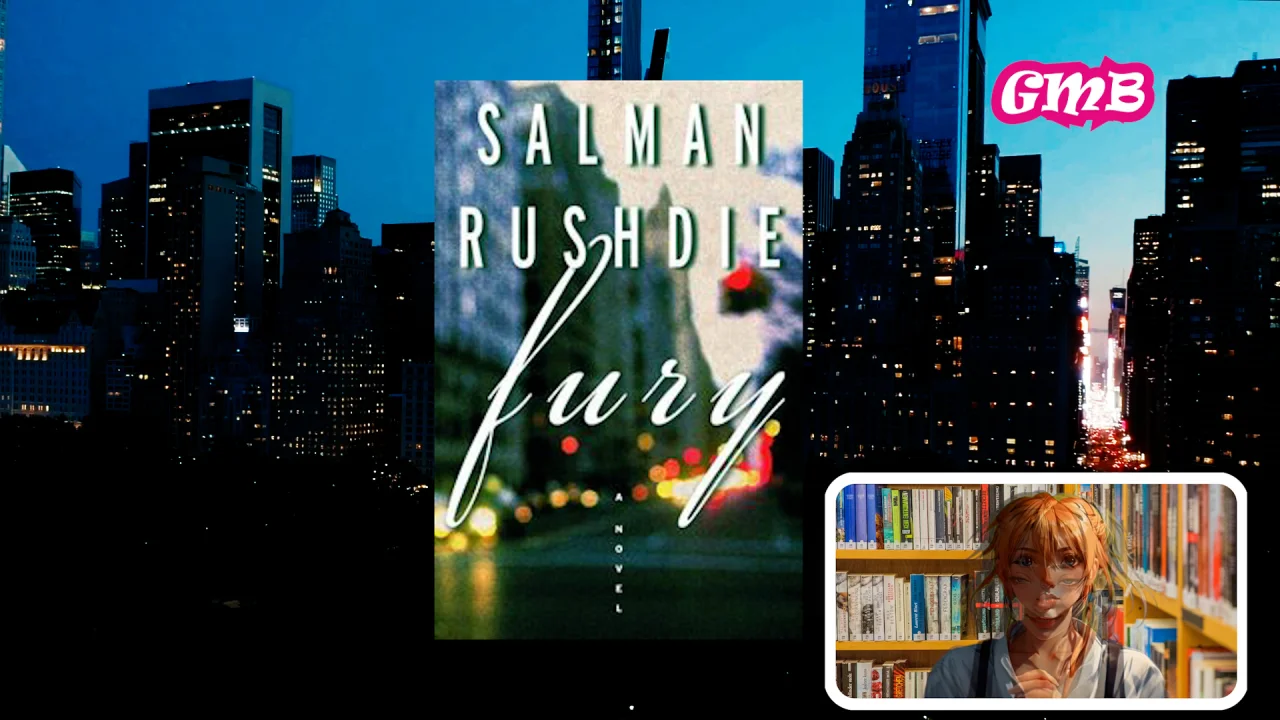
I kept thinking about that moment.
A man standing over his own family… not in action, not in violence — but in possibility. That terrifying space between thought and deed. That quiet question: What if I lose control?
That’s where Fury begins. Not with a bang, but with a man afraid of himself.
And once that fear enters the story, it never really leaves.
What Kind of Novel Is This?
This is a psychological satire about rage, identity, and the quiet collapse of a thinking man.
Tone: dark, ironic, restless
Pace: moderate, occasionally erratic
Themes: anger, exile, fame, capitalism, identity, disillusionment
This book is for readers who:
-
enjoy introspective, idea-heavy fiction
-
like novels that blur philosophy with storytelling
This book is NOT for readers who:
-
want a clean, linear plot
-
prefer clear heroes and villains
👉 The edition I read is available here:
https://amzn.to/4iScJSr
Intro: A Man Who Runs From Himself
Salman Rushdie doesn’t ease you into this novel. He throws you straight into the mind of Malik Solanka — a 55-year-old Cambridge philosopher who suddenly abandons his life in London and escapes to New York.
No note. No explanation. Just… gone.
At first, it feels absurd. Almost darkly funny.
Until you learn why.
Because one night, Malik woke up holding a knife over his sleeping wife and child — not attacking them, but close enough to terrify himself.
That’s the kind of fear that doesn’t stay contained.
So he runs.
Summary: Fame, Dolls, and a Mind in Freefall
Before his escape, Malik had already achieved something strange: success.
He created a philosophical children’s doll called “Little Brain” — a bizarre mix of intellect and entertainment that became wildly popular. It made him rich. Famous.
And quietly disgusted.
The doll becomes everything he hates about modern culture — mass-produced, shallow, commodified thought dressed up as genius.
So Malik flees to New York, hoping to disappear.
Instead, he gets pulled deeper into chaos.
The city throws everything at him:
tech startups, digital identities, parties, sex, ambition, noise — a world where even thought feels commercialized.
And then come the relationships.
Mila, sharp and confrontational, forces him to face his pretensions.
Neela, magnetic and elusive, pulls him into something stranger — even surreal.
At one point, the novel veers into a bizarre political detour involving a fictional island conflict (a clear nod to Gulliver’s Travels). It’s unexpected, almost disorienting.
But maybe that’s the point.
Because Malik himself is disoriented.
And the story refuses to stay still long enough for comfort.
Analysis & Review: A Brilliant Mess of Ideas
Let’s be honest: this isn’t an easy novel to love.
It’s messy.
Not in a careless way — but in an ambitious, trying-to-hold-too-much way.
Rushdie blends:
-
philosophy
-
satire
-
pop culture critique
-
tech-era anxiety
-
personal breakdown
And sometimes, it feels like all of it is happening at once.
But within that chaos, there’s something sharp and unsettling.
What Works
The emotional core of this novel is rage — not loud anger, but quiet, intellectual frustration.
Malik isn’t just angry at the world. He’s angry at:
-
what success has turned him into
-
what culture has become
-
what he might be capable of
And that kind of anger feels disturbingly real.
Rushdie also captures early-2000s New York brilliantly — a city buzzing with ambition, technology, and illusion. It feels alive, but also on the verge of collapse.
And then there’s the metaphor of the doll.
“Little Brain” isn’t just a creation. It’s a warning.
A symbol of what happens when intelligence becomes entertainment — when depth gets flattened into something marketable.
It’s hard not to read this as Salman Rushdie reflecting on his own fame.
What Doesn’t Quite Land
The biggest issue is focus.
The novel stretches itself across too many ideas, and not all of them fully connect.
That surreal island subplot?
It feels like a different novel briefly hijacked this one.
And while it’s interesting, it breaks the emotional rhythm Malik’s story was building.
At times, the book feels like a mind racing faster than it can organize itself.
But maybe that’s intentional.
Because Malik himself is unraveling.
Why This Story Matters
This isn’t really a story about a man running away.
It’s about a man who can’t escape his own mind.
What stayed with me wasn’t the plot — it was the feeling:
That slow, creeping realization that intelligence doesn’t protect you from collapse.
That success doesn’t guarantee meaning.
That anger, if left unchecked, turns inward.
There’s also something deeply modern about it.
The fear of becoming irrelevant.
The exhaustion of constant noise.
The way identity gets fragmented in a world of performance and consumption.
Rushdie doesn’t offer answers.
He just leaves you sitting with the discomfort.
And sometimes, that’s more honest.
Who This Book Is Perfect For
You’ll enjoy this novel if:
-
you like books that explore inner conflict and psychological tension
-
you enjoy satirical takes on modern culture
-
you read fiction to think, not just escape
You might struggle with this book if:
-
you prefer fast-paced, plot-driven stories
-
you need structure and clarity
-
you dislike narrative detours
👉 If this sounds like your kind of book, you can get it here:
https://amzn.to/4iScJSr
My Honest Verdict
This isn’t a perfect novel — but it’s an honest one.
It’s uneven, sometimes overstuffed, occasionally confusing.
But it’s never shallow.
There’s real thought here. Real tension. Real discomfort.
And even when it doesn’t fully work, it tries in ways most novels don’t.
I wouldn’t recommend starting your Rushdie journey here — not when Midnight’s Children and The Satanic Verses exist.
But as a glimpse into his mind?
It’s fascinating.
Final Thoughts & Recommendation
I keep going back to that image — a man afraid of what he might do.
Not because he’s evil.
But because he’s human.
Fury isn’t here to comfort you. It’s here to unsettle you. To show you what happens when thought turns into pressure, and pressure turns into something harder to control.
If you’re the kind of reader who doesn’t mind a novel that wanders — that questions more than it answers — this might stay with you longer than you expect.
👉 If you’d like to read the same edition I did, here’s the link:
https://amzn.to/4iScJSr