 English
 French
 German
 Russian
 中文
中文
A Cherry Orchard, a White Suit, and the Slow Death of Old Russia
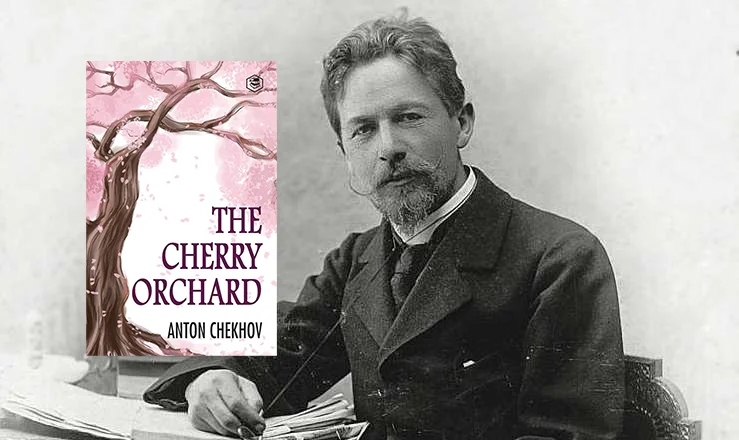
Russia in May is a strange place. The frost still bites, the air is cold enough to make your regrets sting, and yet—somehow—the cherry trees are blooming. That’s where The Cherry Orchard begins: in a country stuck between seasons, much like the people who live in it.
We arrive at the Ranevsky estate, a once-grand property now bleeding money and denial in equal measure. Everyone is waiting. Waiting for the mistress of the house. Waiting for change. Waiting for something—anything—to save them from the inevitable. And like the cherry trees themselves, no one seems prepared for what’s coming.
Chekhov doesn’t open with drama or explosions. He opens with discomfort. Quiet panic. People talking past one another. The kind of tension that grows when everyone knows the house is on fire but keeps arguing about the furniture.
👉 You can find the edition of The Cherry Orchard by Anton Chekhov I’m referring to here:
The Cherry Orchard – Anton Chekhov (Amazon)
A Businessman in Yellow Shoes and a Family in Denial
Standing in the nursery—yes, a room literally named after childhood—we meet Yermolay Lopakhin. He’s a successful businessman now, proudly wearing a white suit and yellow shoes that practically shout, I’ve made it. Once the son of a peasant who worked this land, Lopakhin is now the only person in the room who understands money.
And that makes him dangerous.
Because Lopakhin has a plan.
The Ranevsky estate is drowning in debt. The solution, according to Lopakhin, is brutally simple: cut down the cherry orchard and build summer cottages. Problem solved. Income restored. Future secured.
Except… the orchard isn’t just land.
To Lyuba Ranevsky—the emotional, impulsive heart of the play—the cherry orchard is her childhood. Her memories. Her last connection to a life that made sense before grief and loss tore it apart. She’s just returned from Paris, where she’s spent five years shopping her way through sorrow, accompanied by her daughter Anya, who understands the danger but lacks the power to stop it.
Selling the orchard feels like selling her soul.
So she refuses. Politely. Repeatedly. Catastrophically.
👉 If you want a clean, readable edition for first-time readers, this one works well:
The Cherry Orchard (Amazon)
Talking About Work, Doing Nothing, and the Sound of a Breaking World
Then there’s Peter Trofimov—the eternal student. A walking contradiction. A man who delivers fiery speeches about the dignity of labor, the failure of Russian intellectuals, and the need for a better future… while contributing absolutely nothing in the present.
Chekhov is merciless with him. And with everyone.
Because that’s the real joke of The Cherry Orchard: no one is entirely wrong, but no one is entirely useful either. Everyone sees the problem. Everyone talks about the problem. No one actually acts—except Lopakhin.
And somewhere in the middle of all this polite paralysis, a strange sound echoes through the estate: a snapping string. No explanation. No source. Just a noise that feels like something important has quietly broken.
It’s Chekhov’s way of whispering: The old world is ending. Whether you notice or not.
A Party Before the Fall
Auction day arrives, and in true Ranevsky fashion, it’s celebrated with a party. Music. Guests. Laughter. Anything to avoid facing reality.
Then Lopakhin returns.
He bought the estate.
The cherry orchard is his.
And suddenly, the man who begged them to listen is the man holding the axe.
It’s not played as villainy. That’s the brilliance—and cruelty—of Chekhov’s writing. Lopakhin didn’t destroy the orchard out of hatred. He did it because no one else would save it. Progress didn’t arrive like a monster; it arrived like a businessman with paperwork.
Forgotten Servants and Final Goodbyes
The final act is quiet. Painfully so.
The family disperses. Anya goes to school. Varya takes a job miles away. Ranevsky returns to Paris—still chasing comfort, still running from responsibility. The estate empties. The sound of axes fills the background.
And then there’s Firs.
Eighty-seven years old. Loyal. Forgotten.
Left behind in the locked house as the cherry trees fall, Firs lies down and quietly fades away. No speeches. No drama. Just the soft extinction of a life that belonged entirely to the old order.
If Chekhov wanted a clearer metaphor for the death of old Russia, he couldn’t have written one.
Why The Cherry Orchard Still Hurts
On the surface, The Cherry Orchard is about land and money. But underneath, it’s about people who cannot let go—even when letting go is the only way to survive.
It’s about nostalgia as a trap. About how memory can become a form of paralysis. About a society changing faster than its people are emotionally prepared for.
What makes the play unforgettable isn’t tragedy or comedy—it’s the way Chekhov blends both until you’re unsure whether to laugh or mourn. The characters aren’t villains. They’re human. Flawed. Tender. Infuriatingly passive.
And that snapping string? It stays with you. Long after the last page.
Final Thoughts
The Cherry Orchard isn’t loud. It doesn’t beg for your attention. It waits patiently while everything falls apart.
If you enjoy literature that explores change, loss, denial, and the quiet cruelty of time, this play will sit with you longer than you expect. It’s funny in the saddest way and sad in the most familiar one.
Chekhov doesn’t ask whether the cherry orchard should be saved.
He shows you what happens when no one is willing to act—until it’s too late.
👉 If you’d like to read the same work discussed here, you can find The Cherry Orchard by Anton Chekhov through this link:
The Cherry Orchard – Anton Chekhov (Amazon)